
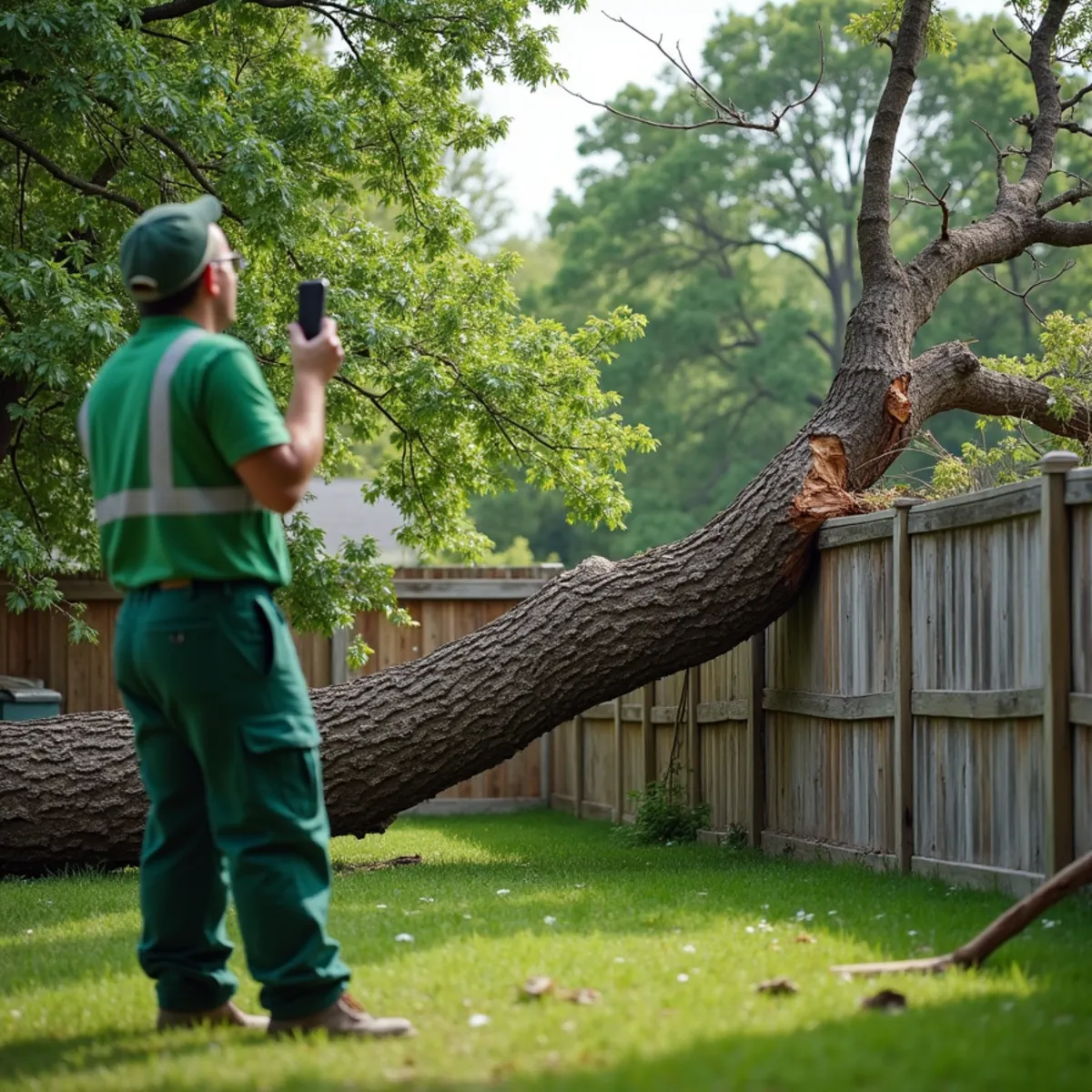
After a tree comes down, the second question, right after is everyone okay, is usually about money: will my insurance pay for this? The answer in Indiana is often yes, but it depends heavily on what the tree hit and how your policy is written. Understanding the rules before you call your carrier helps you file a stronger claim.
We are a tree service, not your insurance company, so always confirm the details with your own carrier. But after years of documenting these situations for local homeowners, here is what we see most often.
The Key Question: Did It Hit a Structure?
Coverage usually turns on whether the tree struck a covered structure. Standard Indiana homeowners policies often cover removal when a tree hits your house, garage, shed, fence, or another insured structure. When a tree simply falls in the yard and hits nothing, coverage is much thinner or absent.
- Tree hits your house or garage: removal is commonly covered, subject to your deductible and a removal sublimit
- Tree hits a fence or other structure: often covered, again subject to limits
- Tree falls in the yard, hits nothing: typically not covered for removal
- Tree blocks a driveway or ramp used for accessibility: some policies cover removal in specific cases, so ask
Typical Limits and Deductibles
Even when removal is covered, most policies cap it. A common removal sublimit in Indiana falls around $500 to $1,000, and that applies on top of your deductible. If your deductible is $1,000 and the removal is covered up to $1,000, a modest job may end up largely out of pocket. For a large tree over a home, the structural repair coverage is usually the bigger part of the claim, and removal is a smaller line item within it.
Dealing with a fallen tree right now? We provide claim-ready documentation and an itemized, insurance-friendly invoice with every job. Call (323) 606-0255 or request a free estimate and we will help you move the claim forward.
When Coverage Gets Denied
A few situations commonly reduce or eliminate coverage. Knowing them ahead of time helps you avoid surprises.
- Neglect. If the tree was obviously dead or diseased and you left it standing, an insurer may argue the failure was preventable. This is a real risk with the dead ash trees still standing all over the region.
- No structure struck. A healthy tree that falls in an open yard during a storm usually is not covered for removal.
- Deductible exceeds the cost. If the removal costs less than your deductible, there is nothing for the policy to pay.
- Excluded events. Flood-related failures may fall outside a standard policy, which matters near the Three Rivers floodplains.
How to Document Your Claim
Documentation is what turns a plausible claim into a paid one. The moment it is safe, before anything is moved, build a record.
- Wide photos showing the whole scene and what the tree hit
- Close-ups of structural damage and any damaged belongings
- A note of the date, time, and weather conditions
- Your tree service's itemized invoice separating structure removal from yard cleanup
When our crew handles your fallen tree removal, we photograph the tree in place and provide paperwork formatted for your adjuster. If the storm brought down more than one tree, our storm damage tree cleanup team documents each one so nothing gets lost in the claim.
Act Before the Next Storm
The single best way to protect both your home and your coverage is to remove hazardous trees before they fail. A dead ash near your house is not just a physical risk, it is a coverage risk, because insurers can point to neglect. If you are worried about a specific tree, our emergency tree service team can assess it, and preventive removal now avoids the neglect argument later.
We serve homeowners across New Haven, Fort Wayne, and the surrounding area. For help with a fallen tree and the paperwork that goes with it, call (323) 606-0255.
Whose Tree Was It, Anyway?
A common source of confusion is a tree that falls across a property line. In general, if your neighbor's tree falls on your house, you file with your own insurance, and your carrier may then pursue your neighbor's insurer if the tree was clearly neglected. It usually does not matter which side of the line the trunk grew on; what matters is whose property it damaged.
That is another reason documentation is so valuable. Clear photos of a dead, obviously neglected tree that came from next door can support your carrier's effort to recover costs. If you have raised concerns about a neighbor's dead ash in writing before it failed, keep that record too.
A Quick Coverage Checklist
- Know your deductible before you file, so you can judge whether a claim is worth it
- Ask your carrier about the specific tree removal sublimit on your policy
- Confirm whether debris haul-away is included in the removal coverage
- Keep every photo, invoice, and communication in one folder for the adjuster
Frequently Asked Questions
Does Indiana homeowners insurance cover fallen tree removal?
What if the tree fell but did not hit anything?
Can a claim be denied if the tree was already dead?
How do I document a fallen tree for insurance?
All About Tree & Turf Services
Family-owned landscaping and tree service in Fort Wayne, led by Darick Van. We share what we've learned working on real Northeast Indiana properties. Questions? Call (323) 606-0255.