
Lawn Aeration & Overseeding in Fort Wayne, IN
Pull the plugs, drop the seed, and give a thin Fort Wayne lawn a real chance to fill in.
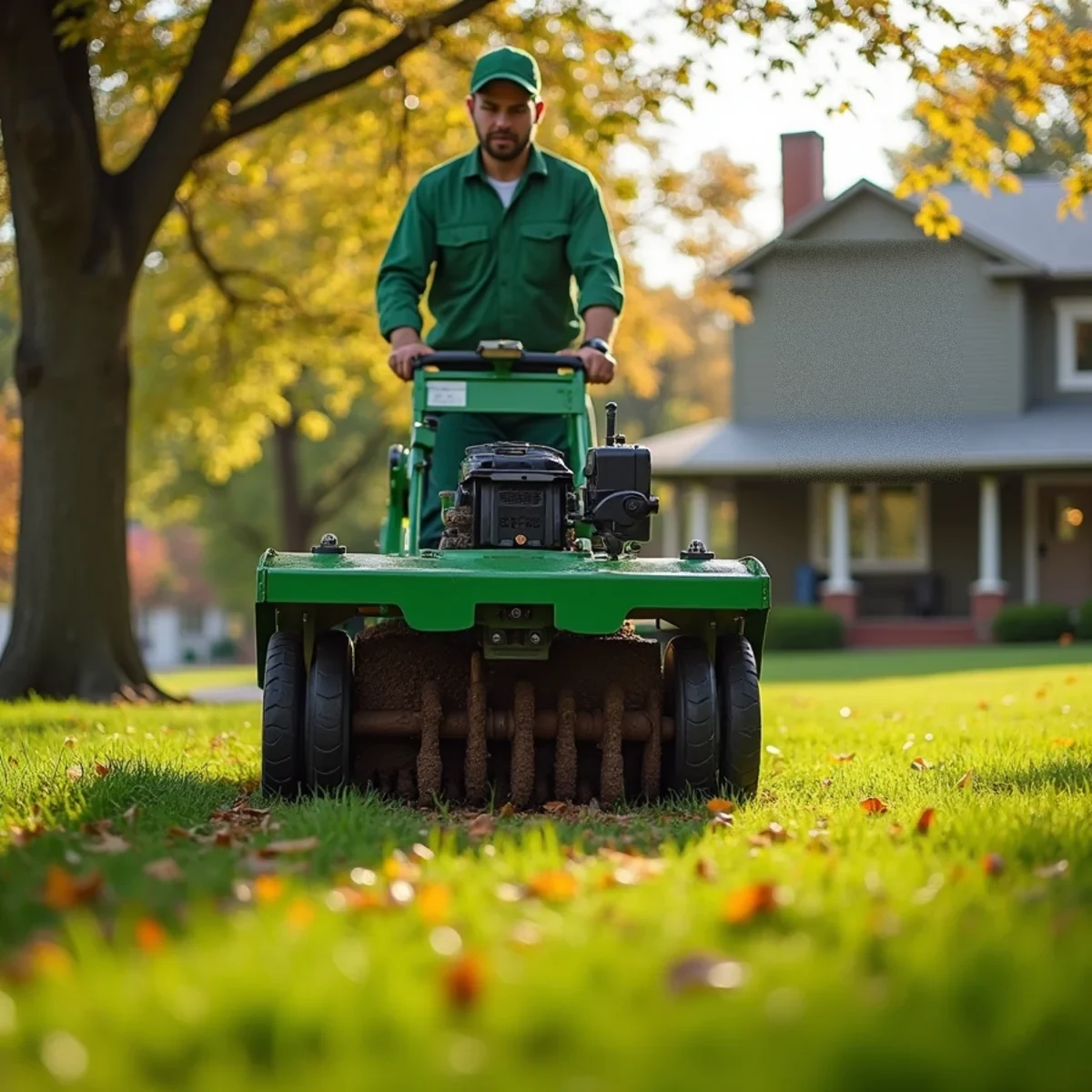
All About Tree & Turf provides lawn aeration in Fort Wayne and across Allen County, usually paired with overseeding. We pull thousands of soil plugs to open compacted ground, then spread a seed blend matched to your sun and shade so new grass drops into those holes and gets real soil contact. Done in the right window, it's the most effective way we know to thicken a thin cool-season lawn without tearing it out and starting over.
Timing is where most people go wrong. Purdue Turfgrass Science puts the best window for seeding cool-season grass in northern Indiana at roughly August 15 to September 15, and fall is also the preferred time to aerate. That's why most of our aeration and overseeding happens from late August through September. If you want the background on why Allen County clay compacts so badly, our clay soil and aeration guide covers it. This page is about how we do the work and what to expect afterward.
Part of our lawn care & maintenance services in Fort Wayne — also see residential lawn care, lawn fertilization & weed control, sod installation, spring cleanup and fall cleanup & leaf removal.
Signs You Need Lawn Aeration & Overseeding
What's Included
- Core aeration with a hollow-tine machine that pulls soil plugs
- Extra passes on compacted paths and high-traffic areas
- Flagging of sprinkler heads, invisible fence wire, and shallow lines
- Overseeding right after aeration so seed settles into the holes
- Cool-season blends of Kentucky bluegrass, tall fescue, and perennial ryegrass
- Shade-tolerant mixes for lawns under mature trees
- Heavier seeding on bare and thin spots
- Plugs left on the lawn to break down naturally
- Written watering and mowing instructions for new seedlings
- Optional fall feeding through our fertilization program
Get a Free Lawn Aeration & Overseeding Quote
Serving Fort Wayne & Northeast Indiana. Call (323) 606-0255 or request an estimate online.
Free estimates Fully insured Family-owned & local
How It Works
- 1Walk the lawnWe check compaction, thatch, sun and shade, bare areas, and drainage, and ask about sprinkler heads, dog fences, and buried lines.
- 2Flag and prepObstacles get flagged, and the lawn is mowed a little shorter than usual so seed can reach the soil.
- 3Core aerateThe aerator pulls plugs across the whole lawn, with extra passes over compacted paths and thin areas.
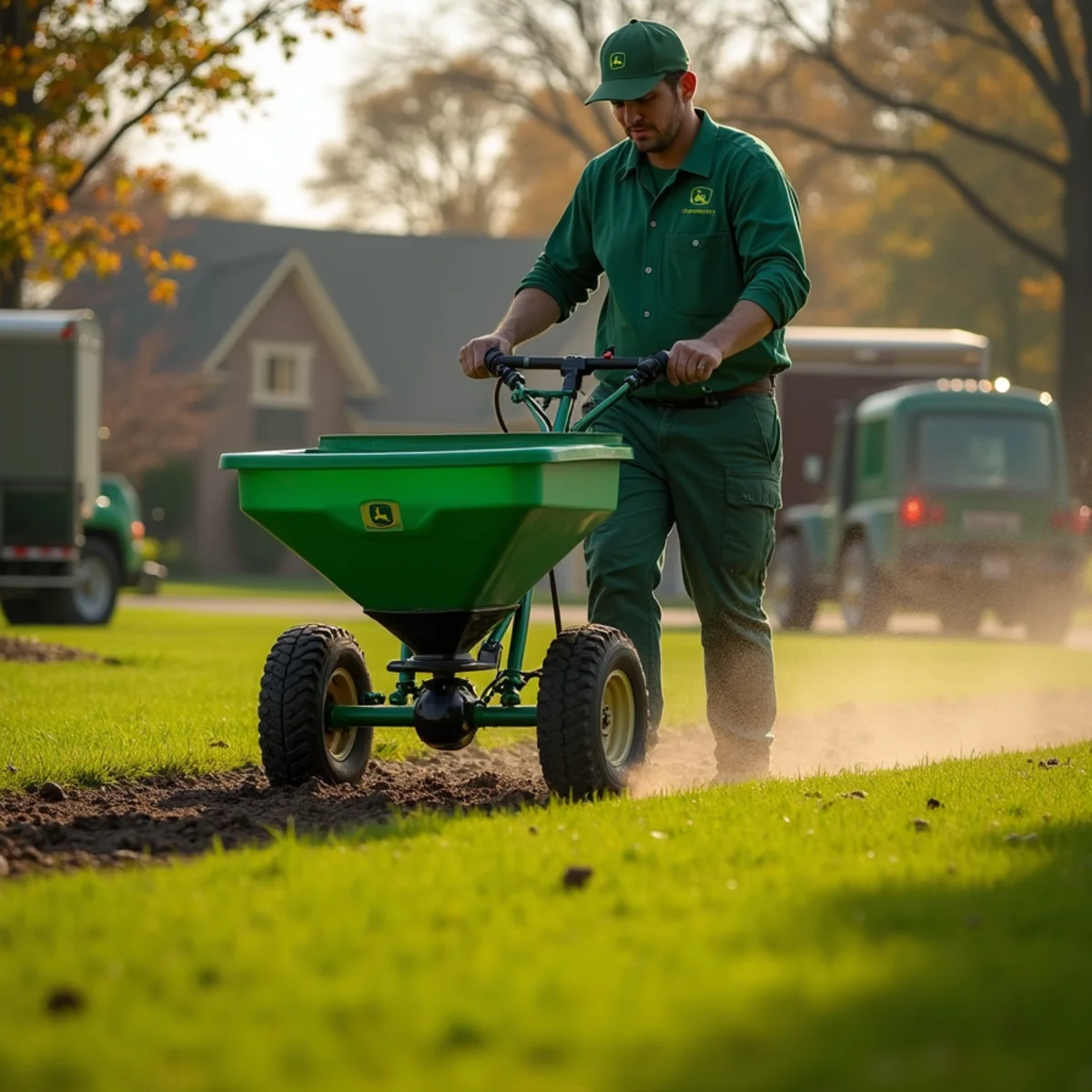
- 4OverseedSeed goes down right after aeration so it settles into the open holes, with a heavier rate on bare spots.
- 5Aftercare handoffYou get a simple watering schedule, when to expect germination, and when the first mow should happen.
Lawn Aeration in Fort Wayne: When to Aerate and Overseed
According to Purdue Turfgrass Science, the optimum window for seeding cool-season grass in northern Indiana runs from about August 15 to September 15, and seeding even a week late can add two to four weeks to establishment. The soil is still warm, nights are cooling off, and weed pressure is dropping, so seedlings get the rest of the fall and the following spring to root before summer heat arrives. That's why our aeration calendar fills up in late August.
Spring aeration is possible, but it's a compromise. Purdue notes that it can disrupt a crabgrass pre-emergent barrier and opens the soil right as weeds are germinating, and spring seedlings head into summer with shallow roots. If you miss the fall window, Purdue actually ranks dormant seeding, spreading seed from late November through March when the soil is too cold for it to sprout until spring, ahead of spring seeding. We'll tell you honestly when waiting is the better call. Our Fort Wayne yard care calendar puts these windows alongside the rest of the year.
Core Aeration and Choosing the Right Seed
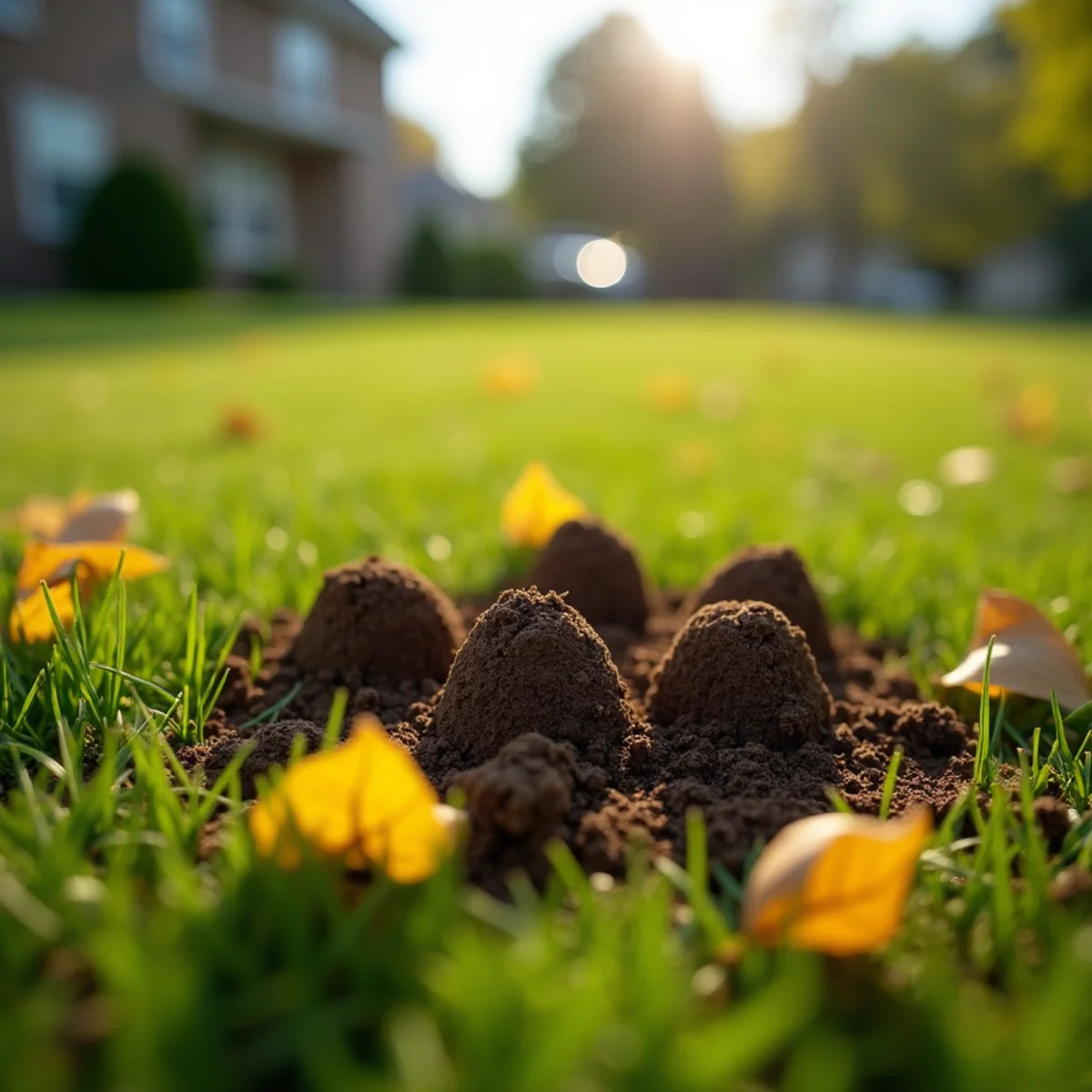
We use core aeration only, which pulls plugs of soil out of the ground. Spike aerators just punch holes by pushing soil sideways, which on clay can press the surrounding soil even tighter. The plugs we leave behind look messy for a week or two, then crumble back into the lawn with rain and mowing. Don't rake them up.
Purdue recommends three cool-season grasses for Indiana lawns: Kentucky bluegrass, tall fescue, and perennial ryegrass. Kentucky bluegrass spreads and repairs itself but is slow to come up from seed. Tall fescue roots deep and handles heat and dry spells well. Perennial ryegrass sprouts fast and fills in quickly but doesn't spread. Most sunny Fort Wayne lawns do best on a blend, and we try to match what's already growing so the new grass doesn't look patchy.
Shade is where expectations matter most. Under maples and oaks, a shade mix built around fine fescues and tall fescue holds up much better than a sun blend, but no grass thrives in deep shade with heavy root competition. If a spot only gets an hour or two of sun, a mulched bed may serve you better than reseeding every fall. And if a lawn is mostly bare, sod installation can be faster than trying to overseed it back.
Aftercare: Watering and Mowing New Seed
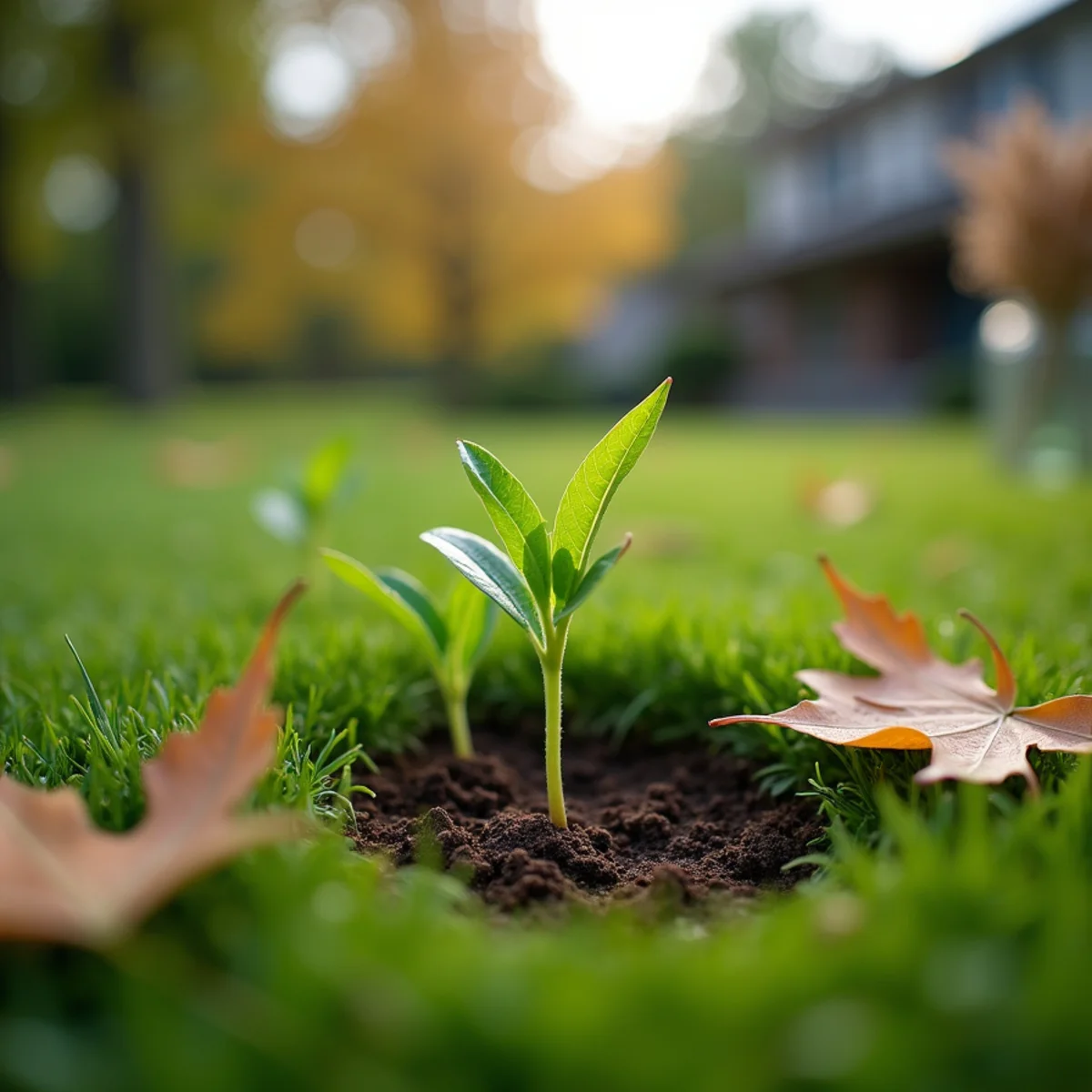
New seed needs the top half inch or so of soil to stay moist until it germinates. That usually means light watering once or twice a day for the first couple of weeks, then tapering to deeper, less frequent watering as the seedlings fill in. Perennial ryegrass can be up in about a week, while Kentucky bluegrass can take two to three weeks or more, so don't stop watering just because the first blades appear.
Hold off mowing until the new grass reaches about 3 to 3.5 inches, then mow with a sharp blade and keep heavy traffic off for a few more weeks. Many broadleaf weed products can injure young seedlings, so check the label and skip weed control on newly seeded areas until the grass has been mowed several times. October leaves landing on new seedlings need to come off gently with a blower or a light rake. If thin spots keep coming back, our guide to brown patches in the lawn covers causes that seed alone won't fix.
On heavy Allen County clay with kids, dogs, or regular foot traffic, aerating once a year is reasonable. A lawn with lighter use may only need it every other year. Overseeding doesn't have to be annual either; how thick the lawn looks tells you more than the calendar does.
What Affects the Price
We give free, itemized estimates — no fake online prices. Your quote depends on:
- Lawn square footage
- Aeration only versus aeration plus overseeding
- Seed blend and seeding rate: bare-area renovation takes more seed than a light overseed
- Number of passes needed on heavily compacted clay
- Slopes, fences, gates, and obstacles to work around
- Whether a fertilization round is added
Why Fort Wayne Chooses Us for Lawn Aeration & Overseeding
Most lawns here grow on Blount and Pewamo clay. We mow on a steady route, keep blades sharp and decks high through summer heat, and time aeration and seeding to Purdue's recommended windows instead of guessing.
How to Get Your Free Lawn Aeration & Overseeding Estimate
- 1Call (323) 606-0255Tell us what's going on. You talk to the crew, not a call center.
- 2We look at the propertyWe walk the job with you, check access, and answer questions on the spot.
- 3Written, itemized estimateLabor and materials separated. No obligation, and no pressure to decide that day.
Lawn Aeration & Overseeding FAQs
When is the best time to aerate a lawn in Fort Wayne?
Can I aerate and overseed in the spring instead?
Does it matter if I use core or spike aeration?
Should I rake up the soil plugs?
How often should I aerate a clay lawn?
How often should I water after overseeding?
What should I do before you come to aerate?
How much does aeration and overseeding cost?
Lawn Aeration & Overseeding Across Northeast Indiana
We provide lawn aeration & overseeding in Fort Wayne and throughout the surrounding communities:
Related Services
Lawn Fertilization & Weed Control
Season-long feeding and weed control tuned to Fort Wayne's clay soils and cool-season turf.
Learn moreLawn Care & Maintenance
Dependable weekly mowing, edging, and cleanup that keeps your lawn sharp all season.
Learn moreSod Installation
Replace a dead, weedy, or torn-up lawn with fresh sod laid on properly prepared soil.
Learn moreTrusted by Fort Wayne Homeowners
Based on verified Google reviews from Fort Wayne & Allen County customers
“Darick and his crew were super professional and did an outstanding job on our landscaping front yard work. Highly recommend.”
Google Review
Fort Wayne, IN
“They took down a 40-foot tree hanging over a structure and cleaned everything up. Very happy with their service.”
Google Review
Allen County, IN
“On time, fair price, and they left the yard cleaner than they found it. Exactly what you want from a local crew.”
Google Review
New Haven, IN
Ready for Lawn Aeration & Overseeding?
Family-owned crews serving Fort Wayne & Northeast Indiana. Call now or request a quote — we answer the emergency line 24/7.
Free estimates Fully insured Family-owned & local