
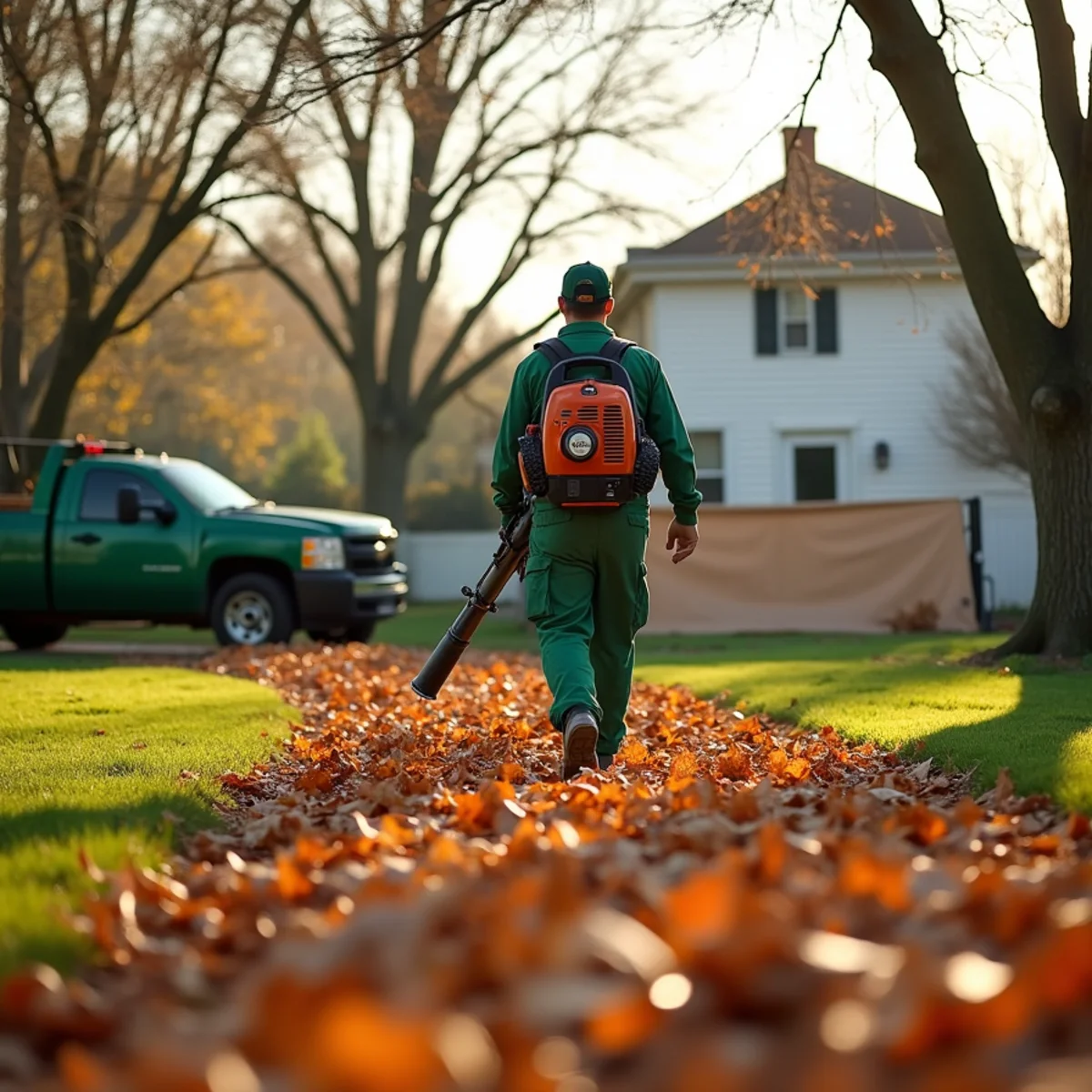
Fall cleanup cost in Fort Wayne comes down to how much material there is and how many trips it takes to deal with it. The biggest price factors are lot size, how many trees drop on the yard and what kind they are, whether it's one visit or two, how much bed work is included, and whether leaves are hauled away or raked to the curb. Two houses on the same street can get very different quotes for those reasons alone.
We don't publish a flat price for fall cleanups, because a fair one isn't possible without seeing the yard. What we can do is explain what drives the number, so you can read a quote, compare it with others, and decide what to handle yourself. Leaf drop here usually runs from mid-October into late November, and that timing shapes almost every factor below.
What Drives Fall Cleanup Cost in Fort Wayne
Most companies price a fall cleanup by the visit after a walk-through, and some break out labor time and disposal. However it's written, the estimate is built on these factors:
- Lot size and layout: more ground takes more time, and fences, gates, slopes and lots of beds slow a crew down more than open lawn does.
- Number and type of trees: a yard under three big oaks is a very different job from a yard with one young maple.
- Leaf condition: dry leaves blow and load quickly. Wet, matted leaves are heavier and take longer to move.
- Number of visits: one big cleanup or a two-round plan.
- Scope beyond leaves: perennial cutback, bed cleanout, fallen sticks and a final mow.
- Where the leaves go: haul-away and disposal, or raking to the curb for city collection.
Leaf Volume: Your Trees Set the Price
The trees on and around your lot matter more than square footage. A big lot with a few young trees can cost less to clean than a small city lot under a canopy of mature oaks and maples, including the neighbor's trees that drop on your side of the fence.
Species matters too. Many maples drop most of their leaves over a few weeks from late October into early November. Oaks hang on longer, and many keep a share of their leaves into late November, so a yard under oaks often needs a later visit. Thornless honeylocust drops tiny leaflets that mostly sift into the turf, while big, leathery leaves like oak and sycamore pile up and mat.
Weather changes the job as well. A dry, breezy week makes leaves easy to move. A cold rain followed by a hard freeze glues them to the lawn, and an early snow can bury them until a muddy thaw. Wet leaves weigh more, fill more loads and take longer, which is one reason waiting until the last possible week rarely saves money.
One Visit or Two? How Timing Changes the Price
A single cleanup after most leaves are down is the simplest option and usually the lowest single bill. The catch is that leaves may sit on the lawn for weeks first, and a late visit often means a heavy, wet layer.
A two-round plan, one visit in late October and a second in mid-to-late November, costs more in total than one visit, but each round is lighter and faster. It suits yards under big oaks or with lots of trees, and it keeps leaves from matting on the grass for weeks at a time.
The cheapest middle ground is to mulch-mow light leaf cover through October on your regular mowing schedule and book one full cleanup at the end. Michigan State University turf research found that mowing leaves into the lawn returned nutrients without creating thatch, so as long as you can still see grass through the leaves, mulching works. Our guide to mulching, bagging or raking leaves explains when it works and when leaves need to come off.
Want a straight price for your yard? We'll walk the property, look at the trees that drop on it, and give you a written quote that spells out visits, bed work and haul-away. Call (323) 606-0255 for a free estimate.
Haul-Away vs. Curbside Collection
Where the leaves end up is one of the clearest line items on a quote.
- Raking to the curb: inside City of Fort Wayne limits, leaves can go to the curb for the city's seasonal leaf collection. This usually costs less because there's no hauling or disposal. The catch is timing. The program's dates, areas and setout rules change from year to year, so check the city's website for the current schedule before you plan around it, and keep piles behind the curb, not in the street, where they clog storm drains.
- Haul-away: the crew loads the leaves and takes them off the property. You pay for the extra labor, trips and disposal, but there's no pile out front waiting on a pickup window. It's also the usual choice outside city limits.
If you'd rather haul your own, the City of Fort Wayne's Biosolids Handling Facility at 6202 Lake Avenue accepts yard waste. Check its current hours and rules before you load up.
Beds, Limbs and the Final Mow: What's Included
A leaf cleanup and a full fall cleanup aren't the same thing, and quotes that look far apart are often covering different work. A complete fall cleanup and leaf removal visit from us typically includes:
- Leaves cleared from the lawn, beds, fence lines and hard surfaces
- Spent perennials cut back and beds cleaned out
- Fallen sticks and small limbs picked up
- A final mow at winter height
- Walks, drives and patios blown clean
Heavy bed work adds time. Long foundation beds full of perennials and ornamental grasses take longer than a few shrubs in mulch. Leaving some perennials standing over winter for seed heads and birds is a fair choice and trims the time a little. Large storm limbs or a downed tree are tree work, priced separately from a cleanup.
One more thing to know: we don't clean gutters. Plenty of fall checklists, including our own fall leaf cleanup checklist for Allen County, recommend clearing them once the trees are bare, so plan that as a separate job. Don't assume gutters are in any company's cleanup quote unless the quote says so in writing.
Bundling the Final Mow, Aeration and Overseeding
Fall cleanup often costs less as part of a package. If you already have a mowing service, adding leaf work to regular visits keeps leaves from piling up while the crew is on site anyway. Lawn care and maintenance visits that mulch light leaf cover through October can shrink the final cleanup considerably.
Aeration is the other natural pairing. According to Purdue Turfgrass Science, fall is the preferred aeration window, and on compacted Blount and Pewamo clay it does real good. Timing matters, though. Seeding after aeration goes best between August 15 and September 15 in northern Indiana, well before most leaves fall, so lawn aeration and overseeding comes first and the cleanup follows. Booking both with one company makes it easier to keep leaves off the new seedlings, since a thick leaf layer can smother young grass.
How to Compare Fall Cleanup Quotes
When quotes come in far apart, line them up on the same points before you pick the cheapest:
- How many visits are included, and roughly when?
- Are beds cleaned out and perennials cut back, or only the lawn?
- Are leaves hauled away or left at the curb, and is disposal included?
- Is a final mow included?
- What happens if leaves are still falling after the last visit?
- Is the company insured, and will it provide a certificate?
Be wary of a price given over the phone without anyone looking at the trees, or a quote with no scope written down. Those are the jobs that end with leaves still in the beds and an argument about what was promised.
We handle fall cleanups and leaf removal across Fort Wayne and Aboite, with one- or two-visit plans and haul-away or curbside options spelled out before we start. Call (323) 606-0255 for a free estimate.
Need a hand with this?
Fall Cleanup & Leaf Removal in Fort Wayne & Northeast Indiana
If you'd rather have it handled, our family-owned crew does this work every week. Estimates are free and written out.
Frequently Asked Questions
Is it cheaper to mulch leaves than to pay for removal?
When should I book a fall cleanup in Fort Wayne?
Does a fall cleanup include gutter cleaning?
Can I save money by raking some of the leaves myself?
Do I need a fall cleanup if I don't have many trees?
All About Tree & Turf Services
Family-owned landscaping and tree service in Fort Wayne, led by Darick Van. We share what we've learned working on real Northeast Indiana properties. Questions? Call (323) 606-0255.