
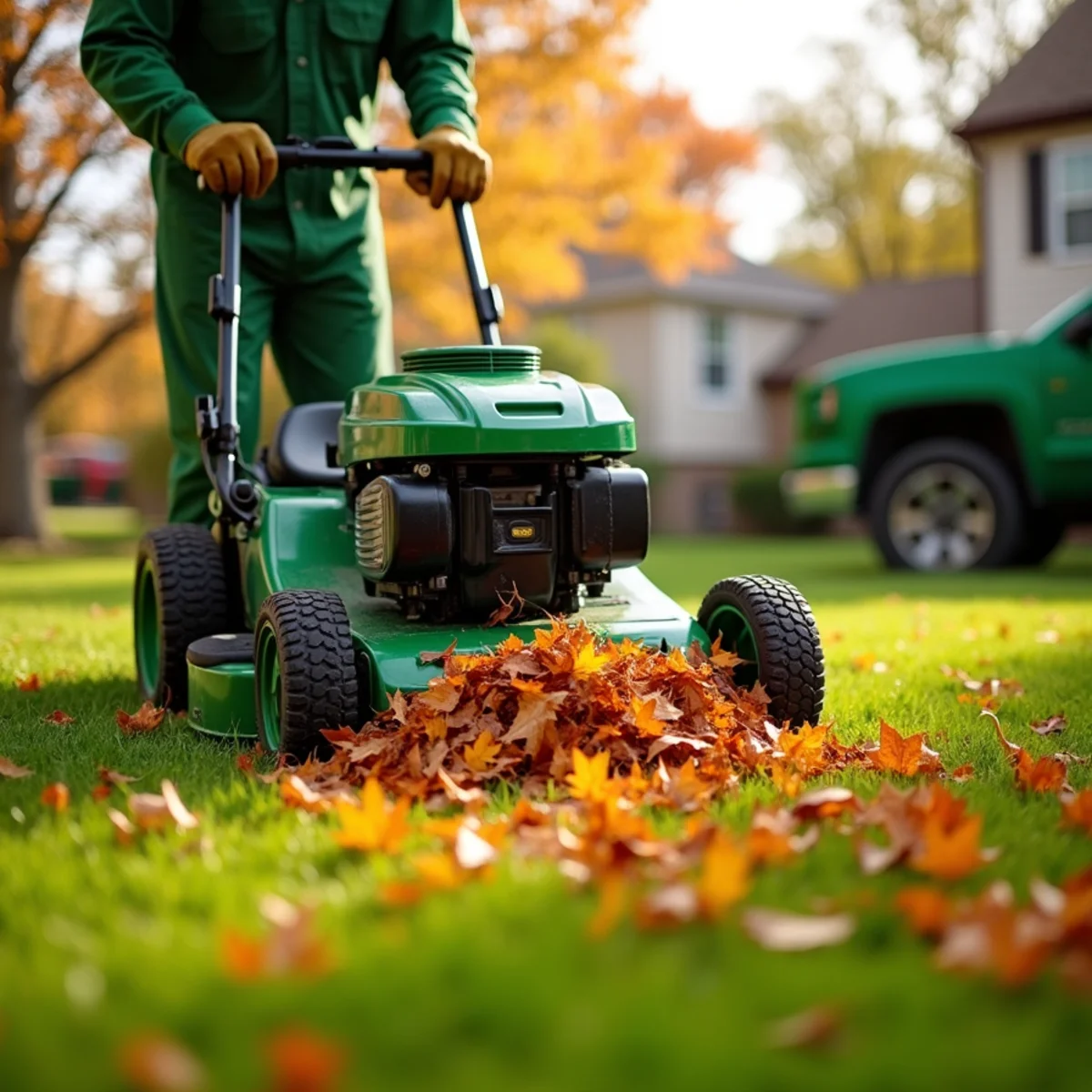
In the mulching leaves vs. bagging debate, mulching wins for most lawns most of the time. Shredding leaves into the grass with your mower feeds the soil, saves hours of raking and, according to Michigan State University turf research, does not cause thatch. Bagging is the better choice when the leaves are too deep, too wet, sitting on new grass or carrying leaf disease.
Most Fort Wayne yards end up using both. Leaf drop here typically runs from mid-October through late November, and the right approach changes as the season goes on. Here is how to decide week by week, and what to do with the leaves you do not keep.
Mulching Leaves vs. Bagging: What the Research Says
Michigan State University turfgrass researchers studied mowing leaves directly into lawns over several seasons. Their findings are a big reason so many turf specialists now recommend mulching:
- Shredded leaves returned nutrients and organic matter to the soil as they broke down
- Mulching leaves into the turf did not create a thatch problem
- Over roughly three years, dandelion and crabgrass dropped sharply in the mulched lawns
- Mowers handled leaf layers up to about six inches deep at a time
The same research is a reminder of what not to do: whole leaves left matted on the lawn smother the grass. Mulching works because the pieces are small enough to sift down between the blades, not because leaves are harmless lying on top.
Should I Mulch My Leaves? When Mulch-Mowing Works
Mulching works best when these conditions line up:
- Light to moderate cover. You can still see grass, or the leaf layer is only a few inches deep.
- Dry leaves. Dry leaves shatter into small flakes. Wet leaves clump, clog the deck and get dropped back in mats.
- A sharp mulching blade. A dull blade bruises leaves instead of cutting them. A mulching blade or kit helps, though a sharp standard blade can work with extra passes.
- Several passes. Mow in one direction, then cross it. Two or three passes are often needed in heavier spots.
- The right result. When you are done, you should see grass through the shredded leaves, with pieces roughly the size of a dime or smaller.
Raise the deck a notch so the mower has room to chop, and slow down through the heaviest areas. Mulching a little every week while leaves are falling is far easier than tackling a foot of leaves all at once.
When Bagging or Removing Leaves Is the Better Choice
Mulching is not the answer every week. Remove leaves instead when:
- The drop is heavy. Big oaks and maples can drop far more than a mower can handle in one go. If the shredded layer still hides the grass after a few passes, take the excess away.
- Leaves are wet and matted. After a rainy week, leaves stick together into an airless layer. Rake or blow them off, or wait for a dry day.
- You just seeded. Shredded leaves can smother young grass sown in late summer or early fall. Keep leaves off new seedings with a light rake or blower, and do not run a mower over tender seedlings before they are ready.
- Leaves are diseased. Maples with tar spot, the black, tar-like spots on the leaves, and apple or crabapple trees with apple scab carry the disease on fallen leaves. Mulching those leaves keeps them right under the trees, so they are better raked up and removed.
If you aerated and overseeded this fall, protecting that investment matters. Core aeration and overseeding is timed for late summer and early fall here, right before leaf drop, so plan to clear leaves from those areas regularly until the new grass is well established.
Want leaves handled on a schedule instead of every weekend? Our fall cleanup and leaf removal crews mulch what the lawn can use and haul away the rest. Call (323) 606-0255 for a free estimate.
Bagging, Composting and Using Leaves in Beds
Bagging with the mower
A bagging attachment chops leaves and collects them at the same time, which gives you fine material for compost or beds. It is slower than mulching because you stop to empty the bag, but it handles heavier drops and leaves a clean lawn behind.
Composting
Shredded leaves break down much faster than whole ones. Mix them with green material like grass clippings or garden trimmings and turn the pile now and then. Leave diseased leaves out of compost you plan to spread near the same trees.
Raking shredded leaves into beds as mulch
Shredded leaves make a good free mulch for planting beds over winter. Keep the layer around 2 to 3 inches and pull it a few inches back from tree trunks, shrub stems and perennial crowns. Whole, unshredded leaves tend to mat into a wet layer, so shred them first.
Blowing Leaves to the Curb in Fort Wayne
Curbside collection is convenient, but the rules change. The City of Fort Wayne runs a leaf collection program, and the details, like dates, areas and how leaves should be set out, change from year to year. Check the city's website for the current program before you blow anything to the curb. If you live outside city limits, your town or township may handle leaves differently or not at all.
Wherever you live, keep leaves out of street gutters and storm drains. Leaves washed into drains clog them and contribute to street flooding during fall rains, and the nutrients they release as they break down end up in local waterways. Pile leaves behind the curb, not in the gutter line.
If you are hauling leaves yourself, the City of Fort Wayne's Biosolids Handling Facility at 6202 Lake Avenue accepts yard waste. Check with the city for current hours and any requirements before you load the truck.
Timing: A Two-Round Approach for Fort Wayne
Leaf drop in Fort Wayne usually runs from mid-October to late November, and not every tree lets go at once. Many trees are mostly bare by early November, while oaks often hang on until late in the month. A two-round plan fits that pattern:
- Through October and early November: mulch-mow light leaf cover on your regular mowing schedule, every week if leaves are coming down steadily.
- First major cleanup: once the earlier trees are mostly bare, remove heavy drifts from the lawn, beds and fence lines.
- Second major cleanup in late November: after the oaks and other late trees finish, clear what is left and give the lawn a final mow.
- Before snow: make sure no thick, wet layers are left on the turf, since leaves pinned under snow are a common cause of snow mold.
For the full fall to-do list, including gutters, beds and the final mow, see our fall leaf cleanup checklist for Allen County. If gray, matted patches show up next spring anyway, our guide to brown patches in the lawn covers snow mold and how to fix it.
Is It OK to Leave Leaves on the Lawn?
A light scatter that gets mulched in, yes. A whole layer left in place through winter, no. Matted leaves block light, hold moisture against the grass and leave dead, moldy patches in spring. The practical middle ground is to leave leaves in beds and natural areas where they do not cover turf, and keep the lawn itself mostly clear.
Common Leaf Mistakes and What Cleanup Costs Depend On
- Waiting for every last leaf to fall before doing anything, then facing a soaked, matted layer
- Mulching wet leaves and leaving clumps that smother the grass underneath
- Blowing leaves into the street gutter, where they clog storm drains
- Piling whole leaves against the house, around tree trunks or deep over perennials
- Mowing over newly seeded areas before the seedlings can handle it
If you hire leaf work out, it is usually priced by time and volume rather than a flat rate. The number and size of trees, how many visits the season takes, whether leaves are mulched on site or hauled away, how many beds and fence lines need hand work, and disposal all move the price. Regular light visits often cost less overall than one huge cleanup at the end of November.
We handle leaf cleanups alongside regular lawn care and maintenance visits throughout Fort Wayne and Allen County, so the lawn is never buried for long. Call (323) 606-0255 for a free estimate.
Need a hand with this?
Fall Cleanup & Leaf Removal in Fort Wayne & Northeast Indiana
If you'd rather have it handled, our family-owned crew does this work every week. Estimates are free and written out.
Frequently Asked Questions
Is mulching leaves bad for your lawn?
Can I mulch wet leaves?
Do I need a special mower to mulch leaves?
How many times should I clean up leaves in the fall?
Where can I take yard waste in Fort Wayne?
All About Tree & Turf Services
Family-owned landscaping and tree service in Fort Wayne, led by Darick Van. We share what we've learned working on real Northeast Indiana properties. Questions? Call (323) 606-0255.