
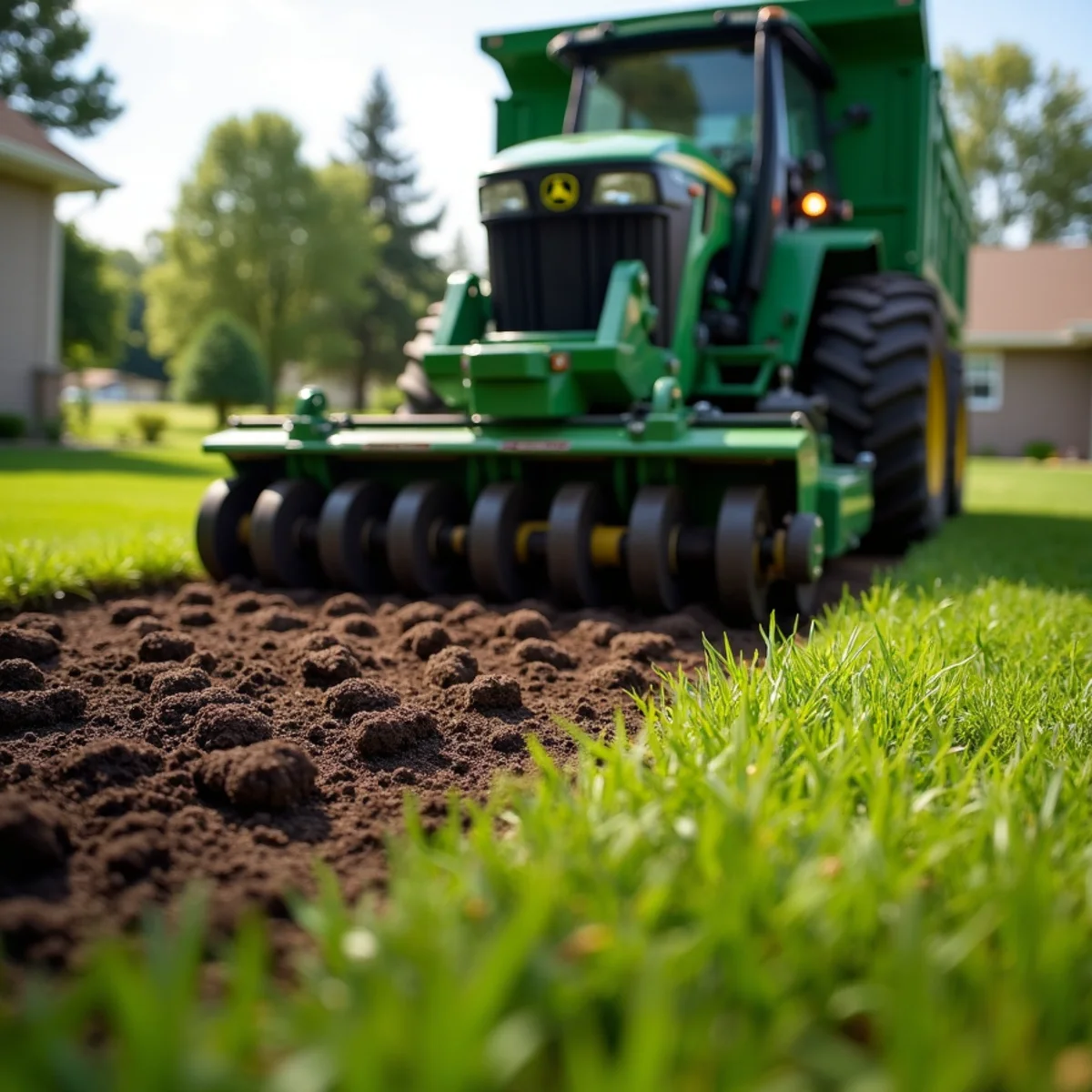
You water, you fertilize, you mow at the right height, and the lawn still looks tired and thin. If that sounds familiar in Fort Wayne, the problem is almost certainly beneath your feet. Much of Allen County sits on Blount and Pewamo clay soils, and clay behaves very differently from the loamy soil grass prefers.
The fix is not more fertilizer. It is opening up that dense soil so roots, water, and air can move again. That is what core aeration does, and in our clay it is one of the highest-value things you can do for a lawn.
What Clay Soil Does to Grass
Clay is made of extremely fine particles that pack tightly together. Add foot traffic, mowers, and our freeze-thaw cycles, and the soil compacts into a dense layer that roots struggle to penetrate.
- Compaction squeezes out the air pockets roots need to breathe
- Poor drainage leaves water sitting on the surface, drowning roots and inviting disease
- Shallow roots form because they cannot push down, leaving grass vulnerable to summer heat
- Locked-out nutrients mean fertilizer sits unused because roots cannot reach it
The frustrating part is that all this happens invisibly. From above, you just see a thinning lawn and blame the wrong things.
How Core Aeration Fixes It
Core aeration uses a machine that pulls thousands of small plugs of soil out of the ground, leaving open channels. Those channels do the work: they let air, water, and nutrients reach the root zone, and they give roots room to grow deeper. The plugs left on the surface break down and return organic matter to the soil.
Core aeration, which physically removes plugs, is far more effective in clay than spike aeration, which just pokes holes and can actually make compaction worse by pressing soil aside. In Blount and Pewamo clay, always insist on core aeration.
Ready to break the cycle on a compacted clay lawn? Call (323) 606-0255 or request a free estimate. We will assess your soil and build an aeration and overseeding plan that actually works in Fort Wayne conditions.
Why Timing Matters: Aerate in Fall
For the cool-season grasses that make up most Fort Wayne lawns, early fall is the ideal window for aeration. The soil is still warm enough for roots to grow, the air is cooling, and there is less weed competition. Our roughly 173-day growing season gives new grass time to establish before winter if you act in the fall rather than waiting for spring.
Fall aeration also pairs perfectly with overseeding, which brings us to the real power move.
Aeration Plus Overseeding: The One-Two Punch
The open holes from aeration are perfect seed beds. Overseed right after aerating and the seed drops into those channels, making excellent soil contact and germinating far better than seed scattered on hard clay.
- Core aerate to open the soil and relieve compaction
- Overseed immediately so seed settles into the fresh holes
- Follow with a starter feeding through our lawn fertilization and weed control program
- Water consistently while the new grass establishes
Done together in the fall, this routine thickens a thin lawn, crowds out weeds, and builds the deeper root system that survives a Fort Wayne summer.
Where Aeration Fits in Overall Lawn Care
Aeration is not a one-time cure. In heavy clay, an annual fall aeration keeps compaction from creeping back, and it works best as part of a full lawn care and maintenance routine. If your lawn also puddles badly after every rain, the issue may go beyond compaction into true drainage problems, which our yard drainage solutions can address.
We help homeowners revive clay lawns across Woodburn, Fort Wayne, and the surrounding communities. As a family-owned company, we would rather fix the underlying soil than sell you fertilizer that clay will not let your grass use. Call (323) 606-0255 to get started.
What to Expect After Aeration
Aeration is not dramatic to look at, which leads some homeowners to wonder whether it worked. The plugs left on the surface look messy for a week or two, then break down on their own; there is no need to rake them up. Resist the urge to remove them, because they are returning valuable soil and organic matter to the lawn.
- Expect the soil plugs to dissolve back into the lawn within one to three weeks
- Keep new overseeded areas consistently moist until the grass is established
- Hold off on heavy foot traffic and mowing until new seedlings are a few inches tall
- Plan to repeat aeration each fall, since clay recompacts over time
The payoff shows up over the following weeks and into next season: thicker turf, deeper color, and a lawn that shrugs off summer heat instead of going crispy in July. Because clay is a permanent feature of Allen County yards, the best results come from making fall aeration a yearly habit rather than a one-time rescue.
Frequently Asked Questions
Why does my Fort Wayne lawn stay thin no matter what I do?
When is the best time to aerate a lawn in Fort Wayne?
Is core aeration better than spike aeration for clay?
Should I overseed when I aerate?
All About Tree & Turf Services
Family-owned landscaping and tree service in Fort Wayne, led by Darick Van. We share what we've learned working on real Northeast Indiana properties. Questions? Call (323) 606-0255.