
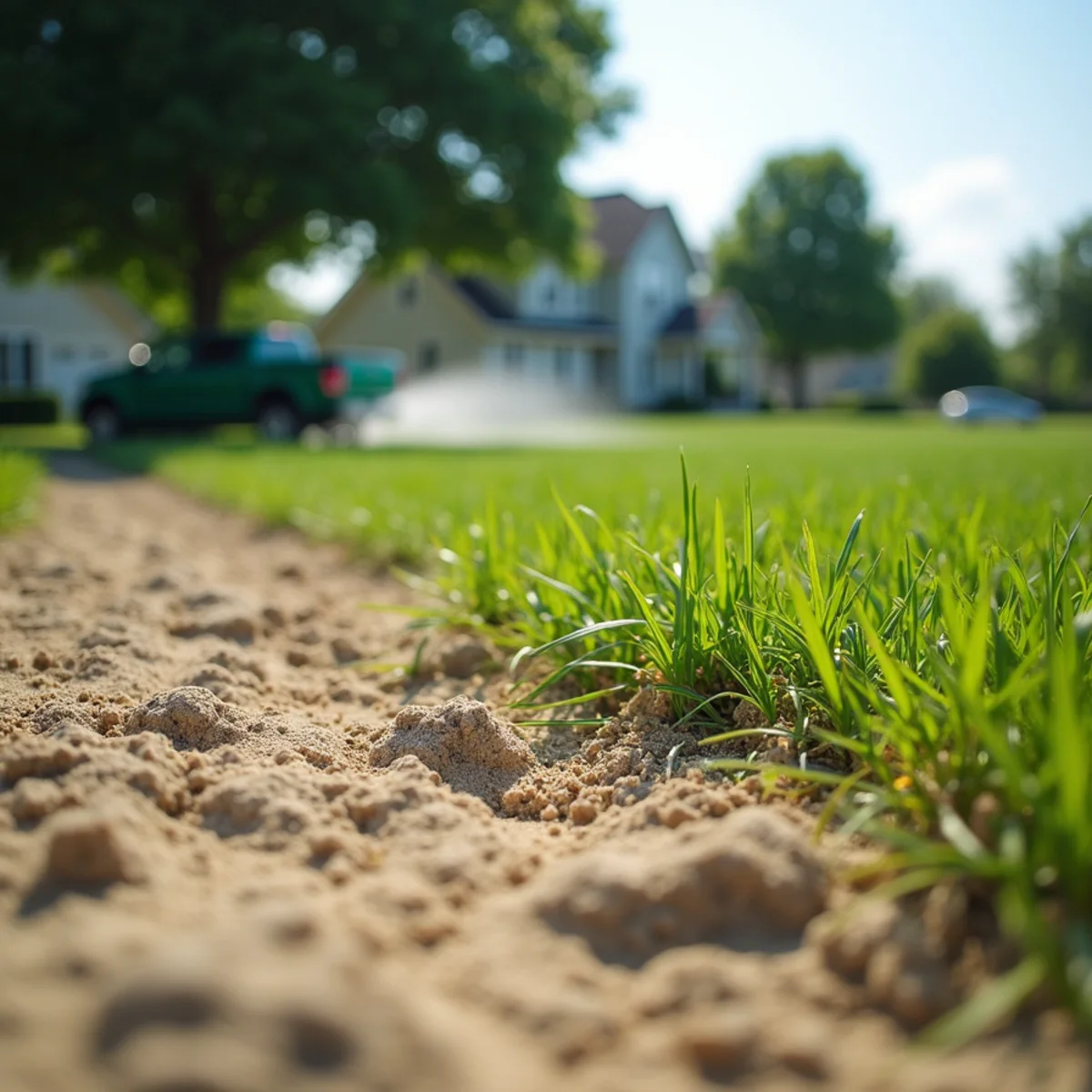
The soil under a lawn in Fort Wayne and a lawn near Knox or Michigan City could not be more different. Around Fort Wayne we fight heavy Blount and Pewamo clay that holds water. Out toward the Kankakee Sands and the Lake Michigan dunes, homeowners deal with the opposite extreme: light, sandy soil that water pours straight through.
Sandy soil has real advantages. It never gets waterlogged, it warms up early in spring, and it is easy to dig. But growing a thick, green lawn on it takes a different playbook than the clay-country advice you will find in most guides. Here is how to do it right.
Why Sandy Soil Fights Your Lawn
The big particles in sandy soil leave large gaps, which is why water and air move through it so freely. That same open structure is the problem. Water drains below the root zone before the grass can drink it, and dissolved nutrients wash right along with it. Sandy soils also hold little organic matter, so they stay hungry and drought-prone.
- Drought stress shows up fast, sometimes within days of the last rain
- Fertilizer leaches away before the grass can use much of it
- Low organic matter means fewer of the microbes and nutrients healthy turf depends on
- The surface can get so dry it repels water instead of absorbing it
Watering: Different Rules Apply
The standard advice to water deeply and infrequently is built for soils that hold moisture. Sandy soil cannot hold a deep reserve, so a single long soak mostly drains past the roots and is wasted. On sand you generally water more often but with less each time, keeping moisture in the shallow root zone where the grass can actually reach it.
Water early in the morning to cut evaporation, and pay attention to how fast your lawn dries out compared to a neighbor on heavier ground. In a hot, dry stretch, sandy lawns may need attention several times a week while clay lawns coast. Our lawn care and maintenance team can help you dial in a watering rhythm that fits your specific soil and sun exposure.
Not sure whether your sandy lawn is thirsty or overfed? Call (323) 606-0255 for a free estimate and a straight answer about what your yard actually needs.
Build Organic Matter, the Long-Term Fix
The single best thing you can do for sandy soil is add organic matter. Compost and other organic material act like a sponge, holding onto both water and nutrients so they stay in the root zone instead of draining away. This is the difference between constantly propping up a struggling lawn and building a soil that supports itself.
- Top-dress with a thin layer of quality compost once or twice a year, working it into the surface where you can.
- Leave grass clippings on the lawn when you mow, so they break down and feed the soil.
- Mulch fallen leaves back into the turf in fall rather than bagging every one.
- Overseed regularly, because a dense stand of grass builds organic matter on its own through root turnover.
Fertilizer: Little and Often Beats All at Once
Because sandy soil leaks nutrients, dumping a big dose of fertilizer at once mostly feeds the groundwater, not your grass. The smarter approach is split applications: smaller amounts spread across the growing season so the grass gets a steady supply and less washes past the roots. Slow-release formulations are especially well suited to sand for the same reason.
This is also the more responsible approach in northwest Indiana, where sandy soils and shallow water tables mean over-fertilizing can reach groundwater fast. Our lawn fertilization and weed control program is built around the right product, at the right rate, at the right time. As a family-owned company we are also honest about where we stand: we are fully insured and pursuing our Indiana OISC 3a and 3b applicator licensing, and we will always tell you plainly what we can and cannot do for you today.
Right Grass, Right Ground
Grass selection matters on sand. Turf-type tall fescues send down deep roots that chase moisture better than shallow-rooted varieties, which makes them a strong choice for the drier lots around Knox and out toward Michigan City. Matching the seed to the soil sets you up to succeed instead of fighting the ground every summer.
Sandy soil is not a curse, it is just a different set of rules. Water a little more often, feed a little at a time, and keep building organic matter, and you can grow a lawn on the dunes that holds its own with anything in the state. Call us and we will help you get there.
It helps to remember why the sand behaves this way. The dunes and the Kankakee Sands region were shaped by glaciers and old lakebeds, leaving soils that are naturally light and fast-draining. You are not going to change that geology, and you should not try to. The winning strategy is to work with the sand, building a resilient lawn that tolerates the quick-draining ground rather than fighting for a clay-country result the soil will never give you.
Frequently Asked Questions
How often should I water a lawn on sandy soil?
What is the best way to improve sandy soil for grass?
Why does fertilizer seem to disappear on my sandy lawn?
What grass grows best in Indiana's sandy soils?
All About Tree & Turf Services
Family-owned landscaping and tree service in Fort Wayne, led by Darick Van. We share what we've learned working on real Northeast Indiana properties. Questions? Call (323) 606-0255.