
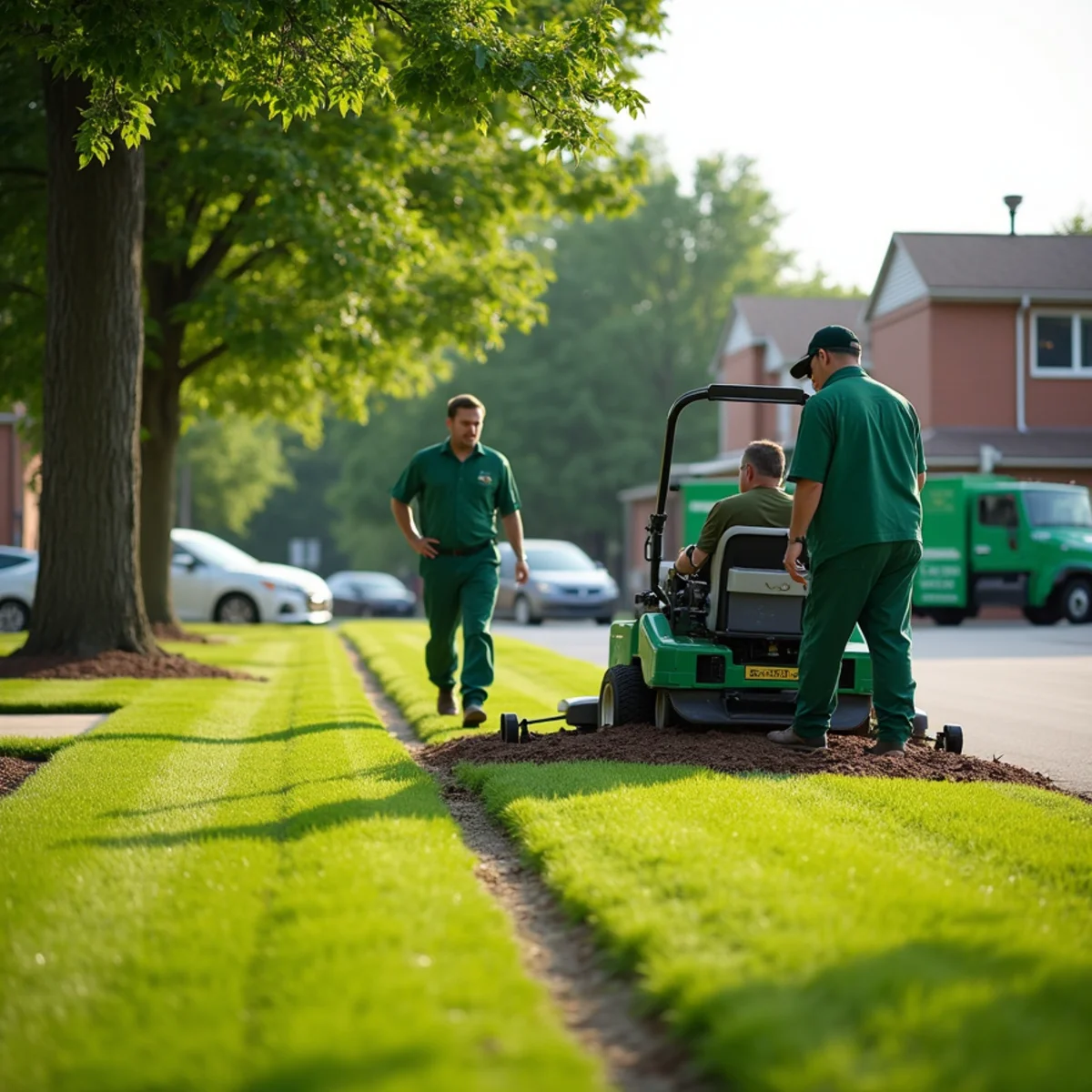
The right commercial lawn care company in Fort Wayne puts the full scope in writing, proves its insurance before work starts, documents its visits, and spells out how storms, seasonal changeovers, and cancellation work. Price matters, but only once every bidder is pricing the same scope. Use the checklist below to vet bidders and review the contract before you sign.
Our property manager's guide to commercial grounds maintenance covers why one year-round vendor and a written service agreement make sense. This post is for the hiring step itself: what to ask, what to verify, and what belongs in the contract, whoever you end up choosing for commercial lawn care.
Define the Scope Before You Ask for Bids
Most bad vendor relationships start with a vague scope. Ask three companies to mow and maintain the property and you'll get three interpretations and three prices you can't compare. Write down what you expect first:
- A site map with zones: turf areas, parking-lot islands, entrance beds, retention-pond edges, tree rows, and any areas excluded
- Mowing standards: frequency, cutting height, string trimming, edging of walks and curbs, and blowing clippings off pavement
- Bed care: weeding frequency, mulch refresh timing, shrub pruning cycles, and seasonal color if you want it
- Turf programs: fertilization, weed control, and aeration, with the number of rounds per year
- Cleanups: spring and fall cleanup timing, the number of leaf rounds, and litter pickup
- Trees: routine clearance pruning over walks and drive lanes, versus larger tree work quoted separately
- Winter: whether snow and ice are part of this contract or a separate agreement
Add the site rules a crew needs to know: preferred service days, hours to avoid mowing near entrances or patient drop-offs, quiet times next to homes, where trucks and trailers may park, and how gate codes or access are handled. These details rarely show up in a bid unless you put them in the scope.
Send the same document to every bidder and walk the site with each of them. Then a lower price means a sharper bid, not a smaller scope.
Insurance and Paperwork to Verify
Ask every finalist for a certificate of insurance before you sign, ideally issued by their agent or carrier and showing current policy dates. Then check what it actually covers.
- General liability for property damage and injuries caused by the work, like a mower throwing a rock through a storefront window
- Commercial auto for the trucks and trailers parked in your lots
- Workers' compensation for the crew, so an on-site injury doesn't land on you
- Additional insured status. Being named as an additional insured on the contractor's liability policy is common practice in commercial work, and many owners and managers require it. Requirements vary, so ask bidders early whether they can provide it.
- Renewal dates. Note when each policy expires and request an updated certificate at renewal.
- Product applications. If fertilization or weed control is in the scope, ask who applies products, how they follow Indiana OISC requirements, and whether that work is subcontracted.
A bidder who hesitates to send a certificate has answered your question. For the record, we're fully insured and provide our certificate on request.
Reporting and Communication
On a commercial site, you're rarely there when the crew is. Reporting is how you know the work happened and how problems reach you before a tenant complains. Ask for:
- A visit record showing the date, time, and work performed
- Photos of problems the crew finds, such as a damaged sign, a dead shrub, or vehicle ruts in the turf
- A named point of contact, plus a backup, who actually answers the phone
- A clear process for complaints, with a response window for fixes
- Written approval before any work that costs extra
Ask to see a sample report during the bid. A company that already documents its visits can show you one on the spot. It's also worth agreeing on a periodic site walk with the account lead, for example at each change of season, to review what's working and adjust the scope before small problems become budget surprises.
Comparing grounds bids for a Fort Wayne property? We'll walk the site with you, price your written scope line by line, and provide our certificate of insurance on request. Call (323) 606-0255 for a free estimate.
Storm Response and Seasonal Transitions
After a Storm
Fort Wayne averages roughly 39 thunderstorm days a year, and summer wind regularly drops limbs onto lots, walks, and turf. Your contract should say how quickly someone checks the site after a major storm, which cleanup is included and which is billed, how hanging limbs and downed trees get handled, and who you call after hours. If your grounds vendor also handles storm damage tree cleanup, you avoid hunting for a tree crew while a limb blocks a drive lane.
Changeovers Between Seasons
The weak spots in many contracts are the seams between seasons: when mowing starts and stops, when spring cleanup happens, how many fall leaf rounds are included, and when winter coverage begins and ends. Northeast Indiana's growing season runs about 173 days, but weather moves the dates every year, so the contract should define what triggers each change rather than fixed calendar days alone.
Ask each bidder to lay out a 12-month calendar for your site. If snow removal and ice management is part of the deal, confirm when drive-edge stakes go in and where snow will be piled. Our comparison of seasonal snow contracts and per-push pricing covers that side of the agreement.
Contract Length, Renewal and Termination
- Term: A one-year agreement lets both sides prove the fit. Multi-year terms can steady pricing, but sign one only after a vendor has earned it.
- Auto-renewal: Know whether the contract renews automatically and the deadline for giving notice if you don't want it to.
- Termination: Look for a clause that lets either side end the agreement with written notice, plus a clear way to raise and fix performance problems first.
- Price changes: Find out how pricing can change at renewal and whether surcharges can be added mid-term.
- Missed visits: Define what happens when a service is skipped, whether that's a make-up visit or a credit.
Be wary of a long term with heavy early-termination penalties from a company you haven't worked with yet.
Per-Visit vs. Seasonal Pricing
Per-visit billing charges for each mow or service performed. A dry summer with fewer cuts costs less, but monthly bills swing. A seasonal or annual contract spreads a set price over regular payments, which is easier to budget, and the vendor carries the risk of a wet, fast-growing year.
Neither is automatically better. What matters is that the scope behind each price is identical, and that extras, like storm cleanup, larger tree work, added leaf rounds, or mulch beyond the schedule, have defined rates. Expect pricing to move with property size and number of zones, service frequency, bed and tree scope, whether snow is included, and how much reporting you require.
To compare bids fairly, ask each company to break its price out by line item, such as mowing, bed care, turf applications, cleanups, and snow, then lay the bids side by side. Gaps jump out fast. Also ask how each bidder handles an unusually wet spring that calls for extra cuts, because that answer tells you whether the price will hold.
Red Flags When Choosing a Commercial Lawn Care Company
Before you sign, ask each finalist for a few current references from comparable commercial sites, and call them. Ask whether the crew shows up on the scheduled day, how problems were handled, and how the last winter went. Then watch for these warning signs:
- A bid far below the others with no clear explanation of what's included
- No certificate of insurance, or one that's expired
- Vague language like maintain grounds as needed, with no frequencies or standards
- No written contract, or a contract with no termination clause
- Nobody can show you a sample visit report or name your point of contact
- Pressure to sign a multi-year term before the first season
- Credentials mentioned in the pitch that the company can't document
We maintain offices, retail sites, and multi-tenant properties across Fort Wayne and Allen County, and our HOA and property manager services cover community common areas. Bring your scope to the site walk, or we'll help you write one. Call (323) 606-0255 for a free estimate.
Need a hand with this?
Commercial Lawn Care & Grounds Maintenance in Fort Wayne & Northeast Indiana
If you'd rather have it handled, our family-owned crew does this work every week. Estimates are free and written out.
Frequently Asked Questions
What should a commercial lawn care contract include?
Should I require additional insured status from my landscaper?
How many bids should I get for commercial grounds maintenance?
When should I start looking for a new commercial lawn care company?
How is commercial lawn care different from residential service?
All About Tree & Turf Services
Family-owned landscaping and tree service in Fort Wayne, led by Darick Van. We share what we've learned working on real Northeast Indiana properties. Questions? Call (323) 606-0255.