For a homeowners association board, landscaping is a balancing act. It is one of the largest recurring items in the budget, it is the most visible thing every resident sees daily, and the moment it slips, the emails start. Get it right and the neighborhood looks cared for and property values hold. Get it wrong and you are managing complaints and a surprise assessment.
The good news for Fort Wayne HOAs is that mowing, tree care, and snow do not have to be three separate headaches. Budgeted and bundled together, they become predictable. Here is how boards can plan the whole package.
Bundle Services Instead of Chasing Bids
Many boards try to save money by hiring the cheapest mower, a separate tree company when something goes wrong, and whoever will plow in winter. It feels frugal, but it fragments accountability and usually costs more over the year. Nobody owns the overall result, and the board becomes the general contractor by default.
Bundling common-area care under one HOA and property manager services provider changes that. Routine mowing, edging, mulch, seasonal cleanups, and snow can all live in one seasonal agreement with one predictable price. That gives the treasurer a stable budget line and gives residents a single standard of care across the community.
- Turf and beds: mowing, edging, fertilization, mulching, and cleanups across all common areas
- Snow and ice: snow removal and ice management for shared drives, sidewalks, and entrances
- Trees: routine tree trimming and pruning on common-area trees and clearance along walks and streets
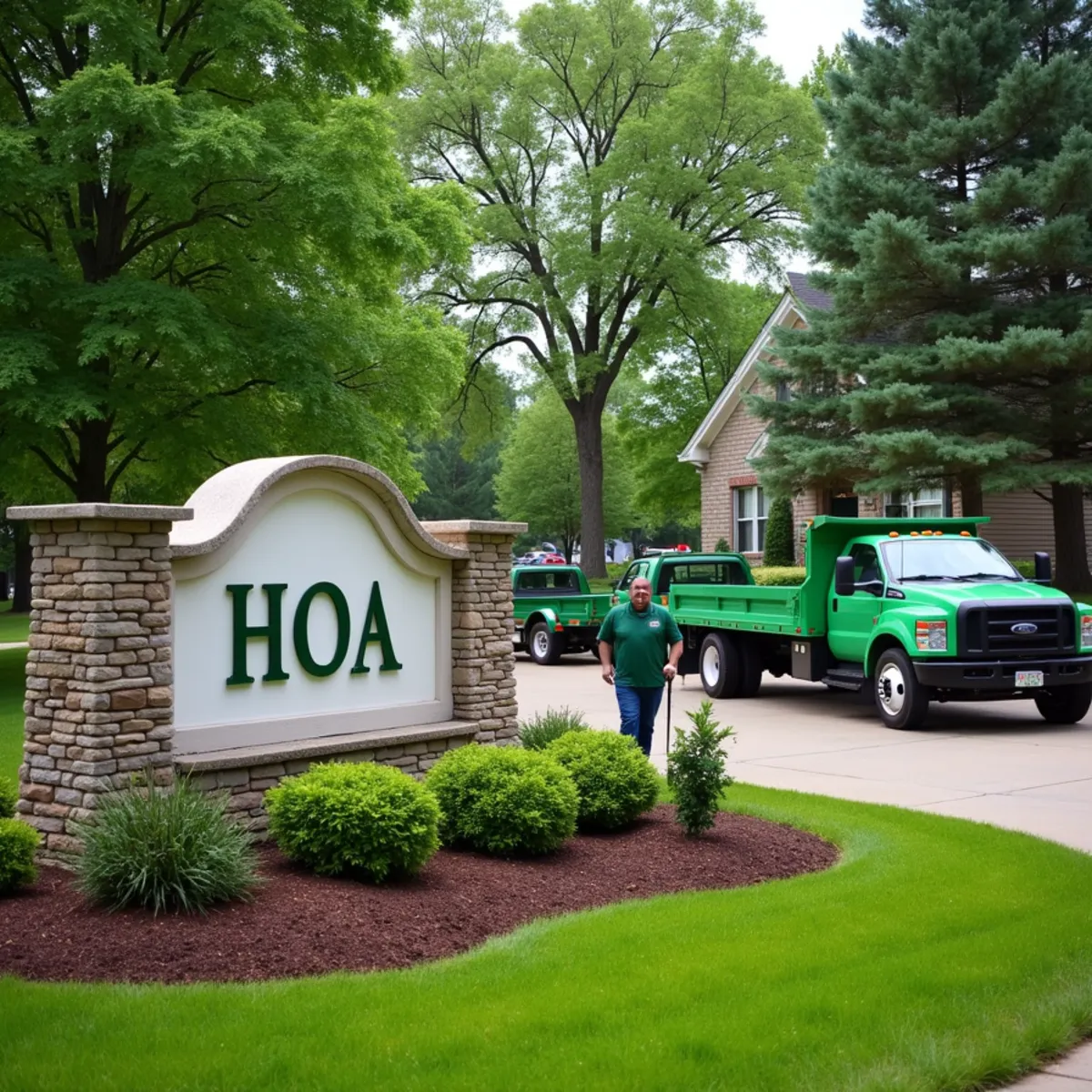
- Entrances and amenities: keeping the monument, clubhouse, and pool grounds looking sharp
Plan Reserves for the Big Tree Work
Here is the mistake that catches HOA boards off guard: routine mowing is a small, steady expense, but a major tree failure is a large, occasional one. When a storm drops a big common-area tree, or several mature trees need removal in the same year, the cost can dwarf the annual mowing budget and force an emergency assessment nobody wants to vote for.
The fix is treating significant tree work as a reserve item, not an operating expense. A good landscaping partner can help the board inventory the common-area trees, flag which ones are aging, declining, or hazardous, and estimate the likely timeline and cost so the reserve study reflects reality. That turns a shocking surprise into a planned, funded line item.
Want help mapping your community's tree risks and building a realistic reserve estimate? Call (323) 606-0255 for a free common-area walk-through and a clear proposal.
The Dead Ash Factor
This matters especially in northeast Indiana, where the emerald ash borer left standing dead ash trees in common areas across the region. Dead ash turns brittle and drops limbs without warning, so it is both a safety liability and a budget item. Boards should know how many ash trees they own and have a plan to remove the dead ones before they fail over a sidewalk or parked car.
Set Clear Common-Area Standards
Residents judge the HOA by how the common areas look, so it pays to define the standard in writing rather than leaving it to interpretation. Agreeing on mowing frequency and height, edging and trimming expectations, mulch refresh timing, and how quickly issues get addressed keeps quality consistent and gives the board an objective yardstick to hold the vendor to.
For winter, the same clarity applies. Spell out the snow trigger depth, response time, which walks and drives are cleared first, and how ice is managed. Clear standards protect the board, protect residents, and take the guesswork out of what good service looks like.
One Point of Contact Saves the Board
Volunteer boards do not have time to coordinate three vendors and referee who is responsible for what. A single point of contact who knows the whole property is worth a great deal. When a resident reports a downed limb or a missed section, the board makes one call, and the person on the other end already knows the community.
That is the model we are built around. As a family-owned, fully insured company, owner Darick Van works directly with boards and managers so you always know who to call and get a straight answer. Our quotes are honest planning ranges tied to your actual common areas, not lowball numbers that grow mid-season.
Serving Communities Across the Area
We work with associations throughout Fort Wayne, the Aboite area, and up toward Granger. If your board is tired of juggling vendors and bracing for the next tree-work surprise, our commercial grounds maintenance and HOA services can bring mowing, trees, and snow under one predictable plan. Call us for a walk-through and a proposal your board can actually budget around.
The boards that sleep well are the ones who plan for the whole year at once: a steady operating budget for mowing and snow, a funded reserve for the big tree work everyone knows is coming, and one accountable partner who keeps the common areas to a standard residents can see. Get those three pieces in place and landscaping stops being the line item that generates surprise assessments and angry emails, and starts being one of the quiet reasons people are glad they bought in your community.
Frequently Asked Questions
Should our HOA bundle landscaping, tree care, and snow together?
How should an HOA budget for major tree removals?
Why are dead ash trees a budget concern for HOAs?
What common-area standards should our HOA put in writing?
All About Tree & Turf Services
Family-owned landscaping and tree service in Fort Wayne, led by Darick Van. We share what we've learned working on real Northeast Indiana properties. Questions? Call (323) 606-0255.