
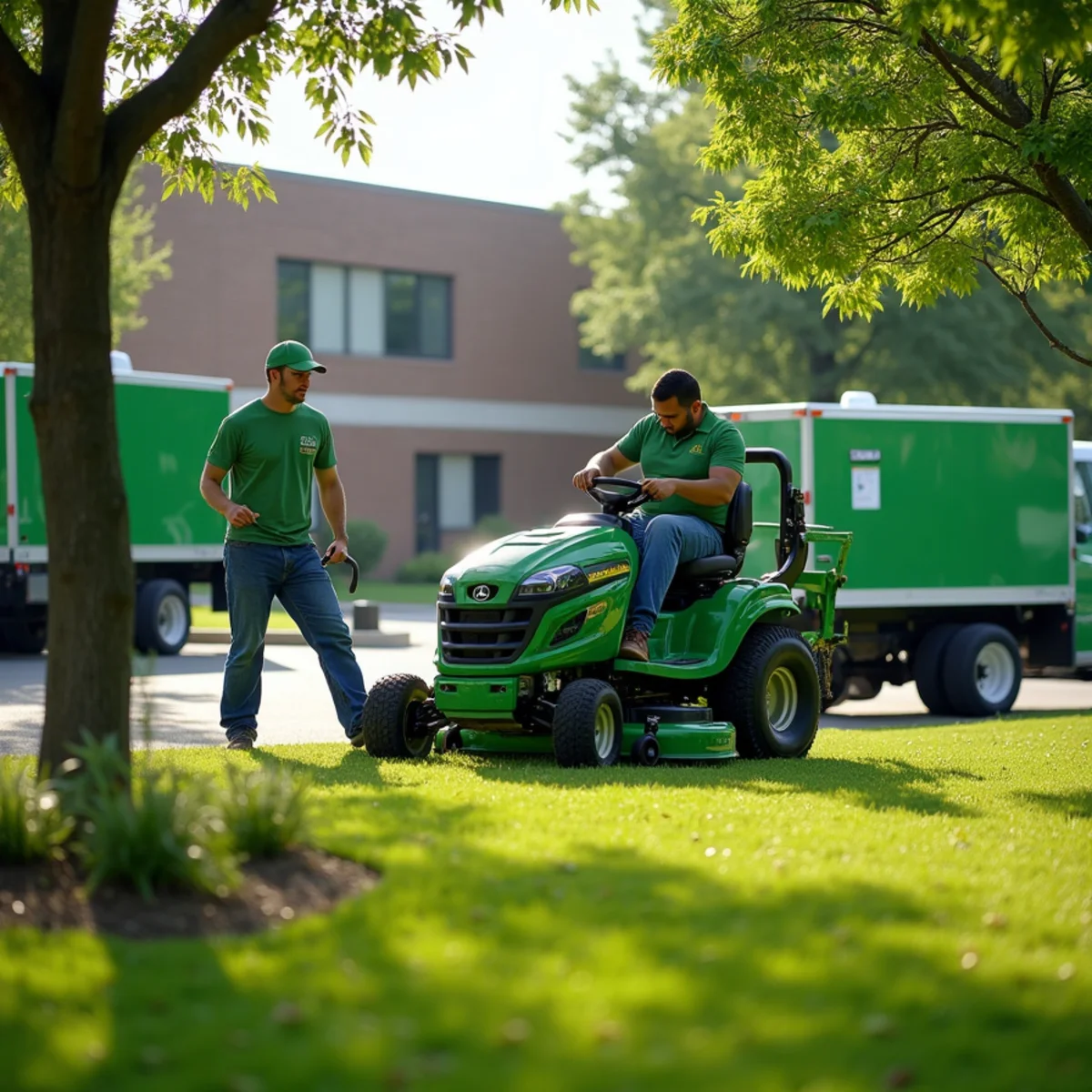
If you manage commercial property in Fort Wayne, the grounds are the first thing tenants, customers, and prospects see. A sharp, well-kept exterior signals a well-run building. Overgrown edges, weedy islands, or an icy lot in January send the opposite message, and in the case of that icy lot, they can send you a liability claim too.
The challenge is that keeping grounds sharp all year touches a dozen different disciplines, from mowing to pruning to snow and ice. This guide covers how to structure that work so it runs smoothly, protects you, and stays inside budget.
The Case for One Year-Round Vendor
Plenty of property managers juggle a mowing company, a separate tree service, and a snow contractor who may or may not show up. When something falls through the cracks, everyone points at everyone else, and you are the one fielding the tenant complaint.
Consolidating grounds care with a single commercial grounds maintenance partner solves that. One vendor, one point of contact, and one company accountable for how the property looks and functions every day of the year. It also means the crew that mows in July already knows your site when they are plowing it in January, including where the drains are, where snow can be piled, and which entrances matter most.
- Turf: mowing, edging, trimming, fertilization, and weed control through the growing season
- Beds and shrubs: mulching, pruning, and seasonal color that keep entrances looking sharp
- Trees: routine tree trimming and pruning, deadwood removal, and clearance over walks and drive lanes
- Cleanups: spring and fall leaf and debris cleanup on a set schedule
- Winter: snow removal and ice management that keeps lots and walkways safe and open
Service Level Agreements: Put It in Writing
A good commercial relationship runs on a clear service level agreement, an SLA, not a vague handshake about keeping things tidy. The SLA is where you define exactly what gets done, how often, and to what standard, so both sides know what to expect and there is no arguing later.
Strong grounds SLAs typically spell out mowing frequency and acceptable height, edging and trimming schedules, how quickly bed weeds and debris are addressed, pruning cycles, and the response window for anything urgent. When expectations are written down, quality stops being subjective.
Snow SLAs Deserve Special Attention
Winter is where the vaguest contracts cause the most trouble, because snow response is time-sensitive and safety-critical. A serious snow SLA answers the questions that matter at 5 a.m. after a storm:
- Trigger depth: at what accumulation does clearing begin, for example a two-inch trigger
- Response time: how quickly crews are on site once the trigger is hit
- Scope and priority: which lots, lanes, and walks get cleared first, and where snow is piled
- Ice management: how and when deicing is applied, and how re-freeze is handled
- Documentation: time-stamped service records that protect you in a slip-and-fall claim
Ready to consolidate your Fort Wayne property under one accountable grounds vendor? Call (323) 606-0255 for a free site walk and a clear service proposal.
Budgeting: Predictable Beats Cheap
The lowest bid is rarely the best value on a commercial property. A vendor who underbids and then cuts corners, skips cleanups, or is slow to plow costs you far more in tenant complaints and liability exposure than the few dollars you saved. What property managers actually want is a predictable annual number they can put in the budget and rely on.
The most manageable structure is often a flat seasonal or annual contract for routine work, so recurring maintenance is a fixed line item, with clearly defined pricing for as-needed items like major tree work or heavy storm cleanup. We are always upfront that our quotes are honest planning ranges tied to the real scope of your site, not lowball numbers that balloon later.
Liability and Insurance: Do Not Skip This
This is the part that protects you personally. Any contractor working on your commercial property must be fully insured, full stop. If an uninsured crew damages the building, injures someone, or a worker is hurt on your site, you can end up exposed. Verify coverage before you sign, and keep a copy on file.
We are a family-owned company and we are fully insured, and we are glad to provide proof of coverage before any contract begins. Owner Darick Van works directly with property managers to build agreements that hold up, because we want to be your vendor for years, not one season.
Serving Managers Across the Region
We handle commercial grounds and snow for properties throughout Fort Wayne and out toward Mishawaka. If you also oversee community associations, our HOA and property manager services bring the same year-round, single-vendor approach to common areas. Call us for a walk-through and a proposal built around your actual site and standards.
Frequently Asked Questions
Why use one vendor for all commercial grounds work?
What should a commercial snow SLA include?
How should commercial grounds maintenance be budgeted?
Do I need to verify a contractor's insurance?
All About Tree & Turf Services
Family-owned landscaping and tree service in Fort Wayne, led by Darick Van. We share what we've learned working on real Northeast Indiana properties. Questions? Call (323) 606-0255.