
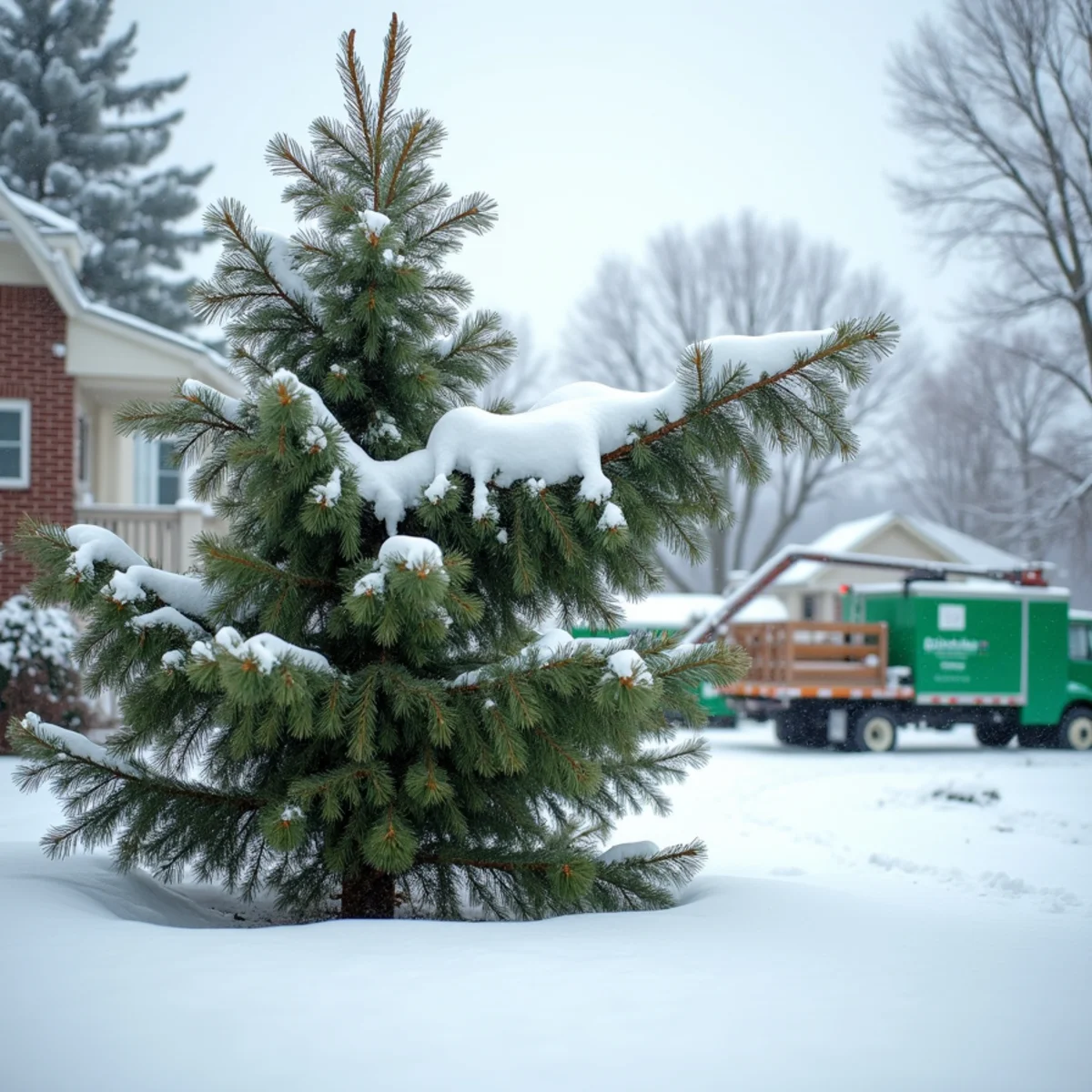
Northeast Indiana averages around 33.6 inches of snow a year, and lake-effect bands rolling in off Lake Michigan can dump a surprising amount on Fort Wayne, Kendallville, and the surrounding lake country in a single stretch. Add our relentless freeze-thaw swings and a winter's worth of road salt, and the season does more damage to your property than most people realize.
Snow is not just an inconvenience to shovel. It is a physical load, a corrosive chemical problem, and a slow structural stress on your trees and shrubs. Here is how it plays out and what you can do before the first heavy band arrives.
Snow Load and Broken Limbs
Wet, heavy snow is deceptively heavy. It piles onto horizontal branches and evergreen foliage until the weight exceeds what the wood can hold, and then limbs split, crack, or tear right out of the trunk. Trees with weak branch unions, existing deadwood, or unbalanced crowns fail first, and they tend to fail over whatever is beneath them: your roof, your car, your driveway.
The single best defense is done before winter. Proactive tree trimming and pruning removes deadwood, thins dense crowns so snow sheds instead of accumulating, and corrects the weak unions most likely to break. A tree pruned in fall is far less likely to become an emergency in January.
Should You Knock Snow Off Branches?
Gently, and only if you can reach it safely from the ground. Brush snow upward off flexible shrubs and low evergreen branches with a broom. Never beat frozen, brittle branches, because they snap under impact. If a limb is already bent under a heavy load, leave it alone and let it recover as the snow melts, or call a professional.
See a cracked or hanging limb loaded with snow over your house? Do not risk it in the cold and dark. Call (323) 606-0255 anytime for a free estimate and fast winter response.
Ice Dams, Ice Load, and Freeze-Thaw
Ice is even harder on plants than snow. A thick glaze coats every twig and multiplies the weight a branch has to carry, and it does not slide off the way snow eventually does. Shrubs planted under roof lines take a double hit, catching both ice sliding off the roof and the meltwater that refreezes at the base.
Our freeze-thaw cycles add another problem underground. Water in the soil expands as it freezes and heaves the ground upward, then drops it as it thaws, over and over. This root heave can lift shallow-rooted shrubs and young trees partway out of the ground, exposing roots and loosening their footing. Mulching before winter buffers the soil temperature and reduces the swing.
Road Salt: The Damage You Do Not See Until Spring
Every plowed and salted road and driveway throws salt spray and salty snowmelt onto nearby lawns, shrubs, and tree roots. You will not notice in December, but by spring you see the results:
- Brown, scorched-looking needle tips on evergreens facing the road
- Dead or stunted turf in a strip along driveways and walkways
- Buds that fail to open and dieback on the salt-facing side of shrubs
- Compacted, poorly draining soil where salt has damaged its structure
You can limit it by using salt sparingly, choosing calcium- or magnesium-based deicers near plantings, and giving salt-exposed beds a deep rinse in early spring to flush the soil. Choosing salt-tolerant plants for the edges that take the worst of it helps too.
Snow Removal That Protects, Not Just Clears
Where the snow goes matters as much as getting it off your pavement. Piling it onto a shrub bed crushes the plants and concentrates salt right where roots will absorb it in spring. Our snow removal and ice management service plans pile locations to spare your plantings and keeps walkways and lots safe through the season. For businesses, HOAs, and larger sites, our commercial grounds maintenance team can carry the same care across your whole property on a seasonal contract.
Lock In a Plow Contract Before the First Storm
The worst time to look for a reliable plow is the morning after eight inches falls. A seasonal snow contract puts you on a set route so your property gets cleared on schedule, not whenever someone with a truck happens to be free. It also lets us plan around your specific site, your priority areas, your no-salt zones, and where the snow can safely go.
We are a family-owned, fully insured crew serving Kendallville, Fort Wayne, and the lake country between them. Owner Darick Van and the team build winter plans around how our snow, ice, and salt actually behave here. Talk to us in fall, and you head into winter with a plan instead of a scramble.
The through-line for all of this is timing. Almost every kind of winter damage, snapped limbs, crushed shrubs, salt-burned turf, is cheaper to prevent in October than to repair in April. A fall pruning pass, a little mulch, a smart snow plan, and some restraint with the salt shaker add up to a property that comes out of winter in good shape rather than beat up. That is the whole goal, and we would rather help you get there before the first heavy band than clean up after it.
Frequently Asked Questions
How much snow does Fort Wayne get in a year?
Can I knock snow off my trees to prevent breakage?
Why does my lawn die along the driveway every winter?
When should I set up a snow removal contract?
All About Tree & Turf Services
Family-owned landscaping and tree service in Fort Wayne, led by Darick Van. We share what we've learned working on real Northeast Indiana properties. Questions? Call (323) 606-0255.