
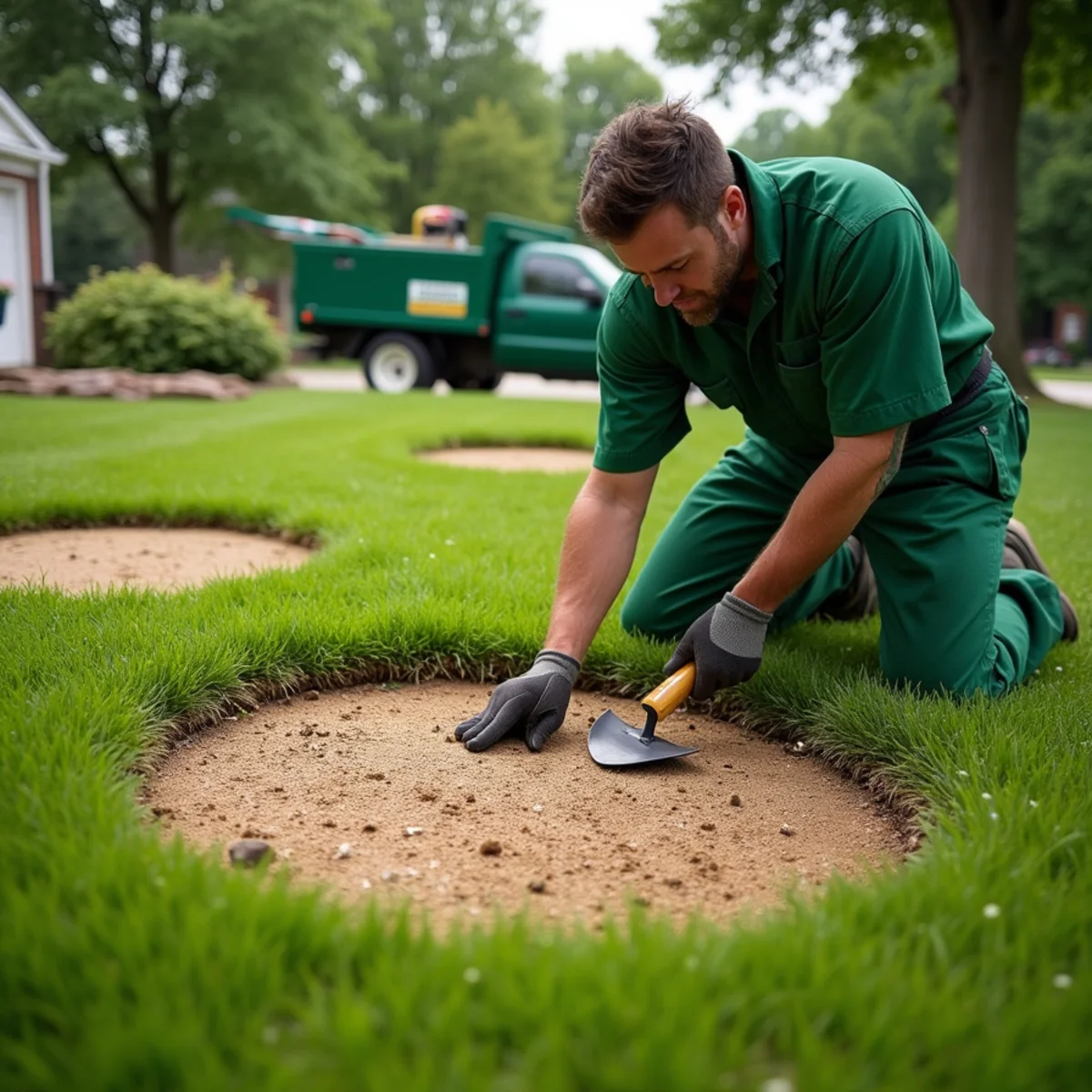
Brown patches in a lawn almost always trace back to one of eight causes: not enough water, mowing damage, burns from dog urine or spills, grubs, fungal disease, compacted soil, something buried under the turf, or too much shade. The fix depends entirely on which one you have, so the first job is diagnosis, not seed or fertilizer.
Most of these can be told apart in a few minutes with your hands and a screwdriver. Some brown in July is normal. Brown that spreads, peels up or returns to the same spot every year is worth chasing down.
First Check: Is the Grass Dormant or Dead?
Before anything else, figure out whether the brown grass is alive. The cool-season grasses common here, like Kentucky bluegrass, tall fescue and perennial ryegrass, go dormant in hot, dry weather. Dormant grass looks dead, but the crowns are alive and green up again when rain returns.
- Tug test: grab a handful of brown grass and pull gently. Dormant grass is anchored and resists. Grass that lifts out easily, roots and all, has a root problem, often grubs.
- Footprint test: walk across the lawn and look back. If your footprints stay pressed in for more than a few minutes, the grass is short on water.
- Crown check: part the blades and look at the base of the plant. A firm, pale crown is alive. A mushy or crumbly brown crown is not.
- Pattern check: dormancy browns large, even areas, sunniest spots first. Circles, stripes or sharp-edged patches point to something else.
Causes 1–3: Water, Mowing and Burn Spots
1. Drought stress and summer dormancy
How to tell: broad browning on sunny slopes, near driveways and along south- and west-facing edges, with footprints that linger. The grass passes the tug test. On our Blount and Pewamo clay, water can also run off a hard, dry surface instead of soaking in, so a lawn can still be dry after a storm.
Fix: decide whether to water or let the lawn go dormant, then stick with it. A lawn generally needs about an inch of water a week, rain included, to stay green; water deeply and less often, early in the morning. If you choose dormancy, a light watering every few weeks in a long dry spell helps the crowns survive. Flip-flopping between the two is harder on the grass than either choice.
2. Dull mower blades and scalping
How to tell: a dull blade tears grass instead of cutting it, leaving ragged, whitish tips that turn brown a day or two after mowing and give the whole lawn a tan haze. Scalping shows up as brown stripes or patches on bumps and the tops of slopes where the deck cut down to the crown.
Fix: sharpen the blade a few times a season and raise the mowing height to 3 to 3.5 inches. Never take off more than a third of the blade in one cut. Scalped high spots usually recover in a few weeks once you raise the deck. If the same bumps keep getting scalped, they may need leveling.
3. Burn spots: dog urine and spills
How to tell: dog spots are round, a few inches to a foot across, with a dead brown center and a ring of dark green grass around it. That ring is the giveaway: the edge got a light dose of nitrogen while the center got far too much. Spill burns from fertilizer, gasoline or other chemicals have shapes that match what happened, like a spreader-overlap stripe or a splash from refueling the mower, and they show up within a day or two.
Fix: for dog spots, soak the area with water soon after the dog goes, or train the dog to a mulched area. For spills, flush the area heavily with water right away. If the grass is already dead, rake it out, replace the top inch or two of soil (always for fuel spills) and reseed or lay a sod patch.
Causes 4–5: Grubs and Lawn Disease
4. Grubs
How to tell: irregular brown patches, usually in late summer into early fall, where the turf peels back like loose carpet because the roots have been eaten off. Skunks, raccoons or birds tearing up the lawn are another strong hint. Peel back a square of turf at the edge of the brown area and look for white, C-shaped grubs in the top couple of inches of soil.
Fix: finding one or two grubs is normal in a healthy lawn. If you are seeing a handful per square foot along with dying turf, the lawn likely needs a treatment plan following Indiana OISC guidance, then reseeding of the dead areas in fall. Timing matters with grubs, so this is a good place to get help rather than guess.
5. Fungal disease, including snow mold
How to tell: summer diseases like brown patch and dollar spot show up during stretches of warm, humid nights when the grass stays wet. Brown patch tends to form roughly circular areas of tan or brown grass, sometimes with a darker border early in the morning. Dollar spot appears as many small, straw-colored spots that can merge into larger blotches. Snow mold is the late-winter version: gray or pinkish, matted patches that appear as the snow melts, often where snow was piled or leaves were left on the lawn.
Fix: change the conditions first. Water early in the morning so the blades dry during the day, avoid heavy nitrogen in summer heat, keep the mower blade sharp and improve air flow where low shrubs crowd the lawn. Snow mold usually clears once you lightly rake the matted areas in spring so they can dry. Repeated or severe disease may call for a treatment plan following Indiana OISC guidance and overseeding with more disease-resistant varieties.
Causes 6–8: What Is Under and Over the Grass
6. Compacted clay soil
How to tell: thin, weak grass that browns first in every dry spell, puddles after rain and is hard to push a screwdriver into. Much of Allen County is Blount and Pewamo clay, which packs tight and drains slowly, so roots stay shallow and give up quickly in heat.
Fix: core aeration in fall, followed by overseeding. Our guide to Fort Wayne clay soil and lawn aeration explains why spike aerators do not help in clay and why fall timing matters.
7. Buried debris and shallow soil
How to tell: a patch with crisp, unnatural edges that browns first every summer in the same place. Push a long screwdriver into the soil. If it stops hard at a few inches, something is down there: a rock layer, leftover concrete or brick, an old buried stump or compacted fill. Newer homes are especially prone to this, since a thin skim of topsoil over construction fill is common.
Fix: dig it out. Remove the debris, replace it with good topsoil deep enough for roots to use, then reseed or lay sod. Patching over the problem without digging just gives you another brown spot next summer.
8. Shade and tree root competition
How to tell: thin grass under big trees, especially maples, that gets a little worse each year, often with surface roots, moss and bare soil near the trunk. The tree is out-competing the grass for light, water and nutrients.
Fix: overseed with a shade-tolerant blend, mow a little higher in shaded areas and water a bit more where roots compete. In deep shade, grass may never thrive, and a mulched bed under the canopy is often the better long-term answer. Keep mulch a few inches off the trunk.
Not sure which of these you are looking at? We will walk the lawn, check the soil and roots, and recommend the simplest fix for the actual cause. Call (323) 606-0255 for a free estimate.
What You Can Safely Check Yourself
- Do the tug and footprint tests on the brown area and on a green area nearby.
- Look at the shape: broad and even, round with a green ring, irregular and peeling, or sharp-edged.
- Peel back a small square of turf at the edge of the patch and look for grubs.
- Push a screwdriver into the soil in the patch and in healthy lawn to compare.
- Check your mower blade for nicks and a rounded, dull edge.
- Think back: dog traffic, a spreader run, refueling, a new shed or a winter snow pile in that spot.
Avoid applying insecticides or fungicides on a guess. A product aimed at the wrong cause wastes money and adds stress.
How to Fix Brown Patches in a Lawn
Once the cause is handled, the dead spots in the grass still need to be filled in. Brown grass that failed the tug test will not come back on its own.
- Aeration and overseeding is the go-to for thin, compacted or widespread damage. Purdue Turfgrass Science puts the best cool-season seeding window in northern Indiana at August 15 to September 15, and seeding later can add weeks to establishment. Core aeration and overseeding gives seed good soil contact in our clay.
- Sod patches make sense for larger dead areas, high-visibility spots or slopes where seed would wash away. Cut the patch square, prep the soil and lay new sod so it sits level with the surrounding turf. Our sod vs. seed comparison covers the tradeoffs.
- Watering changes fix more brown spots than any product: deep, infrequent, early-morning watering, in cycles on clay so water soaks in instead of running off.
- Mowing height of 3 to 3.5 inches shades the soil, keeps it cooler and builds deeper roots.
- Feeding on the right schedule, mostly in fall, through a lawn fertilization and weed control program that follows Indiana OISC guidance, helps repaired areas fill in.
When to Call a Pro
Plenty of brown spots are a weekend fix. Repair cost depends mostly on the size of the damaged area, whether the cause needs its own fix first, like digging out debris or treating grubs, and whether you reseed or sod. Seed is the cheapest repair but needs the right season. It is worth bringing in help when:
- Patches are spreading week to week, or turf peels up in sheets
- You suspect grubs or disease and need a treatment plan instead of a guess
- Large areas need aeration, overseeding or sod and you do not have the equipment
- The same areas fail every summer despite good watering and mowing
We repair lawns across New Haven, Fort Wayne and the surrounding area, starting with the cause instead of throwing seed at the symptom. Plan any reseeding for the late-summer window so the repair has time to root before winter. Call (323) 606-0255 for a free estimate.
Need a hand with this?
Lawn Aeration & Overseeding in Fort Wayne & Northeast Indiana
If you'd rather have it handled, our family-owned crew does this work every week. Estimates are free and written out.
Frequently Asked Questions
Why is my lawn turning brown even though I water it?
Will brown grass come back on its own?
How do I know if brown spots are from grubs?
When is the best time to repair dead spots in a Fort Wayne lawn?
Should I put fertilizer on brown patches?
All About Tree & Turf Services
Family-owned landscaping and tree service in Fort Wayne, led by Darick Van. We share what we've learned working on real Northeast Indiana properties. Questions? Call (323) 606-0255.