
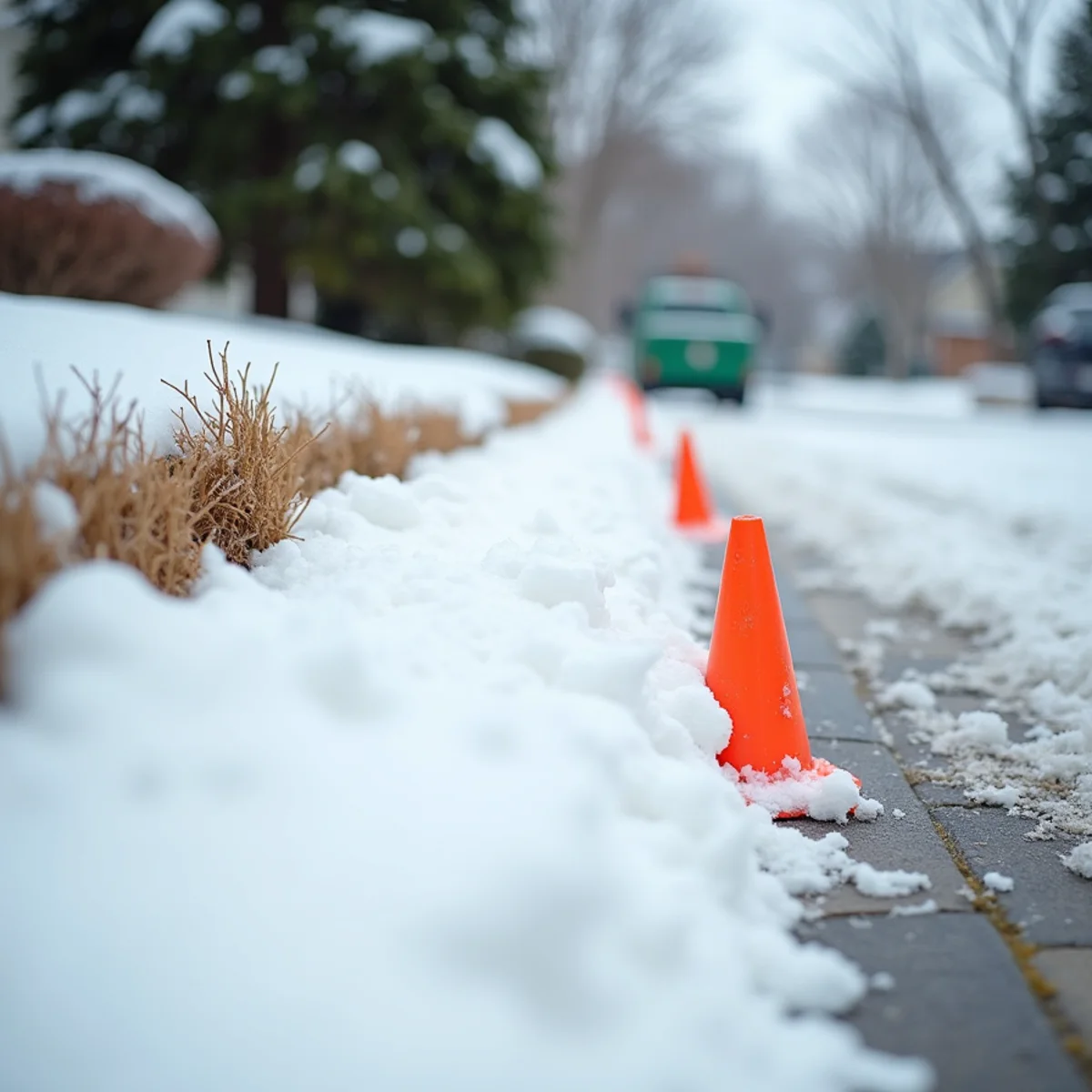
Most salt damage on your lawn comes from rock salt, which is sodium chloride, thrown off the street by plows and spread on driveways and walks, plus plow blades that scalp the turf where pavement meets grass. Prevention does most of the work: use less salt and gentler deicers near plants, stake your drive edges before the ground freezes, pile snow away from beds, and flush damaged strips with water in spring before you reseed or patch with sod.
Fort Wayne averages about 33.6 inches of snow a year, and the street side of most yards takes the hit every winter: salt spray, salty slush, plow-scraped edges, and shrubs buried under shovel piles. Here's how each kind of damage happens, what to do in fall to prevent it, and how to repair what winter leaves behind.
How Road Salt Damages Grass, Shrubs and Trees
When salt dissolves, it soaks into the soil with the melt. In the root zone it pulls water away from roots, so grass and shrubs act drought-stressed even in wet ground. Chloride builds up in leaves and needles and scorches them. Sodium also breaks down soil structure, which makes already dense Blount and Pewamo clay tighter and slower to drain. Salt spray from passing traffic does its own damage to evergreen needles and to the buds of trees and shrubs near the road.
The signs show up in spring, long after the salt went down:
- A band of brown or straw-colored turf along the driveway, sidewalk, or curb that greens up late or not at all
- Evergreen needles browning on the side facing the street
- Shrubs near the road that leaf out late, show scorched leaf edges, or have dead buds on the street side
- Thin crowns or early fall color on roadside trees after heavy salting years
- A white crust on soil or along pavement edges after the snow melts
Salt damage often looks like drought or winter kill, and a dry spring makes it worse because there's no rain to flush the soil. The best clue is the pattern. Damage that follows the pavement or the spray zone is usually salt.
Use Less Salt, and Use It Smarter
You can't control what comes off the street, but you control your own drive and walks, which are often the closest salt source to your beds.
- Shovel early and often. Clearing snow before tires and feet pack it down means you need far less melter afterward.
- Spread thinly. More salt doesn't melt faster. Follow the label rate; a thin, even scatter beats a heap by the steps.
- Sweep up leftovers. Once the pavement is dry, sweep up the crystals and reuse them instead of letting the next melt carry them into the lawn.
- Consider gentler deicers near plants. Calcium chloride, magnesium chloride, and calcium magnesium acetate are generally considered less harmful to plants than rock salt. They usually cost more and none is harmless, so still use them sparingly.
- Use sand or grit for traction. It doesn't melt ice, but it gives grip on a cold walk without adding salt.
- Send melt away from beds. Shovel and spread so slush drains toward the street or open lawn, not into foundation plantings.
If you hire snow service, ask what deicer goes down and whether a lighter rate is possible beside plantings. On commercial walks and lots, safety has to come first, so the goal there is placement and cleanup rather than skipping ice control.
Stake Your Drive and Bed Edges Before the Ground Freezes
Plow damage is mostly a visibility problem. Once snow covers everything, the operator can't see where the pavement ends, and the blade catches the turf edge, rolls up sod, or gouges a bed.
Put driveway marker stakes in during fall, before the ground freezes, because you can't drive a stake into frozen clay. Set them just off the pavement edge and close enough together that the line is obvious in the dark. Mark these spots:
- Both edges of the driveway, especially the apron where it meets the street
- Bed edges and shrubs that sit close to the pavement
- Mailbox posts, valve covers, and anything low a blade could catch
- The area where you want plowed snow to go, and any area where you don't
If a contractor plows for you, walk the drive together before the first storm, point out the stakes, and agree on where snow gets piled. A good snow removal and ice management crew will want that walk-through anyway, because it protects their equipment as well as your lawn.
Where the Snow Goes Matters
Shovel piles and plow windrows are full of salt. When they melt, all of it soaks into the soil underneath. Heavy piles also crush shrubs and snap branches. A little planning keeps that damage off the plants you care about.
- Pick a snow storage spot on open lawn, away from beds, young trees, and shrubs.
- Keep piles off tree root zones, including the strip between the sidewalk and the street.
- Choose a spot where melt drains away from the house, not back toward the foundation.
- Don't heap snow on top of foundation shrubs or against the house.
- Put up a simple burlap screen on the street side of exposed shrubs before the ground freezes, so spray hits the fabric instead of the foliage.
If a tree in the right-of-way in front of your home looks salt-stressed or plow-damaged, remember that it belongs to the City. Fort Wayne Parks forestry maintains street trees, so report concerns through 311 instead of pruning or treating the tree yourself.
Want your drive edges protected and snow piled where it won't kill your beds? We'll walk your property before winter and set up a plan with you. Call (323) 606-0255 for a free estimate.
Spring Repair: Fixing Salt Damage on Your Lawn
Don't judge too early. Some browned turf is just dormant and greens up as the soil warms. By mid-spring, once the rest of the lawn is growing, you can tell what's dead. Then work through these steps:
- Flush the soil. Once the ground thaws, water salt-affected strips deeply and repeatedly to push salt below the root zone. Rain helps, but clay drains slowly, so a few long soakings beat many light sprinkles.
- Clean up debris. Rake out sand, grit, gravel, and plow-scraped chunks of turf. Reset torn sod pieces that are still alive and press them firmly into the soil.
- Rebuild the edge. Fill scalped or gouged spots with screened topsoil, level with the pavement, and firm it lightly.
- Reseed or patch with sod. Purdue Turfgrass Science ranks spring behind late summer, and even behind dormant seeding, for cool-season grass, so spring-seeded strips need steady watering. For a quick, clean edge, a few rolls of sod often make more sense.
- Check the shrubs. Prune out dead tips once new growth shows what survived, and give salt-exposed beds the same deep soak.
Gypsum is often suggested for salt-affected soil because its calcium can help displace sodium in clay. Results vary and it doesn't replace flushing, but it's a reasonable addition for strips that get hit every year. Edge repair fits naturally into a spring cleanup, and our spring yard cleanup checklist covers the rest of the season's to-do list.
Plant the Street Side for Salt
If the same strip dies every year, change what grows there instead of repairing it every April.
- In the curb strip and along the drive, a seed mix heavier in tall fescue generally tolerates salt better than straight Kentucky bluegrass.
- For beds near the road, choose shrubs and perennials rated salt tolerant, and keep salt-sensitive evergreens out of the spray zone.
- Leave a buffer of turf or mulch between the pavement and your best plants to catch splash and slush.
- Set new beds back from the curb rather than right against it.
For the rest of winter's toll, from snow-loaded limbs to freeze-thaw heaving, see our post on what lake-effect snow does to NE Indiana properties.
We plow and de-ice driveways and lots in winter, then handle spring repair, from topsoil and seed to sod installation, across Fort Wayne and Huntertown. If your lawn edge dies back every spring, call (323) 606-0255 for a free estimate.
Need a hand with this?
Snow Removal & Ice Management in Fort Wayne & Northeast Indiana
If you'd rather have it handled, our family-owned crew does this work every week. Estimates are free and written out.
Frequently Asked Questions
Will salt-damaged grass grow back on its own?
Is calcium chloride safer for lawns than rock salt?
When should I put in driveway marker stakes?
Can I use sand instead of salt on my driveway?
How do I protect shrubs near the street from salt spray?
All About Tree & Turf Services
Family-owned landscaping and tree service in Fort Wayne, led by Darick Van. We share what we've learned working on real Northeast Indiana properties. Questions? Call (323) 606-0255.