Tree trimming cost in Fort Wayne comes down to a handful of things: how big the tree is, how easy it is to reach, what's underneath it, and how much wood comes out. That's why honest companies don't publish a flat price per tree. A 20-foot crabapple in an open front yard and a 70-foot silver maple leaning over a garage are completely different jobs, even though both get called a trim.
What we can do is explain the cost drivers plainly, so you know what you're paying for and can compare estimates on equal terms. If you're weighing a trim against taking the tree down, see our tree removal cost guide, which covers removal pricing separately.
What Tree Trimming Costs in Fort Wayne Depend On
Every tree trimming and pruning estimate starts with the same question: how many hours, how many people, and what equipment will it take to do this safely? Everything below feeds into that answer.
Tree Size
Height and canopy spread set the baseline. Most crews think in rough classes:
- Small ornamental trees (roughly under 30 feet), like crabapple, redbud, or Japanese maple, can often be pruned from the ground or a ladder.
- Medium trees (roughly 30 to 60 feet) usually need a climber or a lift, plus more cleanup.
- Large shade trees (60 feet and up), like mature oaks, silver maples, and sycamores, take the most time, rigging, and crew.
Spread matters as much as height. A wide oak with long horizontal limbs can take longer than a taller, narrower tree.
Access: Climbing vs. Bucket Truck
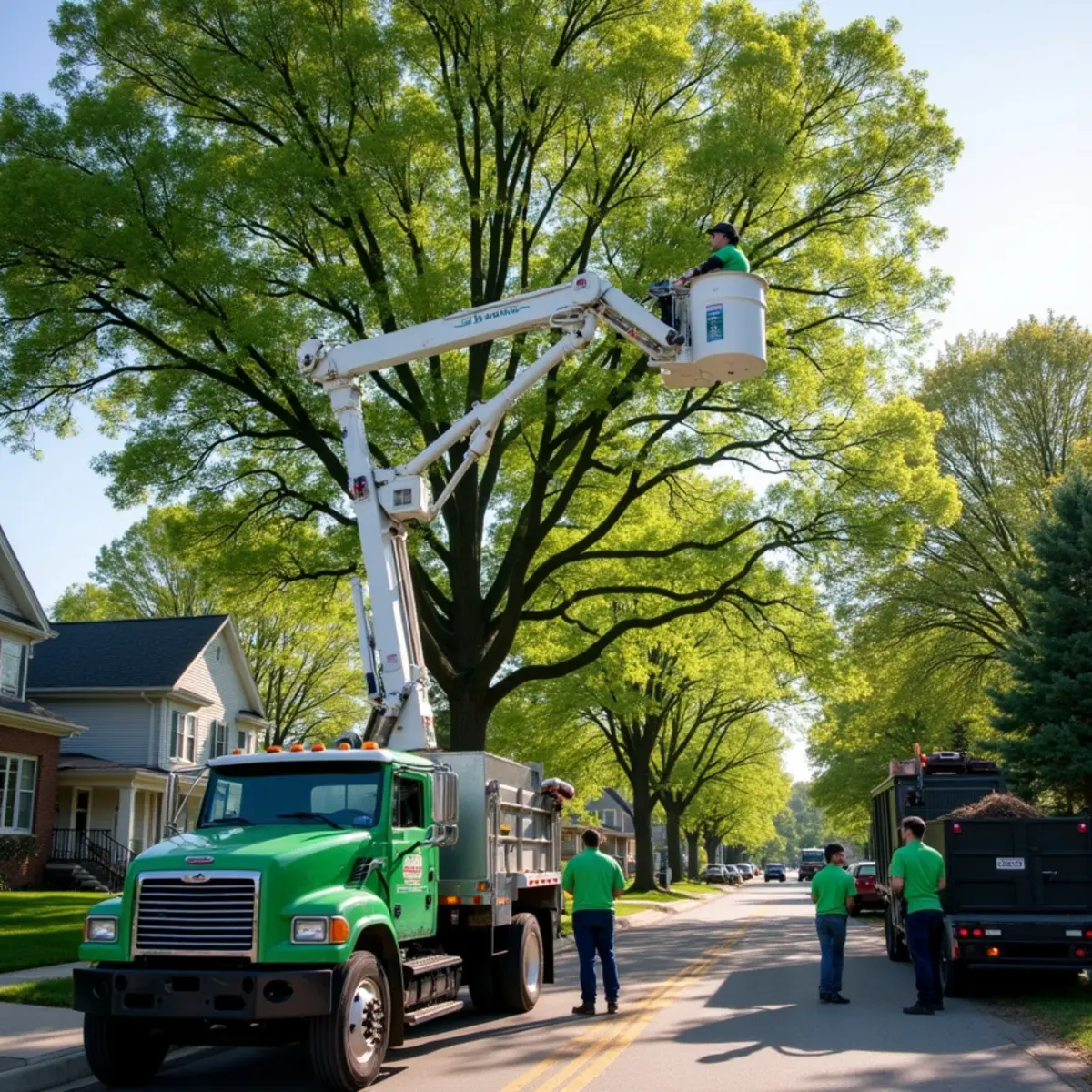
If a bucket truck can park close and reach the canopy, the work goes faster. Backyard trees behind fences, on slopes, or surrounded by soft lawn often have to be climbed, which takes more time per tree. Wet spring ground can also rule out heavy equipment entirely so the lawn doesn't get rutted.
What's Under and Around the Tree
Limbs over a roof, deck, fence, or the neighbor's garage can't simply be dropped. They have to be cut in smaller pieces or lowered on ropes, which adds time and crew.
Power lines add another layer. Trimming near the primary lines on the poles is AEP's line-clearance work, not something a general tree crew should take on. The line from the pole to your house, called the service drop, is handled differently; call AEP to ask about the service drop before anyone trims near it. That coordination can affect when the work gets done.
One more question to settle early is who owns the tree. In Fort Wayne, trees in the right-of-way between the sidewalk and curb are maintained by the City, and pruning one requires City approval through 311. That work shouldn't appear on a private estimate at all.
Species and Wood
Some woods are heavier, harder, or more brittle than others. Silver maple and willow grow fast and shed limbs; oak is dense and heavy; dead ash is brittle and unpredictable. Species affects timing too. Oaks shouldn't be pruned between April 15 and July 15 because of oak wilt, which can push oak work onto the winter schedule.
The Type of Pruning Changes the Price
Trimming isn't one thing. These are the standard types of pruning you'll see on a good estimate, from lightest to most involved:
- Crown cleaning: removing dead, dying, diseased, and broken branches. It's the most common job and the most important one for safety.
- Crown raising: removing lower limbs to clear a roof, driveway, sidewalk, or lawn. Often quick when the limbs are within reach.
- Crown thinning: selectively removing live branches throughout the canopy to let in light and reduce wind load. It takes judgment and time, and done badly it strips out the inner branches and weakens the tree.
- Crown reduction: shortening a tree's height or spread by cutting branches back to smaller side branches that can take over. It's the right way to shrink a tree, and it's slower and more skilled than topping.
Many jobs combine two or three of these. An estimate that just says 'trim tree' with no description makes it hard to know what you're getting.
Deadwood Volume
Deadwood is a cost factor of its own. A healthy maple with a few dead twigs is a quick cleaning. A tree with large dead limbs, or a canopy full of dead ash branches left by the emerald ash borer, takes more care, because brittle wood can break unpredictably while a climber is working nearby.
Cleanup, Wood, and Other Line Items
Cleanup is part of the price, and it's where estimates differ the most.
- Full cleanup and haul-away: brush is chipped and taken away, wood is removed, and the lawn is raked. This is the most common option and the most expensive.
- Leaving the wood: larger logs stay on site for firewood, which can lower the price.
- Leaving the chips: some homeowners want wood chips left for paths or natural areas away from the house.
- Multiple trees: a big part of any job is getting the crew and equipment to your property. Trimming three trees in one visit usually costs less per tree than three separate visits.
- Emergency vs. scheduled: storm calls, after-hours work, and limbs hung up over a house carry a premium. Planned work is almost always cheaper.
Want a real number for your trees instead of a guess? We'll walk the property, explain what each tree needs and what can wait, and put it in writing. Call (323) 606-0255 for a free estimate.
How to Save on Tree Trimming
- Bundle your trees. Have every tree that needs work looked at in one visit so they share the setup cost.
- Schedule in the dormant season. Late winter is better for most trees, the structure is easier to see without leaves, and crews often have more scheduling flexibility. Our guide to the best time to trim trees and shrubs breaks it down by species.
- Stay on a regular cycle. Mature shade trees typically need pruning every three to five years, and young trees benefit from structural pruning every one to three years. Small, regular visits cost less than a big catch-up job after years of neglect.
- Prune young trees early. Fixing a weak fork on a 10-foot tree takes minutes. Fixing it on a 50-foot tree takes a crew.
- Decide on wood and chips up front. If you can use the firewood or chips, say so before the estimate is written.
- Don't wait for a storm. Taking off a dead limb on a calm day is far cheaper than an emergency call after it comes through the roof.
Red Flags When Hiring a Tree Trimmer
A low price can cost more in the long run if the work damages the tree or leaves you exposed. Watch for these:
- Offers to top the tree. Topping, cutting big limbs back to stubs, causes decay and weak regrowth. A company that suggests it as a way to shrink a tree isn't pruning properly.
- Climbing spikes on a tree that's staying. Spikes are fine for removals, but on a live tree being pruned they punch wounds all the way up the trunk. Pruning should be done with ropes, a lift, or a ladder.
- No proof of insurance. Ask for a certificate before work starts. If an uninsured worker gets hurt or drops a limb on the neighbor's car, the problem can land on you.
- Pressure to decide now. Door-knockers after a storm who want cash up front are a common problem.
- A vague scope. If the estimate doesn't say what's coming out and what's being cleaned up, there's room for surprises.
How to Read a Tree Trimming Estimate
A solid estimate answers these questions in writing:
- Which trees are included, identified clearly, such as the silver maple by the garage
- What type of pruning each tree gets: cleaning, raising, thinning, reduction, or a combination
- Roughly what size branches are coming out, and any clearance goals over the roof, drive, or sidewalk
- Whether brush and wood are hauled away, left on site, or chipped and left
- How the crew will protect the lawn, beds, and structures, and what equipment is planned
- Proof of insurance and any timing limits, such as winter-only work on oaks
- Anything excluded, like stump grinding, removals, or work near utility lines
We're a family-owned, fully insured crew serving Fort Wayne and the rest of Allen County, and our trimming estimates spell out exactly which trees, which cuts, and what cleanup are included. If a tree turns out to need more than a trim, we handle tree removal too, along with stump grinding and storm work through our full tree service. Call (323) 606-0255 for a free estimate.
Need a hand with this?
Tree & Shrub Trimming in Fort Wayne & Northeast Indiana
If you'd rather have it handled, our family-owned crew does this work every week. Estimates are free and written out.
Frequently Asked Questions
How much does it cost to trim a large tree in Fort Wayne?
Is tree trimming cheaper in the winter?
Who pays to trim trees near power lines?
Should tree trimming include cleanup?
Does homeowners insurance pay for tree trimming?
All About Tree & Turf Services
Family-owned landscaping and tree service in Fort Wayne, led by Darick Van. We share what we've learned working on real Northeast Indiana properties. Questions? Call (323) 606-0255.