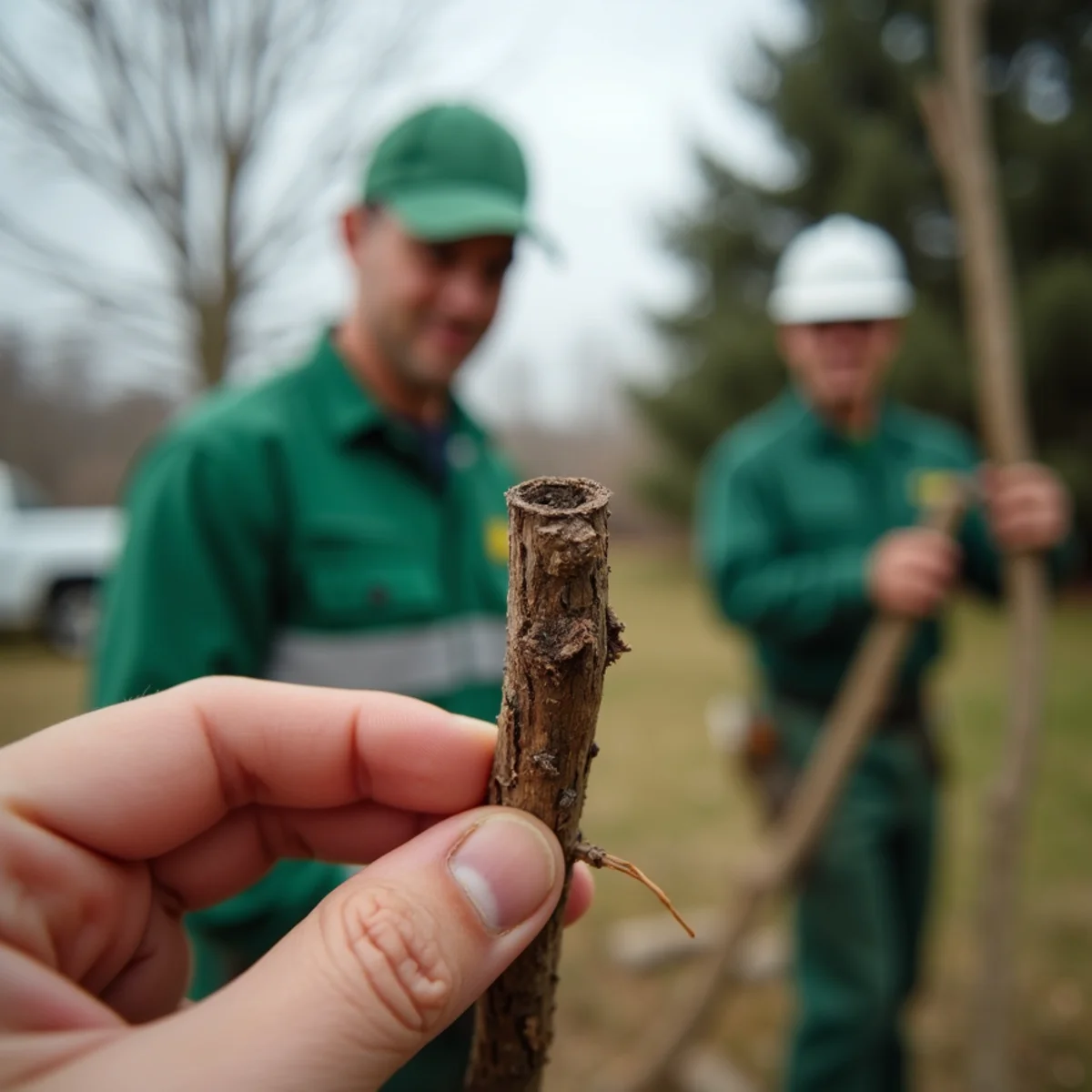
Here's how to tell if a tree is dead in under a minute: use the scratch test. Scrape a small patch of bark on a twig with your thumbnail or a pocketknife. Moist, green tissue underneath means that part of the tree is alive; dry, brown tissue means it's dead. Check several branches in different parts of the crown, because trees often die in sections before they die all at once.
One test rarely tells the whole story, though. Below are the checks we use from the ground, what they mean, how to tell a dormant tree from a dead one in winter, and how to decide between pruning out the dead parts and removing the tree. If you're mainly worried about a tree failing onto your house, our list of hazard signs covers the structural red flags.
How to Tell If a Tree Is Dead: Safe Checks From the Ground
All of these can be done with both feet on the ground. If a tree is leaning hard, cracked, or tangled in power lines, skip the inspection and stay out of its fall zone.
1. The Scratch Test
Pick a twig about as thick as a pencil and scrape a thin strip of bark. Green and moist underneath means the cambium, the living layer, is alive. Brown and dry means dead. If a twig tests dead, move closer to the trunk and test again; you're looking for where the dead part ends. If every branch you can reach tests brown, the tree is likely dead.
2. The Snap Test
Bend a small twig. Live twigs are flexible and bend before they break, with moist, light-colored wood inside. Dead twigs snap cleanly with a dry crack and are brittle and gray or brown all the way through.
3. Buds and Leaves
During the growing season the answer is usually obvious: live branches have leaves and dead ones don't. In late winter and early spring, look at the buds. Live buds are plump and firm and may show a hint of green when you cut one open. Dead buds are dry and shriveled and crumble between your fingers, or there are no buds at all.
4. The Trunk and Bark
Bark falling off in sheets and exposing smooth, bare wood is a strong sign that section is dead. Long vertical cracks, oozing, or sunken patches of dead bark called cankers point to damage that may be spreading.
5. The Base and Roots
Mushrooms or shelf-like fungal conks growing at the base or on the root flare usually mean decay inside the roots or lower trunk. Combine that with a new lean and soil heaving or cracking on one side, and the tree's anchor may be failing. That's both a health problem and a safety problem.
6. The Canopy in Summer
Stand back and look at the whole crown in June or July. Bare sections, thin and sparse foliage, small or yellowing leaves, or leaves that turn fall colors in August are signs of serious stress. A healthy tree has a fairly even, full canopy for its species.
7. Sprouts on the Trunk
Clusters of small leafy shoots coming from the trunk or base, called epicormic sprouts or water sprouts, are often a stress response. The tree is trying to replace leaf area it's losing higher up. On ash, heavy sprouting near the base is a classic sign of emerald ash borer damage.
Dead Ash Tree Signs: The Emerald Ash Borer
Ash deserves its own section in Fort Wayne. The emerald ash borer killed most of the region's ash trees, and many dead ones are still standing. Signs of EAB on an ash include:
- D-shaped exit holes about an eighth of an inch across, where adult beetles chewed their way out
- Vertical bark splits that reveal winding, S-shaped tunnels underneath
- Blonding, patches where woodpeckers have stripped the outer bark while feeding on larvae, leaving lighter-colored bark exposed
- Canopy thinning from the top down, often with heavy sprouting lower on the trunk
Once an ash shows heavy woodpecker damage and a dying top, it's usually too far gone to save. Some ash trees caught very early can be protected with treatments from professionals who offer them; we don't provide treatments, and by the time blonding and a thinning crown show up, removal is usually the realistic option. Our guide to dead ash tree removal explains why those trees become dangerous so quickly.
Is My Tree Dead or Just Dormant?
In winter, every deciduous tree looks dead from across the yard. A few ways to tell the difference:
- The scratch test still works in winter. Green cambium under the bark means the tree is alive.
- Look for buds. Dormant trees carry plump, intact buds set for spring; dead trees often have shriveled buds or none.
- Compare it with the same species nearby. If the neighbor's maples have leafed out and yours hasn't, that's a concern.
- Know your late risers. Oaks, honeylocust, catalpa, hickory, and Kentucky coffeetree leaf out later than maples and can look dead well into spring.
Give a questionable tree until late spring before deciding. If it still hasn't leafed out by late May or early June and the scratch test comes up brown throughout, it's very likely dead.
Partly Dead vs. Fully Dead: What Can Be Saved
Many trees aren't all-or-nothing. A storm-broken limb, a section killed by root damage, or scattered deadwood doesn't mean the whole tree has to go.
- Scattered deadwood in an otherwise healthy canopy is normal and is handled with routine crown cleaning.
- One dead section or leader can often be pruned out if the rest of the tree is vigorous and the trunk is sound.
- Large portions of the crown dead, especially with decay at the base or trunk, usually signal a decline that pruning won't reverse. As a rule of thumb, once roughly half the crown is dead, recovery is unlikely.
- Ash with EAB damage, or any tree with major root rot, is generally a removal candidate.
When a tree is worth saving, tree trimming and pruning that takes out the dead wood lowers the risk of falling limbs and lets the tree put its energy into healthy growth.
Not sure if your tree is dead, dying, or just slow to leaf out? We'll take a look, tell you honestly if pruning can save it, and give you a real price either way. Call (323) 606-0255 for a free estimate.
Why a Dead Tree Shouldn't Wait
A dead tree doesn't stay the same. As the wood dries and decays, it turns brittle and loses strength, and limbs start dropping without wind or warning. Dead ash is especially quick to deteriorate.
That decline also changes how the tree has to come down. Climbers need sound wood to tie into and to hold their weight. Once a tree is too brittle to climb safely, the crew may need a bucket truck, a lift, or rigging anchored somewhere else, and limbs have to be lowered in smaller pieces. More equipment and more time mean a bigger bill, so planned tree removal this year is usually cheaper and safer than taking down the same tree two years from now.
If the tree is near your house, driveway, play area, or a neighbor's property, treat a confirmed dead tree as a priority. If it's far from anything it could hit, you have more time, but not unlimited time.
When to Call a Pro
- The tree tests dead in several places and stands within reach of a structure, fence, or power line
- You see fungal conks at the base, a new lean, or heaving soil
- An ash shows D-shaped holes, blonding, or a dying top
- A large dead limb is hanging or hung up in the canopy
- You can't tell from the ground and want a second opinion before spending money
Two local notes: for trees tangled with the primary lines on utility poles, call AEP rather than a tree crew, and if the tree is in the strip between the sidewalk and curb in Fort Wayne, it's likely a City tree, so call 311.
We help homeowners from Fort Wayne to Leo-Cedarville figure out whether a tree can be saved or needs to come down, and we give a straight answer either way. When removal is the right call, we take the tree down safely and clean up; for pruning, stump grinding, and storm work, see our full tree service lineup. Call (323) 606-0255 for a free estimate.
Need a hand with this?
Tree Removal in Fort Wayne & Northeast Indiana
If you'd rather have it handled, our family-owned crew does this work every week. Estimates are free and written out.
Frequently Asked Questions
Can a dead tree come back to life?
How long can a dead tree stand before it falls?
Is it cheaper to remove a dead tree or a live one?
Why is my tree dying from the top down?
Can I remove a small dead tree myself?
All About Tree & Turf Services
Family-owned landscaping and tree service in Fort Wayne, led by Darick Van. We share what we've learned working on real Northeast Indiana properties. Questions? Call (323) 606-0255.