The best trees to plant in Fort Wayne are tough natives that can handle heavy clay: bur oak, swamp white oak, Kentucky coffeetree and hackberry for big shade; red maple, black gum and river birch for wet spots; and serviceberry or eastern redbud for small yards and spots near power lines. The right pick for your yard depends less on what looks good at the nursery and more on how wet your soil stays, how much room the tree will have at full size, and whether it sits near a salted street.
Much of Allen County sits on Blount and Pewamo clay, which compacts and drains slowly, and the emerald ash borer already showed what happens when a neighborhood leans on one kind of tree. Below, the best options are grouped by site, along with what to skip, what the City of Fort Wayne handles itself, and how to plant so the tree actually makes it.
Best Trees to Plant in Fort Wayne: Start With the Site
Before you pick a species, walk the spot and answer four questions.
- How wet does it stay? If puddles sit for a day or more after a soaking rain, you need a tree that tolerates wet feet. Clay that drains slowly also runs short on air, which is hard on trees that want well-drained soil.
- How much room is there? Look up for wires and out for the house, driveway and sidewalk. A large shade tree needs room to spread for decades, not just its first few years.
- Is it near the street? Trees along a salted road or driveway take spray and salty meltwater every winter. Fort Wayne averages about 33.6 inches of snow a year, so that exposure adds up.
- What's already on your block? If every yard on the street has a red maple, plant something else. Variety is cheap insurance against the next pest.
One rule covers every site: don't plant ash, and don't plant Callery pear. More on both below.
Trees for Wet Clay and Low Spots
Low corners, yards next to a drainage swale and lots near the St. Marys, St. Joseph or Maumee often stay soggy into late spring. These natives handle it.
- Swamp white oak: a long-lived shade tree that takes wet, heavy clay and occasional standing water, then tolerates dry spells once established. It's one of the most dependable large trees for Allen County yards.
- Red maple: grows fairly fast, handles wet soil and gives early red flowers and good fall color. It's also one of the most commonly planted trees around, so skip it if your street already has several.
- Black gum: tolerates wet ground and turns brilliant scarlet in fall. It has a deep taproot, so it's best planted young and small, and many growers prefer to plant it in spring.
- River birch: a medium-sized tree with peeling, cinnamon-colored bark, often grown with several trunks. It loves moist sites and resists the borer that kills white-barked birches, but it drops twigs.
If water stands for days after every rain, fix the drainage first. Even wet-tolerant trees struggle in ground that never dries out.
Big Shade Trees: What to Plant Instead of Ash
Emerald ash borer killed most of the ash in the region, and plenty of Fort Wayne yards still have a stump or a dead tree where the main shade used to be. If a dead ash is still standing, tree removal comes first, because dead ash turns brittle fast. Our look at Fort Wayne's tree canopy after the emerald ash borer covers the bigger picture. For the replacement, give a large tree room and choose from these:
- Bur oak: a big, rugged oak with thick, corky bark that shrugs off compacted clay, drought and city stress. It grows slower than a maple but can outlive everyone who planted it.
- Kentucky coffeetree: tough on clay, heat and poor soil, with few serious pests. Female trees drop leathery seed pods, so ask about a seedless male tree if you'd rather skip that cleanup.
- Hackberry: one of the toughest native shade trees around, tolerating clay, drought and wind. Leaf galls are common but cosmetic.
- Sugar maple: the classic for blazing fall color, but it wants better-drained soil and dislikes salt and compaction.
- Tulip tree: Indiana's state tree grows tall and straight, with tulip-shaped flowers in late spring. It needs deep, moist soil and plenty of room, and like black gum it's often planted in spring.
- American linden: a broad shade tree whose fragrant early-summer flowers draw bees. It does best in moist, reasonably well-drained soil.
As a rule of thumb, large shade trees belong at least 20 feet from the house and well clear of driveways and sewer lines. Plant the replacement a few feet away from the old ash stump rather than right on top of it. If the stump has to go first, stump grinding clears the spot, but rake out the grindings and backfill with soil before anything new goes in.
Small Trees for Tight Yards and Spots Near Power Lines
Anything that grows into overhead lines will eventually be cut back hard for line clearance, and that pruning is rarely pretty. Under or near lines, and in small front yards, stick with trees that top out low.
- Serviceberry: white flowers in April, berries the birds strip in early summer, and orange-red fall color. It's often grown as a multi-stem small tree.
- Eastern redbud: pink-purple blooms on bare branches in spring, followed by heart-shaped leaves. It tolerates clay and part shade but is shorter-lived than an oak.
Both work well near patios and foundation beds, and both pair with the shrubs and perennials in our guide to native plants for northeast Indiana. If you're replanting a whole front yard, trees and beds together, our landscape design and installation work plans the layout so nothing outgrows its spot.
Have a gap where an ash came down, or a bare yard with no shade at all? We'll walk the spot with you, suggest species that fit the soil and space, and plant them at the right depth. Call (323) 606-0255 for a free estimate.
Tough Trees for the Street Side
Front-yard trees near the road take plow spray, salty meltwater and compacted soil. Pick from the tougher end of the list:
- Hackberry, bur oak and Kentucky coffeetree all hold up well to salt, heat and compaction.
- Thornless honeylocust casts light, filtered shade that lets grass grow underneath, and its tiny leaflets mostly disappear into the lawn in fall. It has been planted heavily along streets for decades, though, so use it as part of a mix rather than the whole plan.
Keep sugar maple, linden and red maple back from the salt where you can. Also know where your property ends. In Fort Wayne, the strip between the sidewalk and the curb is usually city right-of-way, and residents can't plant there themselves. According to City of Fort Wayne Parks & Recreation Forestry, the Citizen Match Tree Planting Program shares the cost of street trees, with applications taken February through July 1, and the city does its own planting in fall, from October 1 through December 31. Our guide to Fort Wayne street-tree rules explains who owns what.
Trees to Skip: Ash, Callery Pear and Too Much of One Thing
Ash is off the list. Emerald ash borer is still around, and new ash plantings face the same fate as the old ones. Callery pear, including the Bradford pear, is listed as invasive in Indiana. It seeds into fields and woods, and its tight, upright branch structure tends to split in storms. If one is already in your yard, replacing it with a serviceberry or redbud is a real upgrade.
The bigger lesson from ash is variety. Urban foresters generally advise against letting any single species dominate a neighborhood, so if your block already leans on maples or honeylocust, an oak, coffeetree or black gum adds more than another of the same.
Planting It Right: Timing, Depth, Mulch and Water
Fall is the preferred planting season for most trees here. The soil stays warm after the air cools, so roots keep growing while the tree isn't pushing new leaves. Spring works too, and it's the safer bet for black gum and tulip tree. Whenever you plant, these steps decide whether the tree thrives:
- Call 811 first. Indiana 811 asks for at least two full working days' notice before you dig, and gas, electric and cable lines often cross front yards.
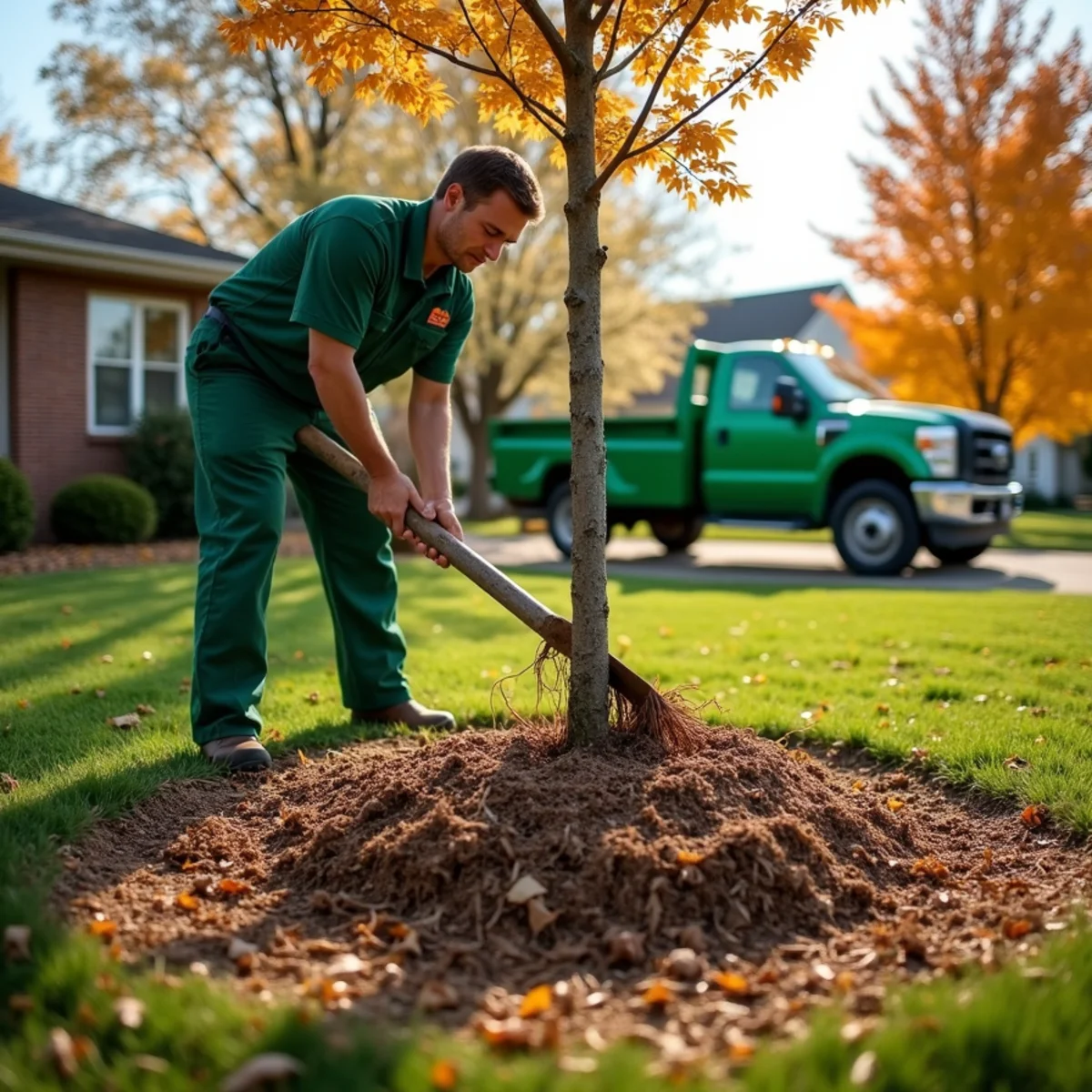
- Find the root flare. The spot where the trunk widens into the roots should sit at grade, or an inch or two high on heavy clay. Planting too deep is one of the most common reasons young trees fail.
- Dig wide, not deep. Make the hole two to three times as wide as the root ball but no deeper, and roughen the sides so roots can push into the clay. Cut twine, burlap and wire away from the top of the ball.
- Mulch 2 to 3 inches deep in a wide, flat ring kept a few inches off the trunk. No mulch volcanoes.
- Water through two growing seasons. Give a slow, deep soak about once a week when rain doesn't do it, and check the soil a few inches down first, since clay can drown roots as easily as drought dries them out.
Smaller trees usually establish faster than big ones, often catch up within a few years, and cost less to buy and plant. Price mostly follows tree size, container-grown versus balled-and-burlapped stock, access for a heavy root ball, and whether an old stump has to be ground first. Our tree and shrub planting service covers species selection, the 811 request, planting and a two-year watering plan.
We plant shade trees, small flowering trees and shrubs on private property across Fort Wayne and New Haven, matched to the soil and space you actually have. Call (323) 606-0255 for a free estimate.
Need a hand with this?
Tree & Shrub Planting in Fort Wayne & Northeast Indiana
If you'd rather have it handled, our family-owned crew does this work every week. Estimates are free and written out.
Frequently Asked Questions
What is the fastest-growing shade tree for Fort Wayne?
Can the city plant a tree in front of my house?
How far from my house should I plant a shade tree?
Is it too late to plant a tree in November?
Can I plant a new tree where an old stump was ground?
All About Tree & Turf Services
Family-owned landscaping and tree service in Fort Wayne, led by Darick Van. We share what we've learned working on real Northeast Indiana properties. Questions? Call (323) 606-0255.