
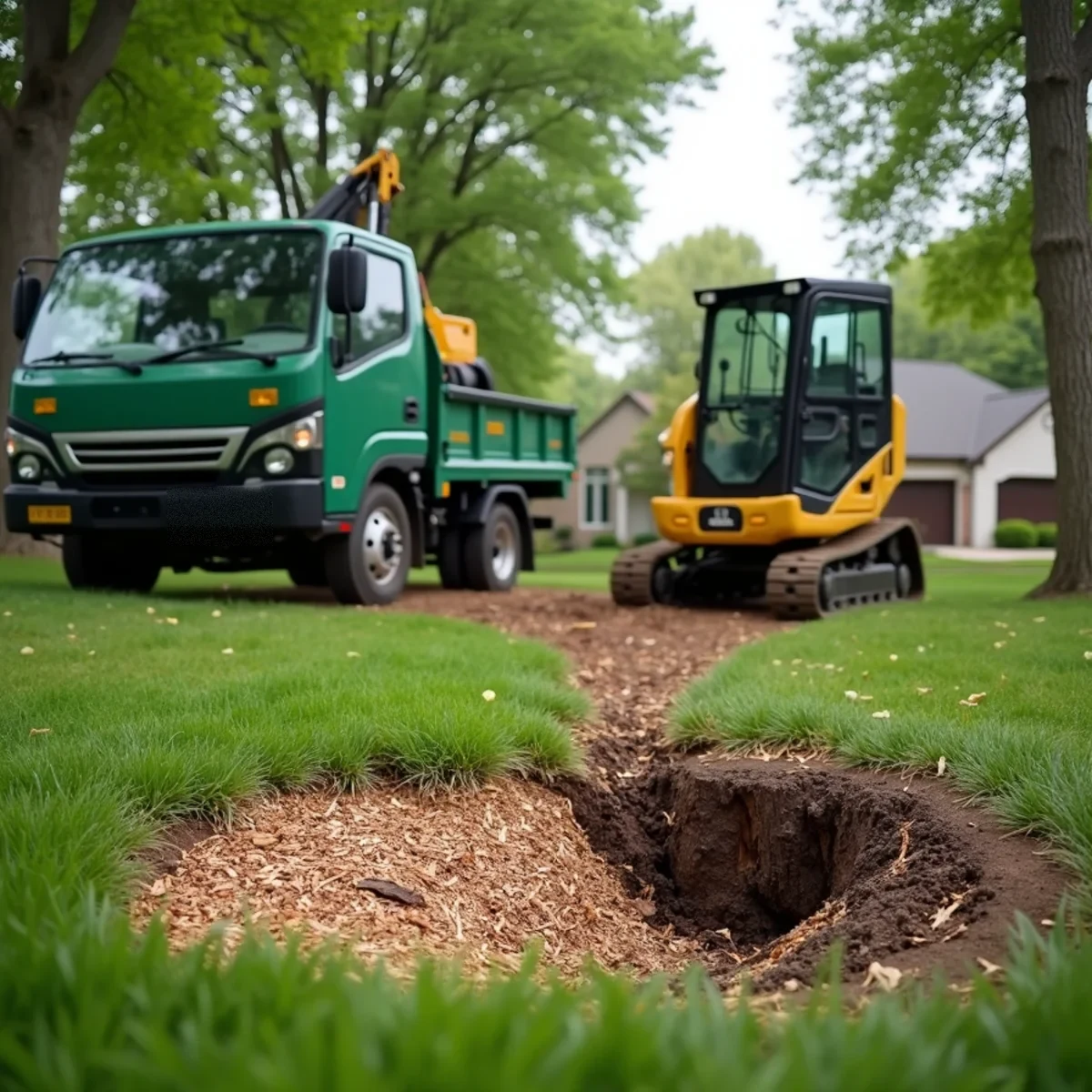
For most yards, stump grinding is the right call. A grinder chips the stump down below the soil line, the leftover roots rot away underground, and you can put grass back over the spot within days. Full stump removal, which digs or pulls out the stump and its root ball, makes sense mainly when you're building over the spot. That's the short answer to stump grinding vs stump removal.
The longer answer depends on what you want to do with the space next, how big the stump is, and how much yard disruption you can live with. Below is a plain comparison of both methods, what happens to the roots afterward, the do-it-yourself options people ask about, and a few Fort Wayne details, like city street-tree stumps, that catch homeowners off guard.
Stump Grinding vs. Stump Removal, Side by Side
Both methods start the same way: the tree is down and you're left with a stump. Here's how professional stump grinding compares with full removal on the points that matter.
- Method: Grinding uses a machine with a spinning, carbide-toothed wheel that chews the stump into chips. Removal means digging around the stump, cutting the major roots, and prying or lifting the whole stump and root ball out of the ground, usually with an excavator or similar equipment.
- Depth: A grinder typically takes the stump 6 to 12 inches below grade, which is enough to lay topsoil and grow grass. Removal takes out the stump and the main root mass, often leaving a hole several feet across.
- Root ball: With grinding, the root ball and lateral roots stay in the ground and decay over time. With removal, the central root ball comes out, though smaller roots running out under the lawn stay behind either way.
- Yard disruption: Grinding leaves a pile of chips and soil and a shallow depression. Removal leaves a large crater, piles of displaced soil, and often tire or track marks across the lawn.
- Time: Most residential stumps are ground in a single visit, usually a matter of hours. Removal takes longer because of the digging, hauling, backfilling, and compacting.
- Cost: Grinding is almost always the less expensive option. Removal costs considerably more because of the equipment, the labor, disposal of a heavy root ball, and the fill dirt needed afterward.
What Happens to the Roots After Grinding
This is the question we hear most. After grinding, the roots left underground are cut off from any leaves, so they slowly die and decompose. Depending on the species and size, that takes years, not months, and it happens out of sight while the lawn grows over the top.
As larger roots rot, the soil above them can settle. You may notice a small depression where the stump was, or a shallow sinkhole along the path of a big root a few seasons later. The fix is simple: top the low spot with screened topsoil, rake it level, and reseed. On the dense clay common across Allen County, plan on doing this once or twice as things settle.
Grinding also leaves a mound of grindings, a mix of wood chips and soil, and there's usually more of it than people expect. Don't leave a deep layer of fresh grindings in the hole and seed over it. Fresh wood ties up nitrogen as it breaks down, and grass struggles in it. Rake most of the chips out, fill with topsoil, and then seed or lay sod. The leftover grindings work fine as a coarse mulch in natural areas away from the house.
Which One Fits What You're Planning Next?
The right choice depends far more on the next use of the ground than on the stump itself.
Putting Lawn Back
Grinding wins here. Once the grindings are pulled and the hole is filled with topsoil, the spot is ready for seed or sod. If it's a large area, like several stumps from a row of dead ash, sod installation gives you instant cover. If you have time and it's the right season, seed costs less. Our sod vs. seed guide walks through that choice for Fort Wayne yards.
Planting a New Tree
The easy route is to plant the new tree a few feet away from the old stump, outside the densest part of the old root mass. If the new tree has to go in the exact same spot, ask for a deeper, wider grind and replace the grindings with good soil. Full removal is rarely needed just to replant.
Building Over the Spot
If you're building over the spot, whether it's a shed, an addition, a footing, or any hard surface, talk to whoever is doing the construction before you choose. Decaying roots can settle under a slab or footing years later, so builders often want the root mass out. This is the situation where full stump removal earns its higher price.
Leaving It Alone
A stump tucked away at the back of a lot can sometimes stay. Just know it may sprout, it can attract wood-decay fungi and insects as it rots, and it's a mower and trip hazard if it sits in turf.
Not sure which approach fits your yard? We'll look at the stump, tell you honestly if grinding is enough, and give you a real price on site. Call (323) 606-0255 for a free estimate.
Will the Stump Sprout Back?
Some species fight back after they're cut. Black locust, boxelder, willow, poplar and cottonwood, tree-of-heaven, and Callery pear are all known for sending up sprouts from the stump or from roots near the surface. A good grind removes the stump tissue that produces most of those sprouts, which is one reason grinding beats leaving a stump to rot on its own.
If a few suckers still pop up from the lateral roots afterward, keep cutting or mowing them off. Each time you remove the new growth, the root burns stored energy, and the sprouting usually tapers off.
What About Chemical Stump Killers or Burning?
Stump-removal granules sold at hardware stores work by speeding up decay. You drill holes in the stump, add the product and water, and wait. The catch is the waiting: it commonly takes many months, sometimes more than a year, before the wood is soft enough to break apart, and you still have to dig out what's left.
Burning is slow and messy, and open burning is often restricted, so check your local rules before you strike a match. Stumps can smolder underground along the roots for a long time, which is a real fire risk near fences, sheds, and dry turf. For most homeowners, grinding is faster, cleaner, and safer than either option.
Fort Wayne Details to Know Before You Grind
- Call 811 first. Indiana 811 asks for at least two full working days' notice before digging, and a grinder working 6 to 12 inches below grade counts. Gas service lines, buried cable, and electric lines often run right through old root zones. A reputable crew confirms the locates are done before the wheel touches dirt.
- City street-tree stumps belong to the City. If Fort Wayne Parks removed a tree from the right-of-way in front of your house, the City schedules the stump for grinding, typically within about a year. The City doesn't reseed afterward, so plan to fill and seed that spot yourself. Check with 311 before hiring anyone to grind a city stump sooner.
- Check the access. Grinders come in different sizes. A backyard stump behind a narrow gate may need a smaller machine, which is slower but avoids tearing up the lawn.
- Hidden metal and rock. Old stumps near fence lines sometimes swallowed nails, wire, or posts. Tell your crew about anything you know is buried; it protects the machine and the people around it.
What Stump Grinding Costs in Fort Wayne
As a rough planning range, not a quote, stump grinding often runs about $75 to $400 per stump. Online cost estimators for Fort Wayne often show roughly $75 to $140 for an average stump; large or difficult stumps run higher. Full stump removal doesn't have a tidy range, because it depends on the equipment needed, the size of the root ball, haul-off, and how much fill it takes to bring the hole back to grade.
These are the factors that move a grinding price up or down:
- Diameter at ground level, including the root flare, which is often much wider than the trunk
- Wood type, since dense hardwoods grind slower than softer species
- Access for the machine, including gates, slopes, and distance from the driveway
- Number of stumps, because several stumps in one visit share the setup cost
- Cleanup scope: leaving the grindings, hauling them away, or backfilling with topsoil
If you're also having a tree taken down, it's usually cheapest to have the stump ground on the same visit. Our tree removal cost guide covers how removal and grinding are typically priced together.
Our stump work is grinding. If your project truly needs the whole root ball out, we'll tell you so on the estimate rather than sell you a grind that won't do the job. We grind stumps and handle tree removal across Fort Wayne and Huntertown, with cleanup and backfill options spelled out before the machine starts. Call (323) 606-0255 for a free estimate.
Need a hand with this?
Stump Grinding & Removal in Fort Wayne & Northeast Indiana
If you'd rather have it handled, our family-owned crew does this work every week. Estimates are free and written out.
Frequently Asked Questions
Is stump grinding or stump removal better?
How deep does a stump grinder go?
Do tree roots keep growing after the stump is ground?
Can I plant grass right after stump grinding?
Should I grind the stump when the tree comes down or later?
All About Tree & Turf Services
Family-owned landscaping and tree service in Fort Wayne, led by Darick Van. We share what we've learned working on real Northeast Indiana properties. Questions? Call (323) 606-0255.