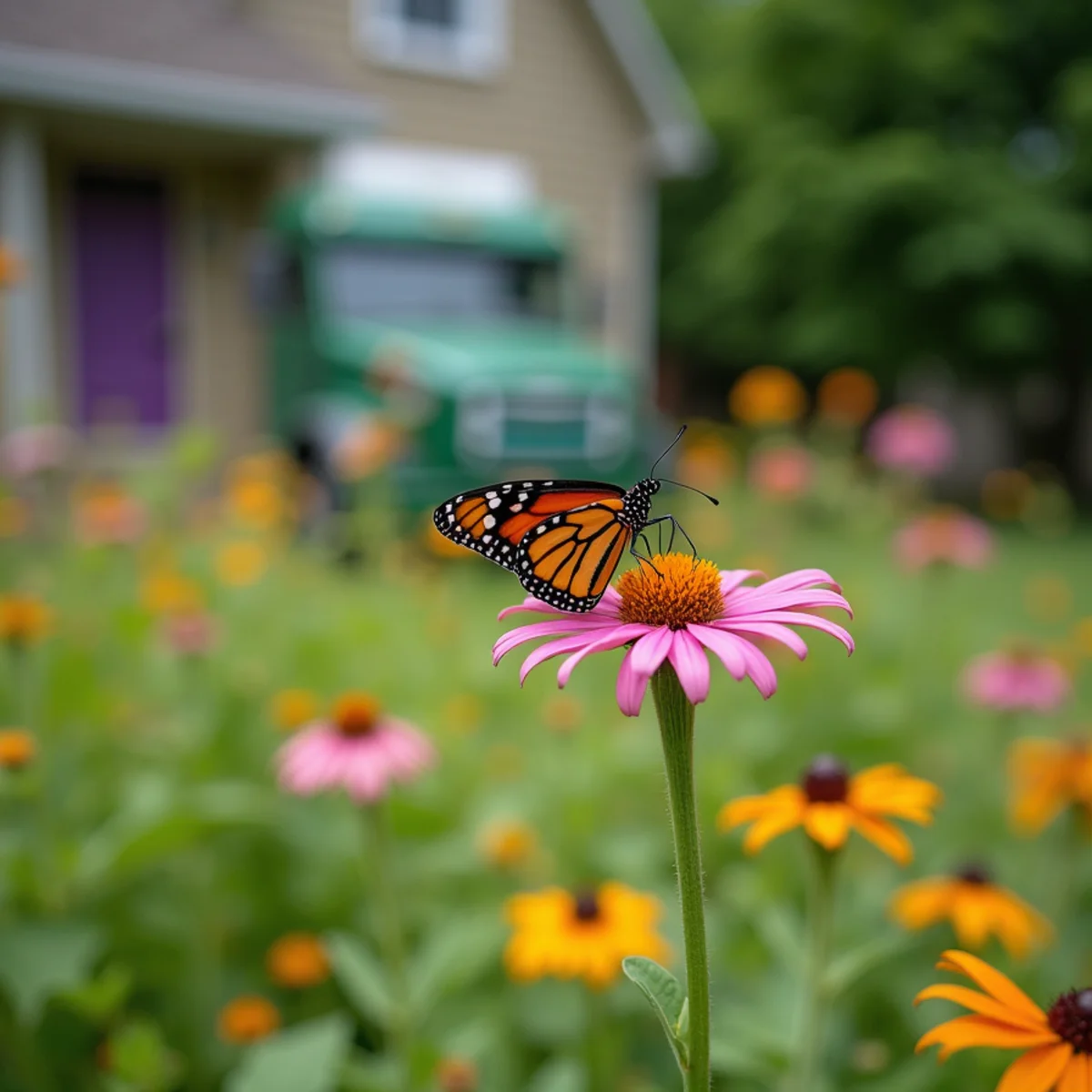
The best native plants for northeast Indiana clay are the ones that grew up in it: swamp milkweed, blue flag iris and buttonbush for wet spots; purple coneflower, black-eyed Susan and prairie dropseed for sunny beds; wild columbine and spicebush for part shade; and serviceberry, redbud and swamp white oak for trees. Matched to the right spot, natives handle our slow-draining soil and freeze-thaw winters better than many imported ornamentals.
This guide groups natives commonly recommended for our region by site, maps out bloom season, and covers the invasive plants worth pulling out. It also covers the part people forget: making a native planting look designed, so it fits a Fort Wayne street or an HOA neighborhood. Our landscape design and installation work leans on these plants for exactly those reasons.
Why Native Plants Work in Northeast Indiana
Much of Allen County sits on Blount and Pewamo clay, which compacts and drains slowly. Our growing season runs about 173 days, with wet springs, dry stretches in late summer, and hard winters. Plants native to this region are adapted to those conditions, and many have deep roots that help open up heavy soil over time.
- Clay and climate: fewer losses to wet springs and cold winters when the plant matches the site.
- Pollinators: native flowers feed native bees and butterflies, and milkweeds are the host plants monarch caterpillars depend on.
- Less watering once established: after the first season or two, most natives in the right spot need little extra water outside of drought.
- Fewer inputs: they generally need little or no fertilizer.
Low maintenance is not no maintenance. Native beds still need weeding while they fill in, a yearly cutback, occasional dividing, and crisp edges. The difference is that you are tending plants that want to be here instead of propping up ones that do not.
Native Plants for Wet Clay Spots and Rain Gardens
Most Fort Wayne yards have a low corner that stays soggy every April. Instead of fighting it, plant for it. These natives tolerate wet feet and heavy clay:
- Swamp milkweed: pink summer flowers, a monarch host plant, and happy in damp soil.
- Blue flag iris: violet-blue flowers in late spring; handles short spells of standing water.
- Cardinal flower: bright red spikes in late summer that hummingbirds visit.
- Joe-Pye weed: tall, dusty-pink flower heads from midsummer on; give it room.
- Switchgrass: an upright native grass that rides out both wet spells and dry ones.
- Buttonbush and red-osier dogwood: shrubs for wet ground; the dogwood's red stems stand out all winter.
- River birch and swamp white oak: trees that tolerate wet sites.
A rain garden is a shallow planted basin that catches runoff from a roof or slope and lets it soak in. On our clay it needs careful siting and sizing so water drains within a day or two instead of sitting. Most rain garden guides recommend keeping it at least 10 feet from the foundation, and Indiana 811 must be contacted at least two full working days before you dig. If water is pooling against the house or across the lawn, start with our yard drainage solutions and our guide to drainage fixes for Blount and Pewamo clay.
Native Plants for Full-Sun Beds
Sunny front beds are where prairie plants shine. These form the backbone of most native gardens in our area:
- Purple coneflower: midsummer flowers, then seed heads that goldfinches pick at into fall.
- Black-eyed Susan and sweet black-eyed Susan: gold summer color; the sweet black-eyed Susan blooms later and handles some shade.
- Wild bergamot: lavender midsummer flowers that bees love, with a minty scent.
- Butterfly milkweed: bright orange flowers and another monarch host. It prefers well-drained soil, so plant it on a slope or the high side of a bed, not the wet corner.
- Foxglove beardtongue: white flower spikes in late spring and early summer; tolerates clay.
- New England aster: purple fall flowers that feed late-season pollinators.
- Little bluestem and prairie dropseed: compact native grasses for edges and the front of beds. Little bluestem turns coppery in fall and does best where it is not soggy.
Native Plants for Part Shade
Under a maple canopy or along the east side of the house, choose plants that get by on a few hours of sun or dappled light. Wild columbine has red and yellow nodding flowers in spring and reseeds gently. Golden alexanders bring yellow flowers in late spring and like moist soil. Joe-Pye weed, wild bergamot and sweet black-eyed Susan all tolerate part shade at the edge of trees. For shrubs in shade, look at spicebush and witch hazel below.
Native Shrubs and Trees
Shrubs
- Ninebark: tough and clay-tolerant, with white early-summer flowers and peeling bark.
- Spicebush: tiny yellow flowers in early spring and yellow fall color; good in part shade.
- American hazelnut: a suckering shrub for informal screens and wildlife.
- Witch hazel: blooms in fall with spidery yellow flowers when little else is flowering.
- Buttonbush and red-osier dogwood: the wet-site shrubs mentioned above.
Small Trees
Serviceberry gives white April flowers, early-summer berries that birds love, and orange fall color. Eastern redbud covers its bare branches in pink-purple blooms in spring. Both stay small enough for front yards and tighter spaces where a big shade tree would not fit.
Shade Trees to Replace Lost Ash
The emerald ash borer killed most of the region's ash trees, and plenty of yards still have a gap where one stood. Strong native replacements include swamp white oak and bur oak, both tough on clay; sugar maple for better-drained spots; and black gum, which handles wet soil and turns brilliant red in fall. Plant a mix rather than repeating one species, which is the lesson ash taught everyone. Our post on Fort Wayne's tree canopy after the emerald ash borer covers replanting in more depth.
Plan for Color From April to October
A native bed that flowers for three weeks and then goes plain green is a common complaint. Spread bloom times across the season:
- Early spring: serviceberry, eastern redbud, spicebush, wild columbine
- Late spring to early summer: golden alexanders, foxglove beardtongue, blue flag iris, ninebark
- Midsummer: purple coneflower, black-eyed Susan, wild bergamot, butterfly milkweed, swamp milkweed, buttonbush
- Late summer: Joe-Pye weed, cardinal flower, sweet black-eyed Susan
- Fall: New England aster and witch hazel, plus the bronze and gold of switchgrass and little bluestem
- Winter: red-osier dogwood stems, ninebark and river birch bark, and standing grass seed heads
Want a native bed designed around your soil, light and HOA rules? We plan it, plant it and mulch it in one job. Call (323) 606-0255 for a free estimate.
Invasive Plants to Remove Instead
Some of the most common landscape plants in older Fort Wayne yards are listed as invasive in Indiana. They spread from yards into woods and natural areas and crowd out native plants. Replacing them is one of the best upgrades you can make:
- Callery pear, including Bradford pear: replace with serviceberry or eastern redbud. The City of Fort Wayne lets residents get permission to contract removal of Callery pear street trees.
- Burning bush: replace with ninebark or spicebush, or plant a black gum if you want red fall color.
- Japanese barberry: replace with ninebark or a compact native grass like little bluestem.
- Bush honeysuckle: replace hedges and screens with American hazelnut, ninebark or red-osier dogwood.
Remove invasive shrubs before they set fruit, dig out as much root as you can, and expect some resprouts the first year. A mature Callery pear is a tree removal job, so budget for stump grinding as well.
Planting and Establishing Native Plants
First-Season Care
Plant in spring or fall, when cooler temperatures and regular rain help roots settle in. Loosen the clay across the planting area, set plants at the same depth they grew in the pot, and water them in well. Through the first growing season, water deeply whenever rain falls short, then taper off. Mulch 2 to 3 inches deep between plants, kept off the crowns and stems, to hold moisture and hold back weeds. Our mulching and bed maintenance service covers the weeding and mulch while a new bed fills in.
Gardeners have a saying about native perennials: the first year they sleep, the second year they creep, and the third year they leap. Much of the early growth happens underground, so do not judge a new bed by its first summer.
Make It Look Intentional
The fastest way to draw a complaint about a native bed is to let it look abandoned. A few design habits make native plantings read as planned, which matters in HOA neighborhoods like many of the newer subdivisions around Huntertown and Fort Wayne:
- Plant in groups of three, five or more of the same plant instead of one of everything.
- Keep a crisp, defined edge or a mowed strip between the bed, the lawn and the sidewalk.
- Layer heights, with short plants in front and tall ones in back.
- Repeat a few key plants through the yard so it reads as one design.
- Add clear signs of care, like a neat border, a path or a birdbath.
Check your HOA covenants before converting lawn to beds, since some set rules on plant height or how much of the front yard can be planted. A drawn plan with a plant list often makes approval easier.
If you want natives without the trial and error, we design and plant beds built for Fort Wayne clay, and our landscaping cost guide shows how to budget the work in phases. Call (323) 606-0255 for a free estimate, and we will walk your yard, check sun, soil and drainage, and put together a plan.
Need a hand with this?
Landscape Design & Installation in Fort Wayne & Northeast Indiana
If you'd rather have it handled, our family-owned crew does this work every week. Estimates are free and written out.
Frequently Asked Questions
What native plants grow well in clay soil in Indiana?
Do native plants need to be watered?
Is it better to plant natives in spring or fall?
Will a native garden look messy?
Why is Callery pear a problem?
All About Tree & Turf Services
Family-owned landscaping and tree service in Fort Wayne, led by Darick Van. We share what we've learned working on real Northeast Indiana properties. Questions? Call (323) 606-0255.