
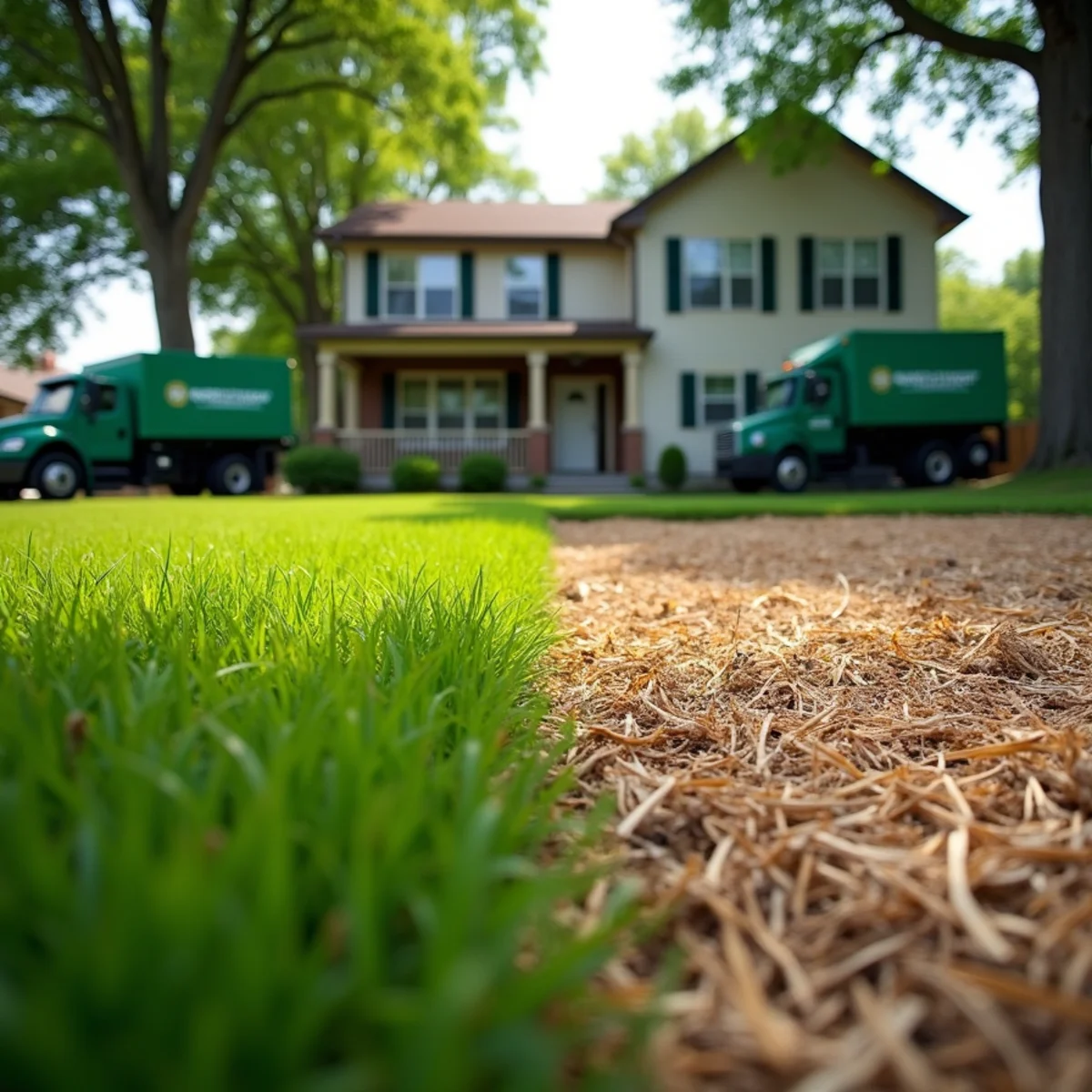
In the sod vs. seed decision, sod wins on speed, erosion control and weed resistance, while seed wins on cost, grass choice and flexibility in shade. Sod costs far more per square foot upfront, but you get a usable lawn in a few weeks. Seed costs a fraction as much but needs the right timing and most of a season to fill in. Neither one lasts longer by nature; soil prep and care decide that.
Here is how the two compare for Fort Wayne yards specifically, where clay soil, a short seeding window and hot summers shape the answer. Every cost figure below is a rough planning range, not a quote.
Upfront Cost: Sod Costs Far More Per Square Foot
Sod is a finished product: grass grown on a farm, cut, delivered and laid by hand, which is why professional sod installation costs much more than seeding. A common benchmark for sod material and installation is around $1.10 per square foot, and published local cost reports for Fort Wayne put installed sod at roughly $1.30 to $1.80 per square foot depending on size, access and prep. When grading and soil prep are needed, a planning figure is around $0.47 per square foot on top of that.
Seed costs a fraction of that for the same area. The tradeoff is that seed asks for more of your time and patience: weeks of careful watering, weed management and a season of filling in. Both options need the same soil prep. Seeding into poorly prepared clay wastes seed the same way sodding over it wastes sod.
- Sod costs more when the area is large, access is tight, old turf has to be stripped or the grade needs work.
- Seed costs more than expected when you seed at the wrong time and have to redo it, or weeds take over and need treatment.
- Both cost more when the soil is compacted construction fill that has to be loosened or amended first.
Timing: When to Seed and When to Lay Sod in Indiana
Timing is where seed is least forgiving. According to Purdue Turfgrass Science, the optimum window for seeding cool-season grass in northern Indiana is August 15 to September 15. Seeding even a week past that can add two to four weeks to establishment, which matters when the first hard freeze is coming.
Purdue also ranks dormant seeding, done from late November through March when the soil is too cold for seed to germinate, ahead of spring seeding. The seed sits through winter and sprouts as soon as conditions allow. Spring seeding is the weakest option here because young grass has to face summer heat and crabgrass before its roots are established, and most crabgrass preventers also stop grass seed from germinating.
Sod is much more flexible. It can go down through most of the growing season, spring through fall, as long as you can keep it watered. It should never go down on frozen ground, and Purdue Extension advises against laying it on very dry, hot soil; lightly moistening the soil first helps. Midsummer sod works, but it drinks a lot of water.
How Long Each Takes to Become a Real Lawn
Sod looks finished the day it is laid, but it is not really a lawn until the roots knit into the soil. Following Purdue's guidance, after about two weeks of daily watering you can gently tug a corner; resistance means roots are taking hold. Most sod handles light use within several weeks.
Seed germinates anywhere from about a week for perennial ryegrass to three weeks or more for Kentucky bluegrass. Seedlings can usually be mowed after a few weeks, but a seeded lawn takes most of a season to reach full density. A lawn seeded in the late-summer window usually looks full by the following late spring.
Slopes, Shade and Weeds
Slopes and erosion: sod wins
On a slope, a heavy rain can wash seed and topsoil downhill before anything germinates. Sod holds the soil from day one, which makes it the safer call for banks, swales and strips along driveways where runoff concentrates. On steep spots, sod is sometimes staked in place until it roots.
Shade: seed has the edge
Most sod sold in our region is grown in full sun and leans heavily on Kentucky bluegrass. It looks great in open yards but tends to thin out under trees. Seed lets you pick the blend for the spot, like a shade-tolerant mix under maples or a tall fescue blend for a hot, sunny side yard. If your yard is a mix of sun and shade, seed or a combination usually works better than sod alone.
Weed pressure: sod wins
Bare soil is an open invitation for weeds, and a new seeding has thin cover for weeks. Dense sod shades the soil immediately, so weeds have a much harder time getting started. That advantage is biggest in spring, when crabgrass germinates at the same time as new grass seed.
Watering Demands and Durability
Both need serious water at first, in different ways. New sod needs daily watering for about two weeks so moisture goes through the sod and into the top inch of soil. New seed needs the surface kept consistently moist, often with several light waterings a day, until the seedlings are established. Missing a few days hurts seed more, because a germinating seed has no reserves to fall back on. If you go with sod, our new sod care and watering schedule walks through the first six weeks.
For durability and traffic, sod is ready for kids and dogs sooner. Long term, a well-prepped seeded lawn of the right blend is just as tough. Which lasts longer depends mostly on the soil underneath. Sod laid on hard, compacted clay often roots shallowly and struggles through its first summer, while seed sown into loosened, amended soil can outlast it.
Weighing sod against seed for a new or worn-out lawn? We will look at your sun, slope and soil and tell you honestly which makes sense, or whether a mix of both does. Call (323) 606-0255 for a free estimate.
Clay Soil Prep Matters for Both
Much of Allen County sits on Blount and Pewamo clay, which compacts easily and drains slowly. On new construction lots it is often worse: heavy equipment packs the subsoil, and the original topsoil may be thin or gone. Neither sod nor seed can fix that on its own.
- Loosen compacted soil by tilling or core aerating before planting
- Add topsoil or compost where the existing layer is thin
- Grade so water moves away from the house and does not pond on the new lawn
- Pull rocks, concrete chunks and construction debris out of the top few inches
- Settle and lightly firm the surface so it does not sink unevenly after the first heavy rain
For a brand-new home, our new construction lawn installation service handles grading, prep and either sod or seed as one job. If an existing lawn is struggling in heavy clay, our guide to clay soil and lawn aeration explains why compaction is usually the real problem.
The Hybrid Approach: Sod Where It Counts, Seed the Rest
You do not have to choose one for the whole property. Many homeowners get the best of both by splitting the yard:
- Sod the front yard, seed the back. The front gets an instant finished look, and the larger backyard fills in from seed at a fraction of the cost.
- Sod the slopes, seed the flats. Sod protects banks and swales from washing out while flat areas are seeded.
- Sod the sun, seed the shade. Use bluegrass sod in open areas and seed a shade blend under trees.
- Sod a strip along walks and drives to stop mud and edge erosion while the main lawn grows in from seed.
Thickening a thin existing lawn is a different job from starting from scratch. For that, core aeration and overseeding during the fall window is usually the most cost-effective fix.
Sod vs. Seed Decision Checklist
- Do you need a usable lawn within a month for a sale, an event, kids or pets? Lean toward sod.
- Is the budget tight, and can you wait for the late-summer window? Lean toward seed.
- Is it already past mid-September? Lay sod now, or plan a dormant seeding from late November on.
- Is the area on a slope or in a drainage path? Sod.
- Is it mostly shade? Seed with a shade blend.
- Can you water daily for two to three weeks? If not, delay either option until you can.
- Is the soil compacted fill? Budget for prep either way.
We lay sod and handle seeding projects across Huntertown, Fort Wayne and the surrounding area, and we will tell you honestly when seed is the smarter buy. Call (323) 606-0255 for a free estimate.
Need a hand with this?
Sod Installation in Fort Wayne & Northeast Indiana
If you'd rather have it handled, our family-owned crew does this work every week. Estimates are free and written out.
Frequently Asked Questions
Is sod better than seed?
When should you lay sod in Indiana?
Can you lay sod on top of existing grass?
How long does seed take to fill in compared with sod?
Is it cheaper to seed or sod a lawn?
All About Tree & Turf Services
Family-owned landscaping and tree service in Fort Wayne, led by Darick Van. We share what we've learned working on real Northeast Indiana properties. Questions? Call (323) 606-0255.