
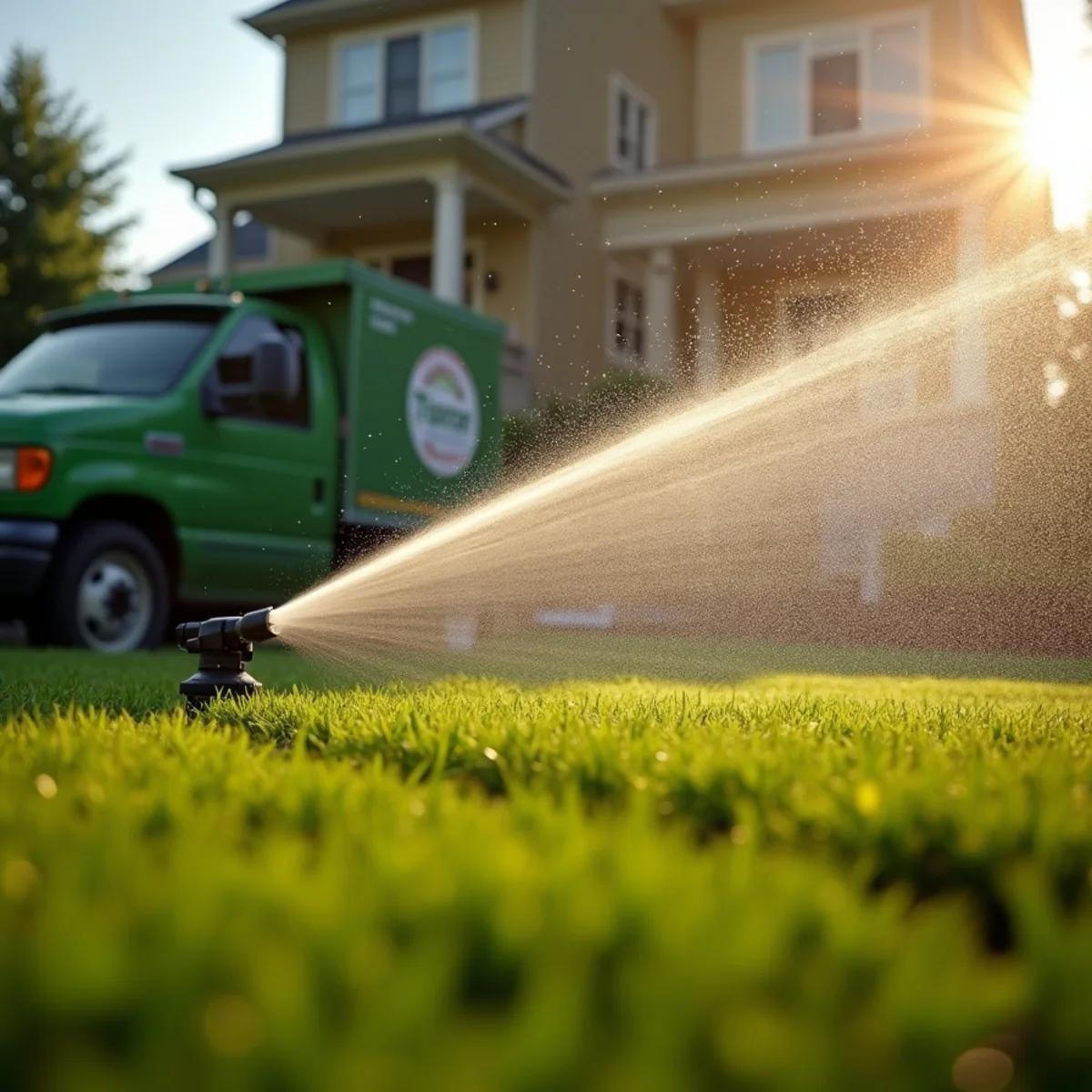
How often to water new sod comes down to timing: water every day for the first two weeks, enough to soak through the sod and about an inch into the soil beneath, and up to twice a day in hot weather. That is the guidance in Purdue Extension's publication on establishing a lawn from sod. After about two weeks, once the roots start gripping the soil, you switch to deeper, less frequent watering.
The first month decides whether new sod becomes a lawn or a set of brown rectangles, and replacing sod that dried out costs far more than a few weeks of careful watering. Below is a week-by-week watering schedule built for Fort Wayne's clay soils and summers, plus how to check moisture, when to mow for the first time and what the warning signs look like.
Before and on Install Day
Good new sod care starts before the first roll goes down, even when a professional sod installation crew is doing the work. Purdue Extension advises against laying sod on very dry or hot soil and recommends lightly moistening the soil first. Dry soil pulls water out of the sod's thin root layer and leaves the roots nothing to grow into.
- Lightly water the prepared soil the day before or the morning of installation
- Start watering the first sections while the rest is still being laid, instead of waiting until the whole job is finished
- Give the finished lawn a heavy first soaking, enough that you can lift a corner and see wet soil beneath
- Pay extra attention to edges and seams, which dry out first
How Often to Water New Sod, Week by Week
Weeks 1 and 2: water daily
Water every day so the sod and the top inch of soil stay wet. In hot, sunny or windy weather, that usually means two waterings a day, morning and early afternoon. The goal is moisture where the roots are trying to grow, not just a damp surface. Skip a day only if a soaking rain did the work for you, and lift a corner to confirm before you assume it did.
Around day 14: the tug test
Gently tug on a section of sod or try to lift a corner. If it resists, roots are knitting into the soil. If it lifts freely, keep up daily watering a few more days and test again. Shaded sod and sod laid in cool weather can take longer.
Weeks 3 and 4: deeper and less often
Once the sod passes the tug test, stretch the time between waterings to every other day, then every two to three days, while watering longer each time. This is the step that builds deep roots. Shallow daily watering beyond the first couple of weeks keeps roots near the surface, where they will struggle in July.
Week 5 and beyond: normal lawn watering
By now the sod can be treated like an established lawn: about an inch of water a week, counting rain, applied in one or two deep waterings. Set a rain gauge or a few straight-sided cans on the lawn to see how long your sprinkler takes to put down an inch.
How to Check Moisture Without Guessing
Hose-end sprinklers rarely cover evenly, and the strips along driveways and walks dry much faster than the middle of the lawn. Check a few spots every day for the first two weeks.
- Lift a corner of a sod piece in several places. The soil underneath should be damp and dark, not dry and pale.
- Push a screwdriver through the sod. It should slide into the soil easily. If it stops hard, the soil is dry.
- Look at the seams. Pieces that are pulling away from each other are drying out.
- Step lightly near the edge. A slightly springy feel is good, footprints that stay pressed in mean it needs water, and squishing means too much.
Signs of Underwatering and Overwatering
Too little water
- Gaps opening at the seams as the pieces shrink
- Edges and corners turning brown and curling up
- A dull, bluish-gray color before the grass browns
- Brown areas near pavement, on slopes and on the south and west sides of the house
Too much water
- Soil that squishes underfoot, or sod that slides when you step on it
- Yellowing across larger areas, especially in low spots
- Mushrooms, slime or fungus on the surface
- Roots that still are not gripping after three weeks because the soil never gets air
New sod turning yellow can come from either problem, so lift a corner before you change anything. Wet, sour-smelling soil means back off. Dry soil means water more. Yellowing in the first few days can also come from sod that sat rolled on the pallet too long in the heat. If the roots are healthy and watering is right, new green growth usually pushes through within a week or two.
Planning a new lawn? We prep the soil, lay the sod and walk you through the watering plan before we leave. Call (323) 606-0255 for a free estimate.
Watering New Sod on Fort Wayne Clay
Much of Allen County is Blount and Pewamo clay, which takes in water slowly. Run a sprinkler too long and the water sheets off the surface and into the street while the root zone under the sod stays dry. The fix is to water in cycles.
- Run each sprinkler position until you see the first sign of runoff, often somewhere around 10 to 15 minutes
- Stop and let it soak in for 30 minutes to an hour
- Repeat until the soil under the sod is wet to about an inch
- Water early in the morning, when evaporation is low and the grass dries during the day
If water is still pooling on the new sod a day after watering, the issue may be grading or compaction under the sod rather than how much you water. Our guide to Fort Wayne clay soil and aeration explains how compaction affects roots long after installation.
When Can You Mow New Sod?
Most new sod is ready for its first mow about two to three weeks after installation, once it passes the tug test and the grass has grown taller than your normal mowing height. Mowing too early can pull up loose pieces and rut the soft soil.
- Skip watering the day before so the soil is firm
- Use a sharp blade, since a dull one tears new grass and tugs at loosely rooted pieces
- Mow high, around 3 to 3.5 inches, and never remove more than a third of the blade
- Use a lighter push mower if you can, and avoid sharp turns that twist the sod
- Leave the clippings unless they are heavy enough to clump
After the first few mows, move to a regular weekly schedule. Our lawn care and maintenance visits can take over from here so the new lawn is cut on time and at the right height.
Foot Traffic, Feeding, Heat Waves and Fall-Laid Sod
Foot traffic
Keep people and pets off new sod for the first two to three weeks, except to move hoses and check moisture. Heavy play, gatherings and regular dog traffic should wait several weeks until the roots are firmly anchored.
Fertilizing new sod
Hold off on heavy feeding for the first several weeks. A starter fertilizer is often worked into the soil during prep, so there is no need to add more right away. Once the sod is rooted and growing, a light feeding as part of a residential lawn care program is plenty. Too much nitrogen early pushes top growth at the expense of roots.
Heat waves
During a hot spell, new sod can dry out in a single afternoon. Add a short midday watering to cool the grass, and give extra attention to strips along driveways, sidewalks and the street, where pavement radiates heat. Hot spells are when the daily checks matter most.
Fall-laid sod and winter
Sod laid in early fall usually roots well, because the soil is still warm and the air is cool. Keep watering as needed until growth stops and the ground begins to freeze, since fall sun and wind still dry it out. Keep fallen leaves off new sod so they do not mat on top of it, disconnect hoses before hard freezes and stay off frozen sod. Sod laid close to freeze-up may not finish rooting until spring.
We install sod across Fort Wayne and nearby towns, including Leo-Cedarville and Huntertown. If you are still deciding between rolls and seed, our sod vs. seed comparison lays out the tradeoffs. Call (323) 606-0255 for a free estimate.
Need a hand with this?
Sod Installation in Fort Wayne & Northeast Indiana
If you'd rather have it handled, our family-owned crew does this work every week. Estimates are free and written out.
Frequently Asked Questions
How long should I water new sod each time?
Can you overwater new sod?
Why is my new sod turning yellow?
When can I walk on new sod?
Is it OK to lay sod in the fall in Fort Wayne?
All About Tree & Turf Services
Family-owned landscaping and tree service in Fort Wayne, led by Darick Van. We share what we've learned working on real Northeast Indiana properties. Questions? Call (323) 606-0255.