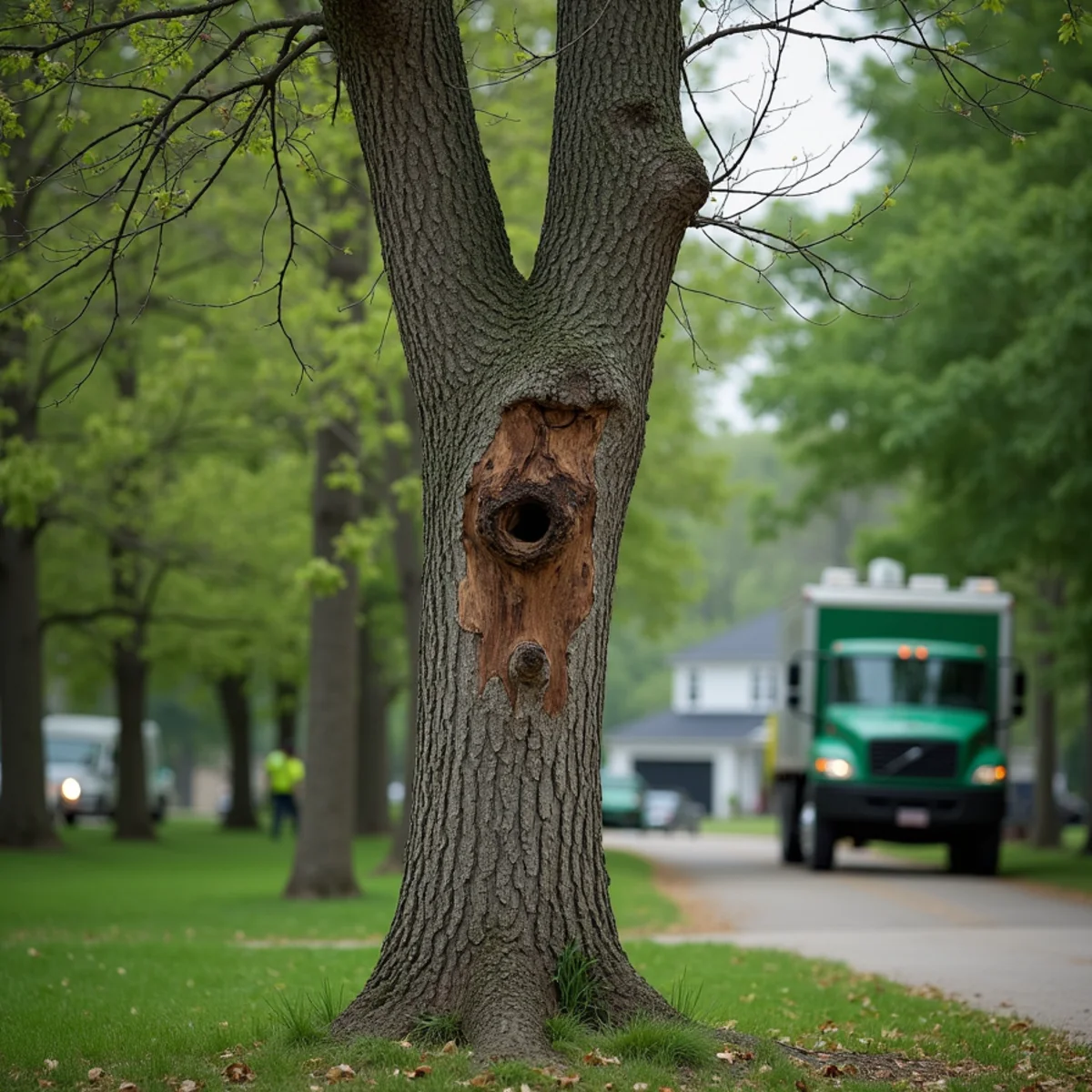
The emerald ash borer swept through Northeast Indiana over a decade ago and killed the overwhelming majority of ash trees in its path. The insect has largely moved on, but its legacy is still standing in yards all over Fort Wayne: gray, bark-stripped dead ash trees that get more dangerous with every passing season.
Arborists have a grim nickname for these trees. They call them widow-makers, because of how suddenly and unpredictably they fail. If you have a dead ash near your home, this is one tree you should not put off.
Why Dead Ash Are So Dangerous
A living tree flexes in the wind and gives warning signs before it fails. Dead ash does neither. As the wood dries and decays, it becomes brittle and loses the flexibility that lets healthy trees bend instead of break.
- Brittle wood snaps without warning, dropping heavy limbs in even modest wind
- Rapid decay means an ash that was climbable last year may be unsafe to climb this year
- Root failure can bring the entire tree down as the anchoring roots rot
- Falling bark and limbs create hazards long before the whole tree comes down
This is exactly why dead ash removal is more specialized, and more expensive, than removing a healthy tree of the same size. Crews often cannot climb the wood safely and must rely on bucket trucks or cranes, working with the assumption that any piece could break unexpectedly.
The Cost of Waiting
Every year a dead ash stands, it gets more brittle, more decayed, and more expensive to remove safely. Worse, the odds of a costly failure climb.
- A planned removal is scheduled, controlled, and priced at standard rates
- A failure onto your house triggers emergency response, structural repair, and an insurance claim with a deductible
- A neglect argument can arise if an insurer decides you left an obviously dead tree standing, which may reduce your payout
Have a dead ash leaning over your house, driveway, or a play area? Do not wait for it to fail. Call (323) 606-0255 or request a free estimate for safe, planned tree removal before it becomes an emergency.
How to Spot a Dead or Dying Ash
You do not need to be an arborist to recognize the warning signs. Walk your property and look for these.
- Bark falling off in sheets, exposing smooth wood underneath
- S-shaped tunnels carved just under the bark, the borer's signature
- Bare branches with no leaves during the growing season
- New shoots sprouting from the trunk base as the tree tries to survive
- Woodpecker damage, since they feed heavily on the borer larvae
If you see several of these, treat the tree as a hazard and get it assessed. The sooner it is evaluated, the more options you have.
Removal, Not Just Trimming
Occasionally a partly declining ash can be managed for a season with careful tree trimming and pruning to remove the worst deadwood. But once an ash is truly dead, pruning is a stopgap at best. The safe answer is full removal, ideally before winter storms and spring winds test the brittle wood. If a dead ash has already dropped a major limb or partially failed, our emergency tree service crew can respond quickly.
Protecting Your Property and Your Neighbors
A dead ash is not only your risk. A tree that falls across a property line or onto a road becomes everyone's problem. Removing it protects your family, your neighbors, and your wallet. We handle dead ash removal throughout Churubusco, Fort Wayne, and Allen County, and we will give you an honest assessment of how urgent your specific tree is. Call (323) 606-0255 and we will take a look.
Prioritizing Which Trees Come Down First
If you have several dead ash on your property, as many rural and wooded lots in our area do, you do not necessarily have to remove them all at once. The key is triage: deal first with the trees whose failure would do the most harm.
- Highest priority: dead ash within striking distance of your house, garage, driveway, or power lines
- Next: trees over walkways, patios, play sets, or anywhere people gather
- Then: trees near property lines, roads, or a neighbor's structure
- Lower priority: dead ash standing in open areas with nothing beneath them, which can sometimes wait
Even a lower-priority dead ash is worth planning for, because these trees do not improve with time. Spreading removals across a season or two can make the cost more manageable while still taking down the most dangerous ones right away. During a free estimate we will walk the property with you and rank your trees honestly, so you spend on the ones that matter most first.
The emerald ash borer changed the tree canopy of Fort Wayne permanently, and the cleanup is still not finished. Every winter, more of these standing dead trees give way. Getting yours down on your schedule, in daylight, with a controlled plan, beats the alternative of a limb through the roof on the worst night of the year. That is the whole case for acting now rather than later.
Frequently Asked Questions
Why are dead ash trees called widow-makers?
How can I tell if my ash tree is dead?
Why does dead ash removal cost more than removing other trees?
Is it worth removing a dead ash before it falls?
All About Tree & Turf Services
Family-owned landscaping and tree service in Fort Wayne, led by Darick Van. We share what we've learned working on real Northeast Indiana properties. Questions? Call (323) 606-0255.