
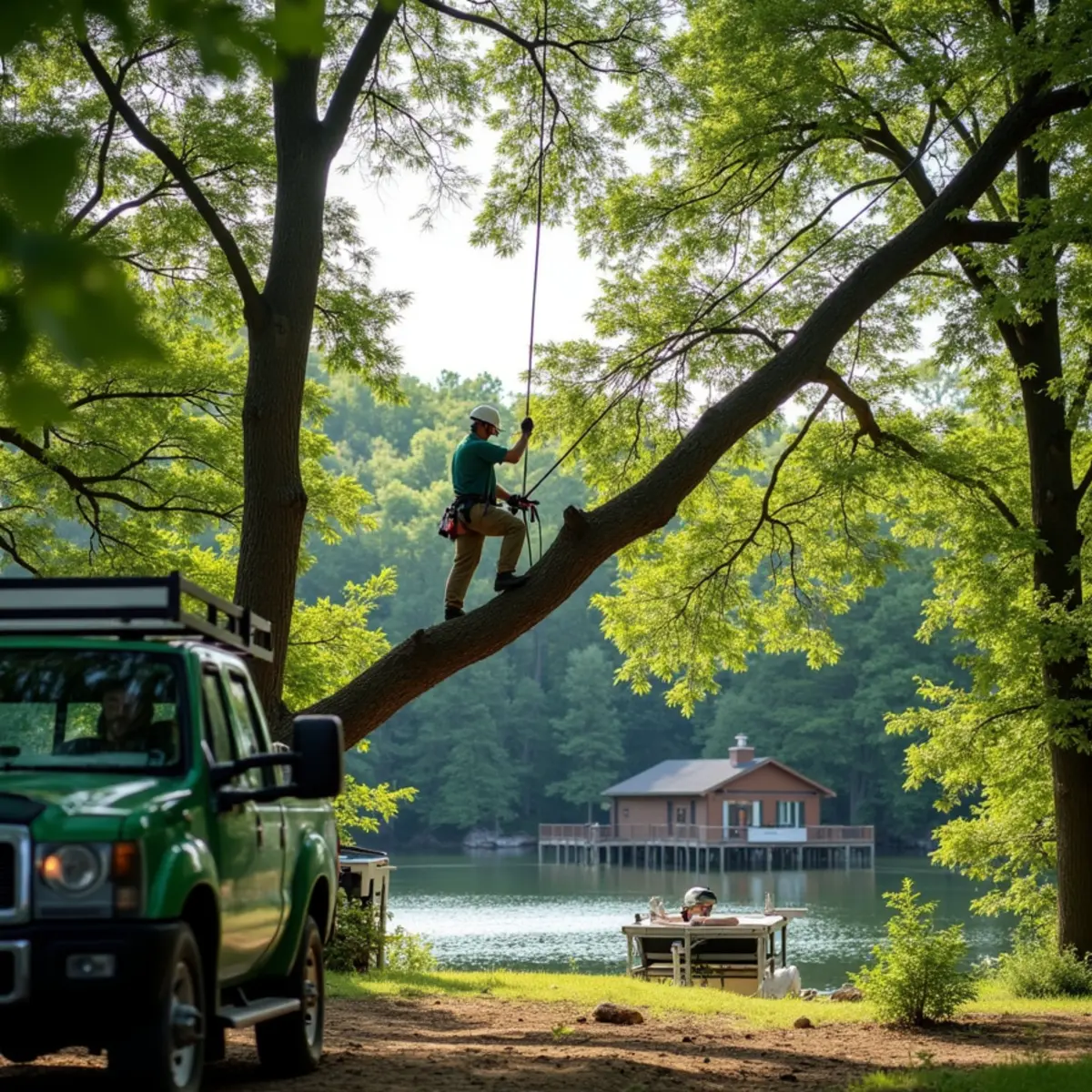
Northeast Indiana lake country is some of the most beautiful property in the state. Lake Wawasee near Syracuse is Indiana's largest natural lake, Lake James up by Fremont anchors the Pokagon area, and dozens of smaller lakes around Warsaw draw families back generation after generation. The mature shade trees that make these lots so appealing are also what make tree work on them genuinely tricky.
A lakefront tree job is not the same as a tree job in a subdivision. The access is worse, the stakes are higher, and there are rules involved. If you own on one of these lakes, here is what actually goes into doing the work safely and legally.
Access Is the First Real Problem
Lake lots tend to be narrow, deep, and steep, sloping down to the water with the house, a seawall, and a dock all crammed into the fall zone. There is often no room to bring a bucket truck close, and dropping a tree the conventional way is not an option when the only clear space is the lake itself.
That means most lakefront removals are done by climbing and rigging, taking the tree down in controlled pieces and lowering each one by rope to a small landing area. On the tightest sites, a crane sets up on the road side and lifts sections out over the house. Both approaches take skill and the right gear, which is exactly why lakefront work belongs with a crew equipped for it. Our tree removal service is built around these confined, high-consequence sites.
Shoreline Rules and Setbacks
This is the part lakefront owners most often overlook. Indiana's public freshwater lakes are regulated, and work within the shoreline and lakebed area can fall under the jurisdiction of the Indiana DNR, on top of any county or lake-association rules. Removing certain trees, disturbing the bank, or working below the legal shoreline may require a permit or need to respect a setback.
- Access is the first problem. Many lakefront lots are steep, tight, and hard to reach with a truck or chipper — the work often has to be rigged by hand or reached from the water side.
- Setbacks and permits apply near the water. Shoreline and near-water tree work can fall under Indiana DNR and local lake rules; always confirm what's allowed before cutting anything close to the waterline.
- Docks, seawalls, and neighbors are inches away. Limbs get lowered by rope over water and hardscape rather than dropped, which takes more time and the right rigging.
- Cleanup is different on a lake lot. Debris can't just be shoved into the lake — it has to be chipped and hauled, and we keep the shoreline clear of sawdust and brush.
- Dead and leaning trees over cabins are the priority. A hazard tree over a seasonal cabin or a boathouse is exactly the kind of job worth scheduling before storm season.
Planning tree work near the water on Wawasee, James, or another Indiana lake? Call (323) 606-0255 for a free on-site estimate. We will walk the site with you and flag where you should confirm shoreline rules before we start.
We are tree professionals, not your permitting office, so we always tell lakefront clients the same thing: check with the Indiana DNR and your local or lake-association authorities before shoreline work begins. We are glad to time the job around whatever approvals apply. Doing it in the right order protects you from fines and protects the lake everyone shares.
Why the Trees Matter to the Lake
Shoreline trees and their roots hold the bank together and slow the runoff that would otherwise carry sediment and lawn chemicals straight into the water. That is a big reason removals near the water are regulated. When a tree genuinely has to come out, thoughtful replanting keeps the bank stable and the water clean.
Protecting Docks, Seawalls, and Boat Lifts
The hardware sitting under a lakefront tree is expensive. A dock, a boat lift, a seawall, and a lakeside deck can add up to serious money, and all of it usually sits directly in the fall zone. A dropped limb through a boat lift is not a small repair.
Careful rigging is how we keep those structures out of harm's way, lowering each piece under control rather than letting anything free-fall. When we cannot fully clear the fall zone, we protect what stays with mats and planning. This is also why hiring a fully insured company matters so much on the lake: if something does go wrong, you are covered rather than staring at a repair bill.
When to Trim Instead of Remove
Not every lakefront tree needs to come down. Sometimes the goal is a better view of the water or a healthier tree, and skilled tree trimming and pruning gets you there while keeping the shade, the bank stability, and the character of the lot. Selective crown thinning can open sightlines to the lake without gutting the tree, which is almost always the better long-term outcome.
Storms Do Not Care About Access
Lake country takes the full force of the wind that builds over open water, and lakefront trees come down in storms every season. When one lands on your cottage, your dock, or across your only driveway, you need a crew that can respond. Our emergency tree service covers the lakes around Syracuse, Fremont, and Warsaw, and we bring the same rigging skill to a storm cleanup that we bring to a planned removal.
We are a family-owned, fully insured company, and owner Darick Van personally scopes the trickier lakefront jobs. Whether you want a hazard tree gone before summer or a cleaner view of the water, call us and we will give you honest options and a realistic planning range for your site.
Frequently Asked Questions
Do I need a permit to remove a tree on my lakefront property?
How do you remove a tree on a steep, narrow lake lot?
Will tree work damage my dock or boat lift?
Can I keep my tree but open up the lake view?
All About Tree & Turf Services
Family-owned landscaping and tree service in Fort Wayne, led by Darick Van. We share what we've learned working on real Northeast Indiana properties. Questions? Call (323) 606-0255.