
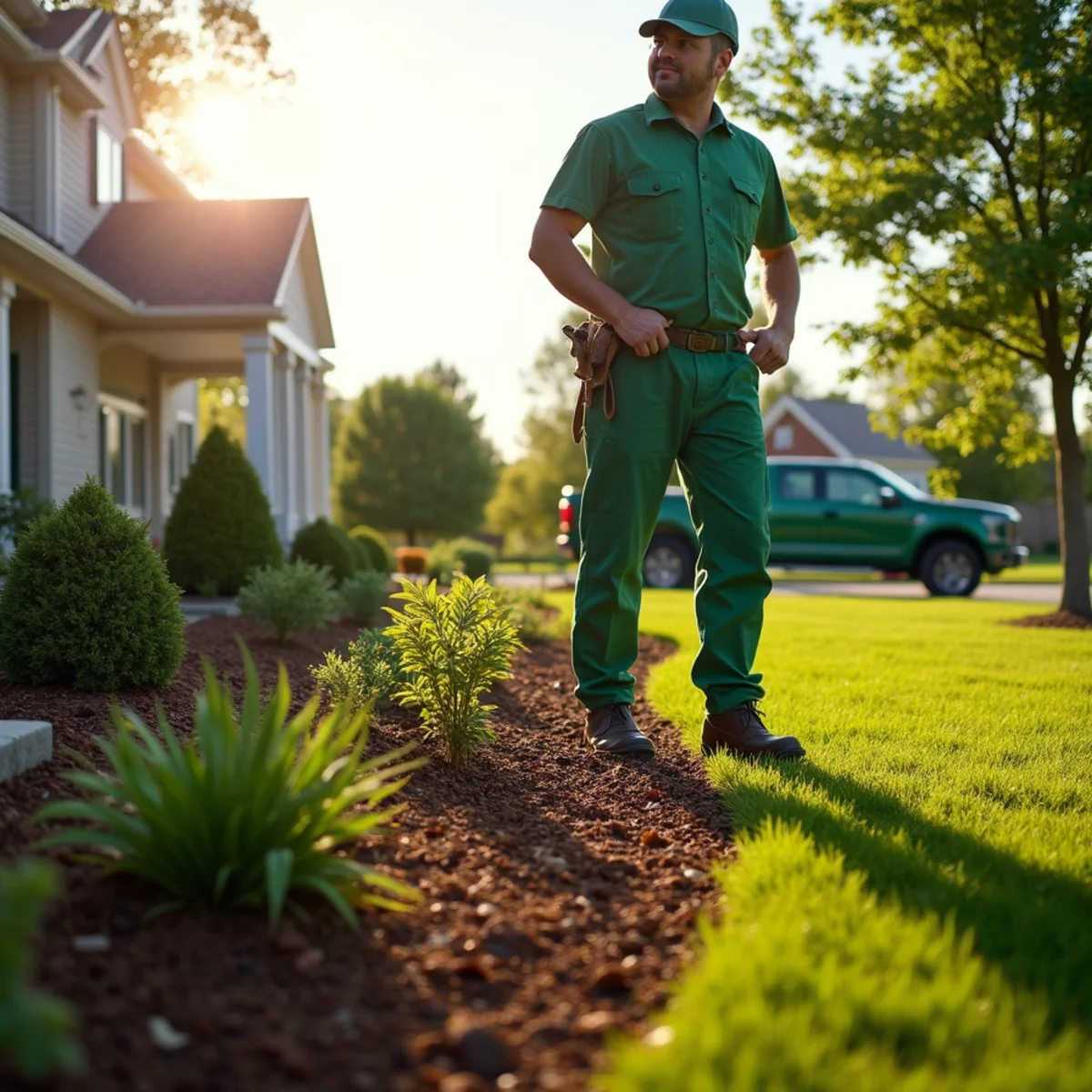
Landscaping cost in Fort Wayne commonly runs about $2 to $13 per square foot as a rough planning range, not a quote. A simple mulch refresh or sod job sits at the low end, while new beds with larger plants, soil work on clay and drainage fixes push toward the top. For a typical front yard, that is the difference between a few hundred dollars and several thousand.
This guide breaks down the numbers Fort Wayne homeowners can plan around, shows the math on three hypothetical projects, and explains what moves the number. Every figure here is a planning range drawn from local benchmarks. Your real price comes from an itemized estimate after someone walks the property, which is how every landscape design and installation project we take on starts.
Landscaping Cost in Fort Wayne: Why the Range Is So Wide
The $2 to $13 range is wide because landscaping covers everything from spreading mulch to rebuilding a yard. At the low end you are paying mostly for labor and bulk material on simple, open ground. At the high end you are paying for design time, larger nursery stock, removal of old plants, soil improvement, edging, and work that has to happen by hand in tight spaces.
It helps to think in layers. Prep, plants, mulch, sod and any removals each carry their own cost, and your total is the sum of the layers you actually need.
Local Unit Costs to Plan Around
These are the local benchmarks we use for ballpark math. Treat every one as a starting point, not a price:
- Overall landscaping: about $2 to $13 per square foot, depending on scope
- Sod: around $1.10 per square foot as a material-and-install benchmark; published local sod cost reports range roughly $1.30 to $1.80 per square foot installed
- Grading and soil prep: about $0.47 per square foot
- Mulch application: about $0.34 per square foot
- Tree removal, if a tree has to come out first: roughly $400 to $2,000 or more per tree
- Stump grinding: about $75 to $400 per stump
Plants are the piece that does not fit neatly into a per-square-foot number. The same bed might hold a handful of large shrubs or dozens of small perennials, and the plant list can swing a total more than any other line.
Planning Math: Three Worked Examples
The examples below use made-up square footages and only the benchmarks above. They show how the math works. They are illustrations, not quotes for any real yard.
Example 1: A 400 Sq Ft Mulch Refresh
Say you have 400 square feet of existing beds that need a fresh top layer. At the $0.34 per square foot mulch application benchmark, 400 × $0.34 comes to about $136. Heavy weeding, re-cutting lost edges, or switching mulch types would add to that. To work out how many cubic yards the job takes, see our guide on how much mulch you need.
Example 2: Replacing 2,000 Sq Ft of Lawn With Sod
Now say a 2,000 square foot section of backyard is weedy, bumpy and worn out. Grading and prep at $0.47 per square foot comes to 2,000 × $0.47 = $940. Sod at the $1.10 benchmark adds 2,000 × $1.10 = $2,200, for about $3,140 together. Plug in the $1.30 to $1.80 range from published local sod cost reports instead and the sod portion becomes $2,600 to $3,600, or roughly $3,540 to $4,540 with prep added. Some installed prices already fold in prep and some do not, which is exactly why you compare line items. Our sod installation page explains what proper prep involves.
Example 3: A New Front Bed With a Dead Tree in the Way
Picture a 600 square foot front-yard bed, with a dead ash standing right where the new planting goes. At $2 to $13 per square foot, the bed plans out to $1,200 to $7,800. Taking the tree down adds roughly $400 to $2,000 or more, and grinding the stump adds about $75 to $400. The full planning envelope is roughly $1,675 to $10,200 or more. The low end is a simple bed with small plants; the high end is larger nursery stock, heavy soil work and detailed edging. Our tree removal cost guide explains what moves that part of the number.
That third example is why one per-square-foot figure rarely answers how much it costs to landscape a front yard. The real answer comes from deciding which layers you need and which can wait.
Want your own numbers instead of examples? We walk the property, talk through your budget, and give you a written, itemized estimate. Call (323) 606-0255 for a free estimate.
What Drives Landscape Installation Cost
Design Complexity
Straight beds along a foundation are quick to lay out and install. Curved beds, several planting layers, and a design that ties the front and side yards together take more planning time and more hand work.
Plant Size
Nursery plants come in container sizes, from small plugs and one-gallon pots up to large containers and balled-and-burlapped trees. Bigger plants cost more to buy and more to plant, but they look finished sooner. Smaller plants cost less and often establish faster, though you wait a few seasons for the full look.
Soil Prep on Clay
Much of Allen County sits on Blount and Pewamo clay, which compacts and drains slowly. Good beds here usually need the soil loosened and organic matter worked in. Skipping prep saves money on day one and costs you in dead plants later.
Drainage Fixes Come First
If water pools where the new bed is going, fix that before anything is planted. Grading, a swale or a French drain is its own line item, but planting into a wet spot is how a season's investment drowns. Our yard drainage solutions page covers the options.
Access, Removal and Season
A backyard reached only through a narrow gate means material moves by wheelbarrow instead of machine. Removing old shrubs, rock, landscape fabric or worn-out sod adds labor and disposal. Spring is the busiest stretch for installs, so booking early or planting in fall can open up more scheduling options.
What a Typical Landscaping Bid Does Not Include
Landscaping, hardscaping and irrigation are related but separate trades. We design and install beds, plantings, mulch or rock, edging, sod, grading and drainage. Patios, pavers, retaining walls, sprinkler systems and landscape lighting are specialty trades with their own equipment and expertise. If your plan includes them, get separate bids for that work and coordinate the schedules. Usually hardscape and irrigation lines go in first, followed by final grading and planting around them.
Phasing a Project Over Several Years
You do not have to build the whole plan at once. Phasing spreads out the cost and still leaves you with a yard that looks designed rather than patched together. A common sequence:
- Year one: remove dead or hazardous trees, fix drainage and rough grading, and plant any new shade trees, since trees take the longest to grow.
- Year two: install the front-yard beds and foundation plantings that do the most for curb appeal.
- Year three and beyond: add backyard beds, repair or replace worn lawn, and fill in with perennials.
The key is getting a full design up front so every phase fits the final picture. Leaning on native plants suited to northeast Indiana in later phases can also lower long-term watering and replacement costs.
How to Compare Landscaping Bids
Two bids for the same yard can look thousands of dollars apart and still be closer than they seem. Line them up item by item:
- Are plant species, quantities and container sizes listed, or just a general line for shrubs and perennials?
- Is soil prep described, including what is added and how deep it is worked?
- What mulch type and depth are included, and is edging part of the price?
- Who removes old plants, sod, rock or debris, and is haul-away included?
- Is there a plant warranty, and what does it require of you, such as watering?
- Can the company show a certificate of insurance before work starts?
A lower number that skips soil prep or swaps in smaller plants is not the same job. Ask each contractor to explain any line you do not understand. We are fully insured and provide our certificate on request.
Budgeting for Care After Installation
The install is not the last cost. New plantings need regular watering through their first growing season, and beds need roughly an inch of fresh mulch each year to stay at 2 to 3 inches total. At the $0.34 per square foot benchmark, refreshing the 400 square feet from Example 1 each spring plans out to about $136 a year. Add weeding, shrub pruning, and mowing, which typically runs $35 to $75 per visit as a planning range. Our mulching and bed maintenance service can keep new beds on that schedule so the investment holds up.
We are a family-owned, fully insured crew serving Fort Wayne and neighborhoods like Aboite, where many HOA communities have landscape standards worth checking before you plan. If you are ready to put real numbers on your yard, call (323) 606-0255 for a free, itemized estimate.
Need a hand with this?
Landscape Design & Installation in Fort Wayne & Northeast Indiana
If you'd rather have it handled, our family-owned crew does this work every week. Estimates are free and written out.
Frequently Asked Questions
How much does it cost to landscape a front yard in Fort Wayne?
Is sod or seed cheaper for a new lawn?
Why is landscaping on clay soil more expensive?
What time of year is cheapest to landscape?
Do you install patios or sprinkler systems?
All About Tree & Turf Services
Family-owned landscaping and tree service in Fort Wayne, led by Darick Van. We share what we've learned working on real Northeast Indiana properties. Questions? Call (323) 606-0255.