
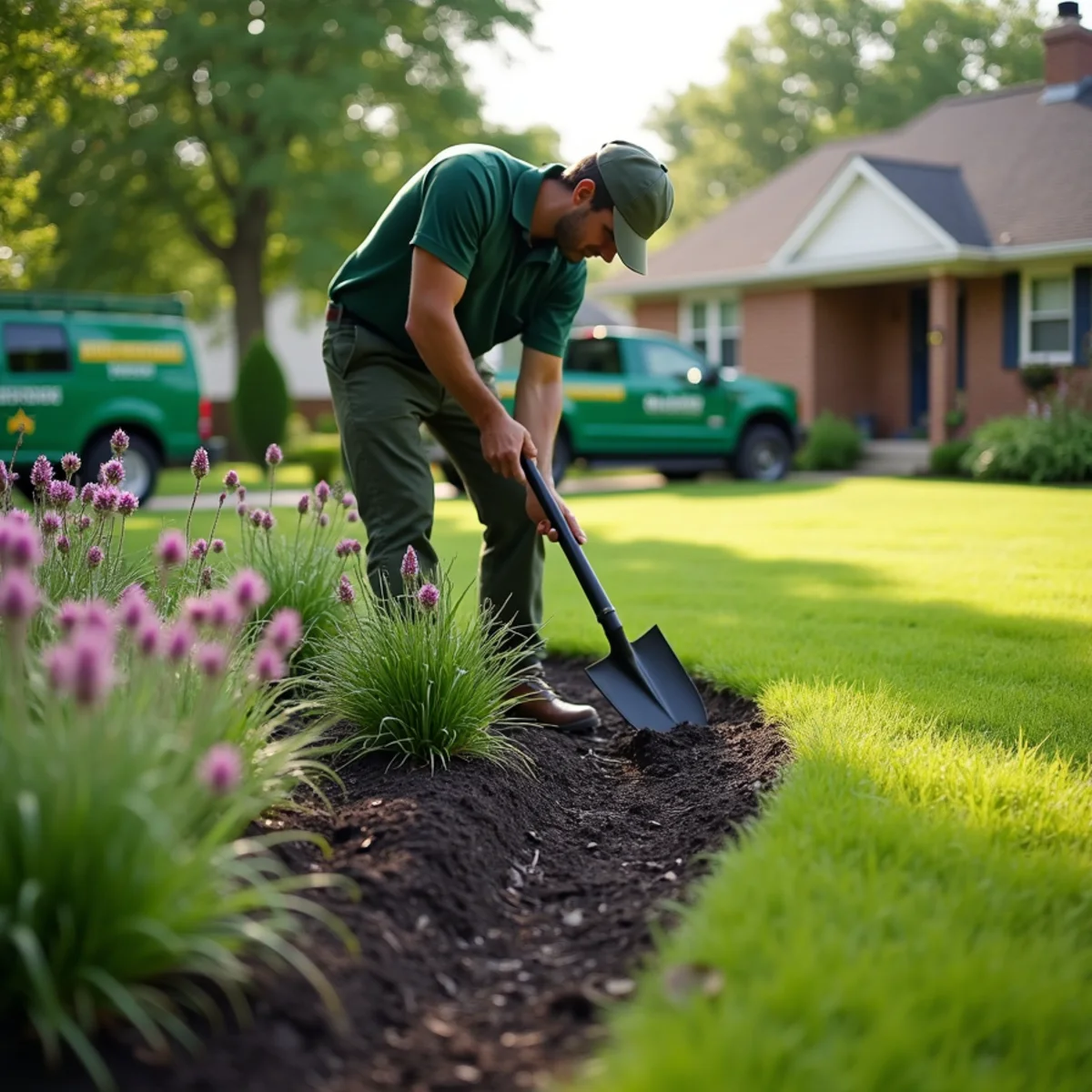
The best low maintenance landscaping ideas cut the jobs you repeat every week: fewer, larger beds with clean edges, tough plants matched to the spot, a mulch layer that keeps weeds down, and groundcover or planting beds in the places a mower struggles. Done well, a Fort Wayne yard goes from eating every weekend to needing a few focused work days a year. Done poorly, low maintenance turns into a rock bed full of weeds.
No yard is truly maintenance-free, and the clay under most of Allen County adds its own wrinkles. It stays wet in spring, bakes hard in August and punishes plants that want sharp drainage. Here's what actually saves time here, the trade-offs behind each idea, and the short list of chores that never fully go away.
Low Maintenance Landscaping Ideas That Actually Save Time
Start by figuring out where your time goes now. On most residential lots, the hours pile up in a few places:
- Trimming and edging around lots of small beds, trees and obstacles in the lawn
- Weeding beds where the mulch is thin or bare soil shows
- Mowing slopes, wet corners and shady patches where grass grows poorly anyway
- Shearing shrubs that are too big for where they were planted
- Replanting annuals and watering pots and beds all summer
Each idea below targets one of those. You don't have to do everything at once. Fixing the worst one or two often makes the biggest difference.
Fewer, Bigger Beds With Clean Spade Edges
A lawn dotted with small island beds, ringed trees and a birdbath here and there keeps the mower stopping and the trimmer always out. Combining those pieces into a few larger beds with smooth, sweeping curves cuts trimming time and lets the mower run long, straight passes. Reworking a bed layout like this is the heart of most landscape design and installation projects we plan for busy homeowners.
Ring trees with mulch beds, and connect neighboring trees into one bed where they're close together. That protects trunks from mower and trimmer damage, and the grass under trees is usually thin anyway. Keep curves gentle. Tight wiggles look busy and are hard to mow around.
For the edge itself, a spade-cut edge, a clean cut straight down a few inches between lawn and bed, keeps grass from creeping into the mulch and gives a crisp line. It needs re-cutting once or twice a season, which takes far less time than pulling grass out of a bed all summer. Thin plastic edging that heaves out of the ground after a few freeze-thaw winters often ends up being more work, not less.
Right Plant, Right Place on Fort Wayne Clay
Most high-maintenance yards are fighting their plants: shrubs that want to be twice the size of the space, perennials that rot in wet clay, or sun lovers struggling in shade. Choosing plants for the real conditions removes a lot of chores.
- Plan for mature size. Choose shrubs that fit the space at full size, so you prune once a year instead of shearing every month. Leave room around foundations, windows, air conditioners and meters.
- Lean on natives. Purple coneflower, black-eyed Susan, little bluestem, prairie dropseed and ninebark settle into clay and rarely need watering once established. Our guide to native plants for northeast Indiana sorts them by sun and soil.
- Group by water need. Put moisture lovers such as swamp milkweed, blue flag iris and red-osier dogwood in low spots or near downspouts, and drought-tough plants on high, sunny ground. Then you water by area instead of babying individual plants.
- Swap most annuals for perennials and shrubs. Annuals mean replanting every spring and frequent watering. Keep a few in pots by the door if you love the color, and let perennials and shrubs carry the beds.
Planting in drifts of three, five or more of the same plant helps too. It looks more intentional than a bed with one of everything, and weeds are easier to spot.
Want a front yard that looks good without eating every Saturday? We'll lay out beds that fit your lot, pick plants for your soil and sun, and install them with clean edges and mulch. Call (323) 606-0255 for a free estimate.
Mulch or Rock? An Honest Comparison
Both have a place, and neither is maintenance-free.
- Shredded hardwood mulch holds moisture, keeps soil cooler, smothers weed seeds before they sprout and feeds the soil as it breaks down. The trade-off is a light top-up most springs. Keep it 2 to 3 inches deep and pulled a few inches off trunks and stems.
- Rock lasts for years and won't float or blow away. But it holds heat around plants in summer, adds nothing to the soil, and collects leaves and dust that weeds root in. It's also heavy, slow work to remove if you change your mind.
For most planted beds, mulch is the lower-maintenance choice over time, because healthier plants fill in and shade out weeds. Rock tends to work best in narrow strips along a foundation, around downspout outlets or in spots with few plants. Don't pile fresh mulch on top of old every year; refresh it, or the layer gets too deep and starves roots of air. Our mulching and bed maintenance service handles the yearly refresh, and our guide on how much mulch you need does the math if you'd rather spread it yourself.
Replace the Spots You Hate to Mow
Every yard has a few places where grass is more trouble than it's worth. Those are the best candidates for change.
- Steep slopes: mowing a steep bank is slow and risky. Deep-rooted native grasses and perennials, or a spreading shrub, hold the soil and take the mower off the hill. Mulch well while plants fill in, since bare slopes wash out in heavy rain.
- Deep shade under mature trees: grass thins out there no matter how much you seed. A wide mulch ring or a shade bed of ferns, wild ginger or native sedges looks better and needs less care. Skip wintercreeper, which is listed as invasive in Indiana, and don't pile soil over tree roots to build the bed.
- Narrow strips: grass between a driveway and a fence, or a sliver along the side of the house, is awkward to mow. A simple planted strip or mulch bed solves it.
- Wet corners: a low spot that stays soggy gets rutted by the mower. A bed of wet-tolerant natives can work there, though ground that holds water for days may need drainage work first.
One honest limit: we build planting beds, not retaining walls or patios. A slope that needs structural support is a job for a hardscape contractor.
Check HOA Rules Before You Rip Out Grass
Many subdivisions around Fort Wayne have covenants that cover landscaping. Rules vary widely, but they can address how much of the front yard stays lawn, approved mulch or rock in front beds, plant choices, and how well beds must be weeded and edged. Some require approval before you change the front yard at all.
Read your covenants or ask the board before you start, and get approval in writing if it's required. A natural-looking native bed may need a clean edge and a mulched border to read as intentional to a board or a neighbor. Low maintenance still has to look tended.
What Still Needs Doing Every Year
A low-maintenance yard trades weekly chores for a handful of seasonal ones. Plan on these:
- Spring: cut back last year's perennials and grasses, pull early weeds, re-cut bed edges and top up the mulch.
- The first two seasons: water new plantings through dry spells and weed more often until the plants fill in. This is the most work the yard will ever need.
- Summer: a quick weeding pass every few weeks, plus watering during long dry stretches.
- Once a year: prune each shrub at the right time for its species, instead of shearing everything all season.
- Fall: clear heavy leaf mats off the lawn and out of beds. A light layer of chopped leaves in beds is fine.
On cost, a redesign costs more up front and saves time every year after. As rough planning ranges, not quotes, landscaping in Fort Wayne often runs about $2 to $13 per square foot depending on plants and prep, and mulch application about $0.34 per square foot. Our landscaping cost guide breaks those numbers down, and many homeowners phase the work over a couple of seasons, starting with the beds they see most.
The lawn you keep still needs regular mowing. If you'd rather hand that off too, our lawn care and maintenance visits pair well with a smaller, simpler yard.
We design and install low-maintenance beds and plantings across Fort Wayne and Huntertown, planned around your soil, your sun and your HOA's rules. Call (323) 606-0255 for a free estimate.
Need a hand with this?
Landscape Design & Installation in Fort Wayne & Northeast Indiana
If you'd rather have it handled, our family-owned crew does this work every week. Estimates are free and written out.
Frequently Asked Questions
What is the cheapest low-maintenance landscaping?
Is landscape fabric a good idea under mulch?
What are the easiest plants to grow in Fort Wayne clay?
How long does it take a new bed to become low maintenance?
Can I replace my whole front lawn with beds?
All About Tree & Turf Services
Family-owned landscaping and tree service in Fort Wayne, led by Darick Van. We share what we've learned working on real Northeast Indiana properties. Questions? Call (323) 606-0255.