
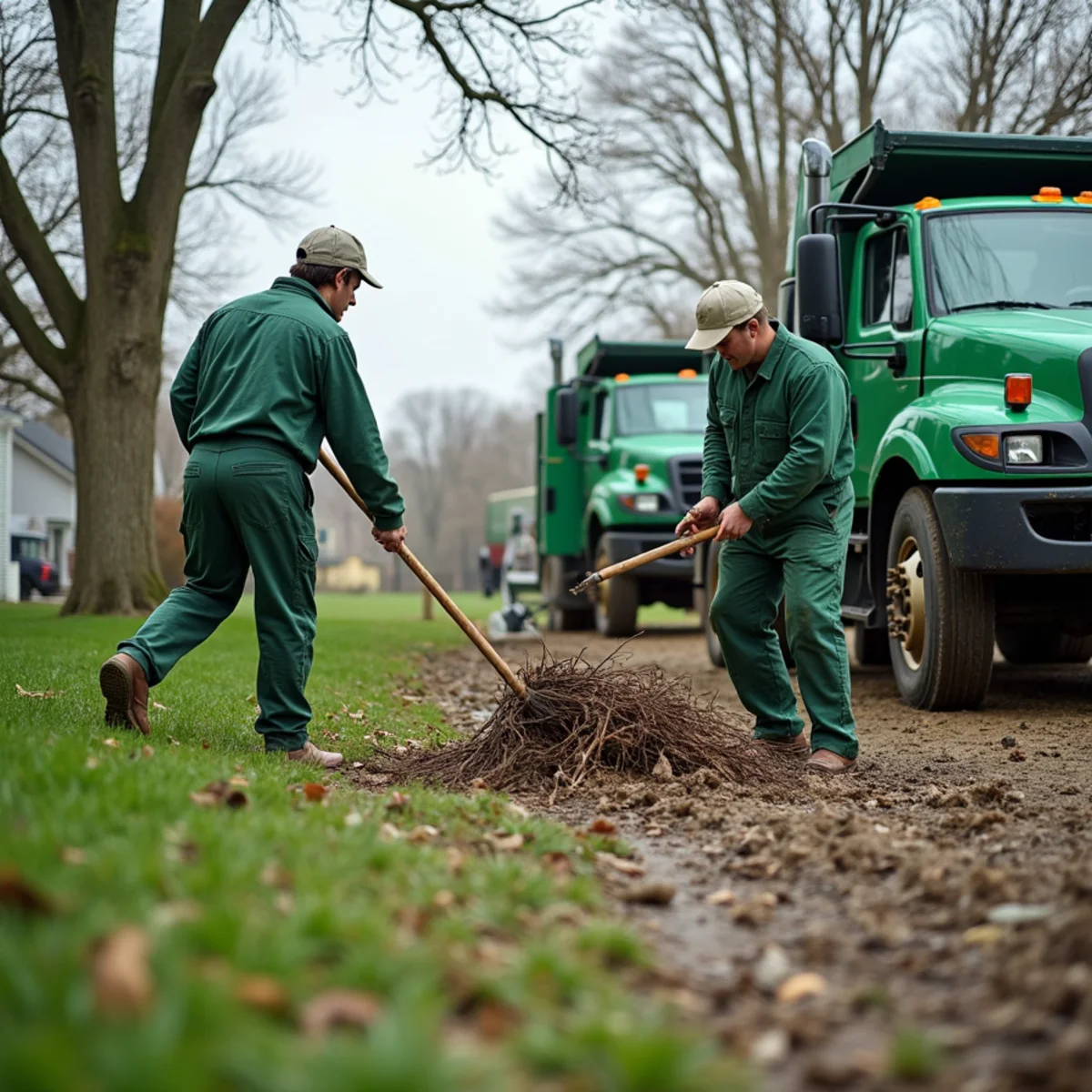
Fort Wayne exists because of water. The St. Marys and St. Joseph rivers meet here to form the Maumee, and that confluence, the Three Rivers, gives the city its identity. It also gives thousands of properties a front-row seat to flooding when heavy rain and spring snowmelt push those rivers over their banks.
If your yard has ever gone under, you know the mess the water leaves behind is almost worse than the water itself. Silt, branches, whole logs, and a gray film over everything. Here is how to clean it up the right way and set your property up to shrug off the next high-water event.
What Floodwater Actually Leaves Behind
Receding river water drops its cargo across your lawn and beds. The most common problems we see after a Three Rivers flood are:
- Woody debris, from small branches to full trees that floated in from upstream
- A layer of silt and sediment that smothers grass and hardens like concrete when it dries
- Displaced mulch, landscape rock, and eroded soil scoured out of beds and slopes
- Contaminants, because river floodwater can carry fuel, sewage, and chemicals you cannot see
That last point matters. Treat flood debris as potentially contaminated, wear gloves and boots, and keep kids and pets off the yard until it is cleaned and rinsed.
Step One: Clear the Heavy Debris Safely
Start with the big stuff. Fallen limbs and drifted trees need to come out before you can assess the turf underneath. If a large tree floated onto your property or a weakened tree came down in the flood, that is a job for a crew with the right equipment, not a chainsaw and good intentions. Our storm damage tree cleanup service exists for exactly this, and we can coordinate fallen tree removal when a trunk is tangled or under tension.
Buried under flood debris after the rivers came up? We handle the heavy, dangerous work so you do not have to. Call (323) 606-0255 for a free estimate on flood and storm cleanup.
Step Two: Deal With the Silt Before It Kills Your Turf
Silt is the silent lawn killer after a flood. A coating even half an inch thick blocks air and light from reaching the grass crowns, and once it bakes hard in the sun, water runs off it instead of soaking in. If you leave it, you are often looking at reseeding whole sections in a month.
- Rinse silt off grass blades with a hose while the sediment is still damp and movable, before it hardens.
- For thicker deposits, shovel or rake off the bulk, then rinse the remainder into a manageable layer.
- Core aerate once the lawn dries out to break the sediment crust and get air back to the roots.
- Overseed thin or dead patches and top-dress with quality soil rather than leaving the silt as your growing surface.
Restoring a silt-choked lawn is steady work, and our lawn care and maintenance crew can take on the aeration, seeding, and recovery mowing so your yard bounces back on schedule.
Step Three: Fix the Grade So It Floods Less Next Time
Cleanup is reactive. Grading is how you get ahead of the problem. Fort Wayne's heavy Blount and Pewamo clay soils drain slowly, so water that pools does not disappear quickly on its own. If your yard holds standing water long after a rain, or floodwater sits against your foundation, the ground itself is working against you.
Regrading low spots, cutting swales to move water toward the street or storm system, and installing French drains can dramatically cut how long water lingers. Our yard drainage solutions start with watching where water actually goes on your lot and then reshaping it so the next high-water event does less harm. Note that work near a river or in a floodway may need local approval, and we will tell you when that is the case.
A Local Crew That Knows These Rivers
We are a family-owned company, fully insured, and we work in flood-prone neighborhoods across Fort Wayne and out toward Woodburn near the Maumee. Owner Darick Van has seen what these rivers do, and we build cleanup and drainage plans around how water really moves in this part of Indiana, not a generic checklist. Prices we quote are honest planning ranges based on the size of the mess and the scope of the fix.
One more piece of advice from experience: document everything before you start cleaning. Take clear photos of the debris, the silt line on your house and trees, and any damage while it is still fresh. If you carry flood coverage, that record makes the claim far smoother, and it helps us scope the work accurately from the first visit.
When the water goes down, call us. The faster you clear debris and rinse silt, the more of your lawn and trees you save, and the sooner your yard stops looking like the river passed through it.
Frequently Asked Questions
How soon after a flood should I clean up my yard?
Will silt from a flood kill my grass?
Is flood debris dangerous to handle?
Can grading really reduce flooding in my yard?
All About Tree & Turf Services
Family-owned landscaping and tree service in Fort Wayne, led by Darick Van. We share what we've learned working on real Northeast Indiana properties. Questions? Call (323) 606-0255.