
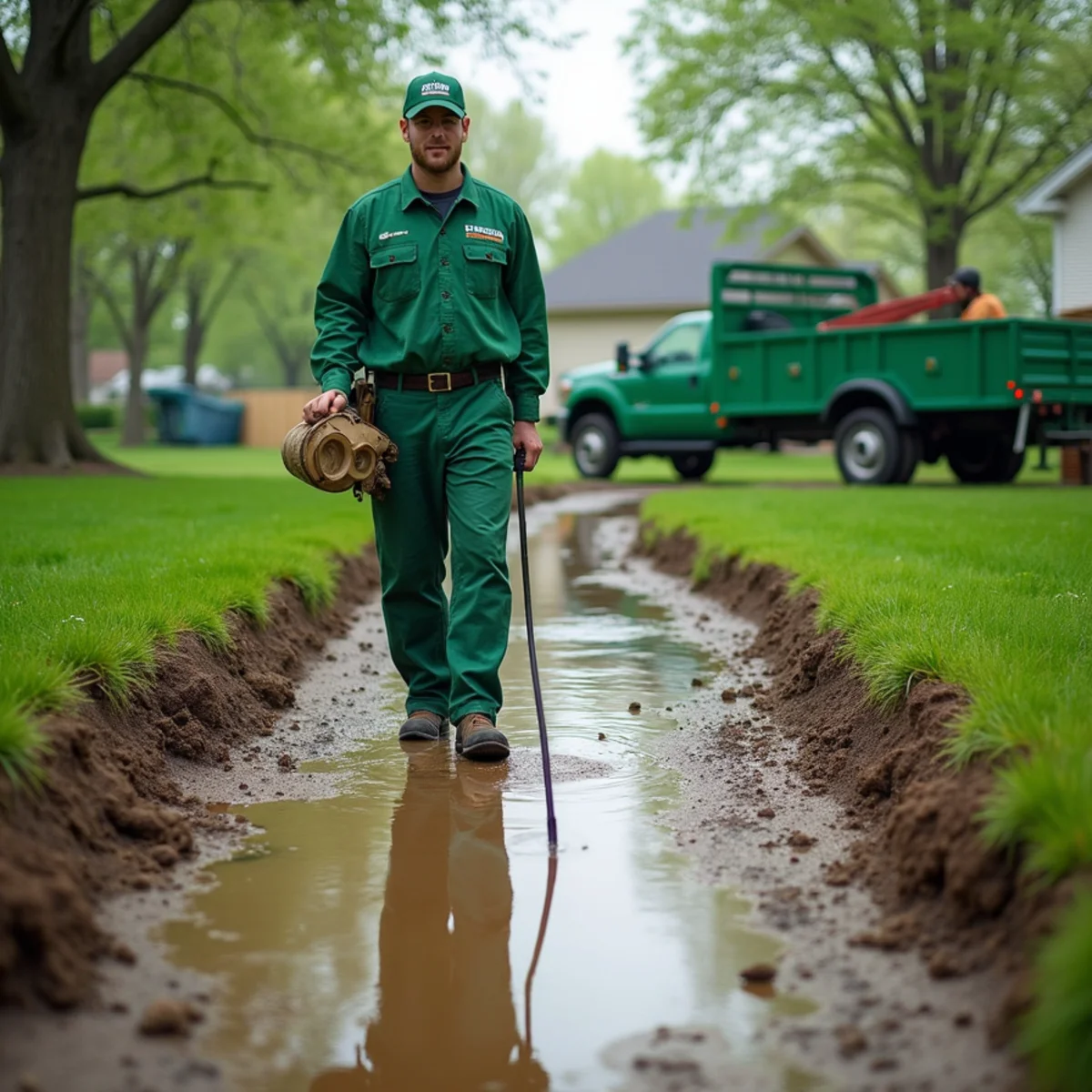
Days after the rain has stopped, part of your yard is still a swamp. Grass dies in the low spots, mosquitoes move in, and water creeps toward your foundation. On the Blount and Pewamo clay soils common around Fort Wayne, this is one of the most frequent problems we are called to solve.
The reason is simple: clay drains slowly. Water that would soak into sandy or loamy soil in minutes can sit on clay for hours or days. The good news is there are proven fixes, and the right one depends on where the water comes from and where it needs to go.
Why Clay Soil Holds Water
Blount and Pewamo soils are fine-textured and dense. Their tiny particles leave little room for water to move through, so instead of percolating down, rain pools on the surface or runs off. Add the flat-to-gentle terrain across much of Allen County and the Three Rivers floodplain influence, and water simply has nowhere fast to go.
Because clay is the underlying issue, the best solutions either move surface water to a better outlet or give it a faster path away from where it causes trouble.
The Drainage Fixes That Work
French Drains
A French drain is a gravel-filled trench with a perforated pipe that collects water and carries it away to a safe outlet. It is one of the most reliable fixes for a chronically soggy area or water pooling against a foundation, precisely because it does not rely on clay to absorb anything.
Regrading the Yard
Sometimes water pools simply because the ground slopes the wrong way, often back toward the house. Regrading reshapes the surface so water flows away from structures and toward areas that can handle it. It is foundational work, and everything else drains better once the grade is right.
Downspout Extensions
This is the cheapest fix and often the most overlooked. Downspouts that dump right next to the foundation flood the same spot every storm. Extending them, above or below ground, to carry roof water well away from the house solves a surprising number of drainage complaints on its own.
Dry Wells
A dry well is an underground basin that collects runoff and lets it seep slowly into the soil below the clay layer. It works well as a destination for water carried by French drains or downspouts, giving that water somewhere to go without pooling on the surface.
Swales and Rain Gardens
A swale is a shallow, planted channel that guides water along a chosen path. A rain garden is a planted low spot designed to catch and absorb runoff using water-tolerant plants. Both manage water while looking intentional, and they double as attractive landscape features rather than eyesores.
Tired of a yard that turns to soup after every storm? Call (323) 606-0255 or request a free estimate. We will diagnose where your water is coming from and design a drainage fix built for Fort Wayne clay.
Which Fix Do You Need?
Most yards need a combination rather than a single solution. A typical plan might look like this.
- Start with downspout extensions to stop roof water from flooding the foundation
- Regrade any areas that slope toward the house or trap water
- Add a French drain to collect water from a persistent wet zone
- Route that water to a dry well, swale, or rain garden as a safe outlet
Getting the diagnosis right matters. Installing a French drain when the real problem is a bad grade, or vice versa, wastes money. Our yard drainage solutions start with figuring out where your water actually originates before we recommend anything.
Drainage and the Bigger Picture
Solving drainage often opens the door to a better yard overall. Once water is under control, we can restore the damaged areas through landscape design and installation and keep the whole lawn healthy with ongoing lawn care and maintenance. Fixing drainage first protects everything you plant afterward.
We solve wet-yard problems across Bluffton, Woodburn, and Fort Wayne. If standing water is ruining your yard, call (323) 606-0255 and we will build a plan that works on our clay.
Warning Signs Your Drainage Needs Attention
Standing puddles are the obvious symptom, but drainage trouble shows up in subtler ways too. Catching these early keeps a nuisance from becoming an expensive foundation or landscape problem.
- Bare or mossy patches where grass will not grow no matter what you do
- A soggy, spongy feel underfoot days after the last rain
- Water stains, dampness, or a musty smell in the basement or crawl space
- Mulch and soil washing out of beds after storms, or gullies forming on slopes
- Mosquitoes breeding in spots that stay wet between rains
Our roughly 33.6 inches of annual snowfall matters here too. When all that snow melts in late winter, saturated clay has nowhere to send the water, and low spots that seem fine in summer can turn into ponds in March. A drainage plan should account for snowmelt and spring rain, not just summer storms, which is exactly how we approach every wet-yard job in Northeast Indiana.
Frequently Asked Questions
Why does water sit in my Fort Wayne yard for days?
What is the best drainage fix for clay soil?
Will a French drain work in heavy clay?
Can standing water damage my foundation?
All About Tree & Turf Services
Family-owned landscaping and tree service in Fort Wayne, led by Darick Van. We share what we've learned working on real Northeast Indiana properties. Questions? Call (323) 606-0255.